
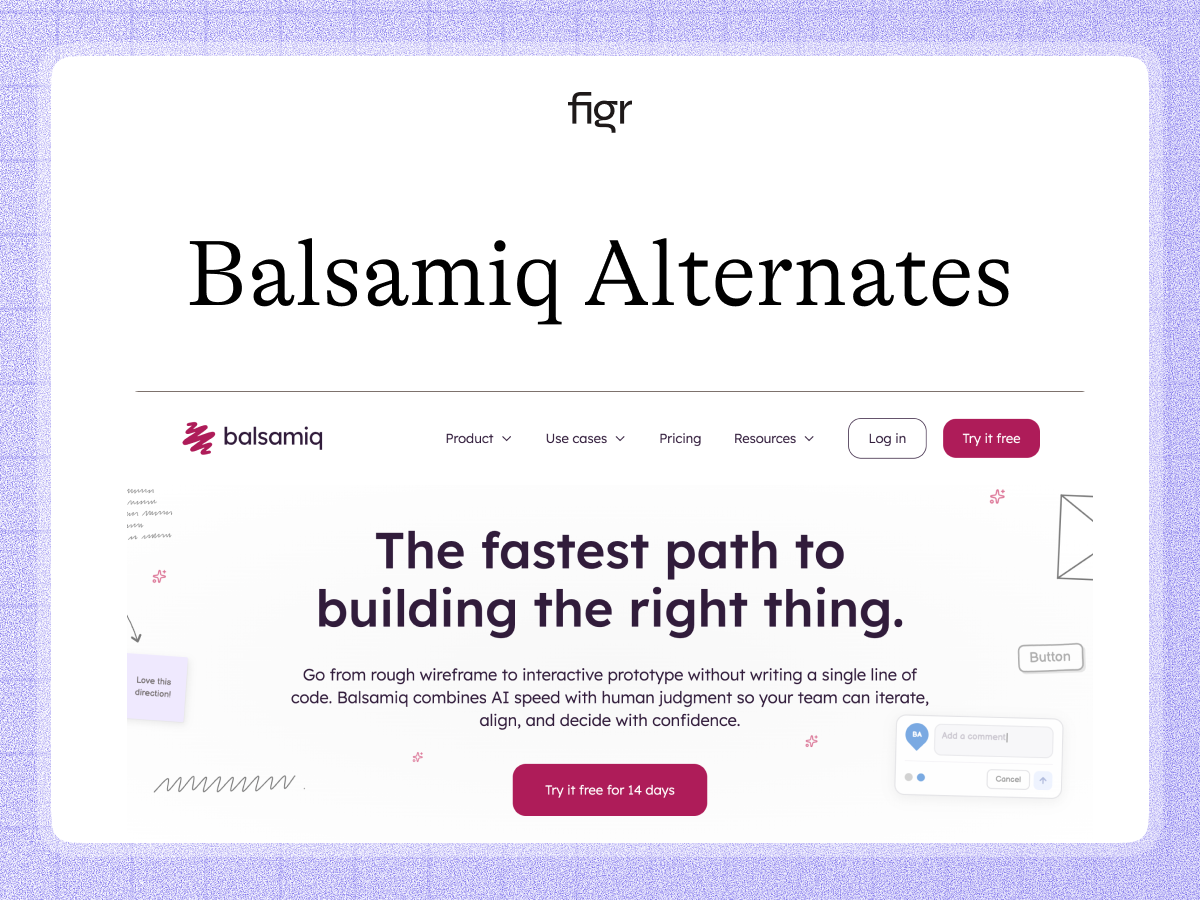
The Balsamiq alternative for when wireframes are not enough
Balsamiq makes low-fidelity wireframes on purpose. That focus is a strength: it keeps early conversations about structure, not pixels. It is not built to produce real, high-fidelity product design that fits your system and handles real states.
Figr starts from your product. It learns your screens, flows, and design system, reasons through the UX, and produces Figma-ready design. This page is honest that the two serve different stages, and where each one fits.
Low-fidelity wireframes and product design are different stages
This comparison is a little unusual, because Balsamiq and Figr sit at different points in the process. It is worth being clear about that.
Balsamiq is built for the earliest stage, when you want to sketch structure fast and deliberately avoid looking finished, so feedback stays on the layout and the flow. Figr is built for actual product design: high-fidelity screens, grounded in your real product, that respect your system and handle the states a real screen needs.
That is the real distinction, and it is about stage and fidelity. Balsamiq is for rough early structure. Figr is for designing the product itself, which usually comes after the wireframe has done its job.
What Balsamiq is genuinely good at
Balsamiq is excellent at exactly what it set out to do, and credit where it is due. Its deliberately rough style keeps early reviews focused on structure instead of visual polish, which is a real and underrated benefit. It is simple, fast, and has earned a devoted following for low-fidelity wireframing. Balsamiq Cloud has since added AI features, though deliberate low-fidelity remains its core.
Its deliberately low-fidelity focus is a philosophy, not a gap, and we respect it. The point is only that a low-fi wireframe is not the finished product design, and at some stage you need that next thing, which is where Figr fits.
What Figr is, and the job it is built for
Figr is an AI product designer that starts from your product. It captures your screens, flows, design system, and docs, reasons through the UX, and produces Figma-ready design that fits what you run.
The difference is fidelity and grounding. Balsamiq gives you a rough wireframe to align on structure. Figr gives you high-fidelity design rooted in your real product, with components, states, and constraints considered, then handed to Figma.
That makes Figr strongest once the structure is settled and you need to design the product for real.
A worked example: from a wireframe to a real screen
Take a flow you sketched as a Balsamiq wireframe and now need to actually design.
The wireframe did its job: it aligned everyone on structure and rough layout. But it is intentionally not your product. To move forward, someone designs the real screen, on your components, with the states the wireframe left out, the empty state, the error, the permission case.
With Figr, you bring the product and design system in and describe the screen, using the wireframe as a guide. It reasons through the design and returns high-fidelity screens on your system, with the states included, ready to refine in Figma, through design new features. The win is the leap from rough structure to real design, without starting over.
Where each one wins
| The job | Balsamiq | Figr |
|---|---|---|
| Rough low-fidelity wireframes | Built for it | Not its focus |
| Keep early reviews on structure | Strong | Different stage |
| High-fidelity product design | No | Built for it |
| Match your design system | No | Yes |
| Reason through edge cases | No | Yes |
| Produce Figma-ready design | No | Yes |
When Balsamiq is the right call
Use Balsamiq, not Figr, when you want rough wireframes and you want to stay rough on purpose. Earliest-stage structure, quick layout sketches, a flow you want to align on before anyone designs anything real.
That is a genuine use case, and Balsamiq's focus serves it better than a high-fidelity tool would. Figr earns its place at the next stage, when the structure is agreed and you need to design the product for real, on your system.
How to choose between Balsamiq and Figr
The question is not which tool is better, because they sit at different stages. It is which stage you are in.
If you are sketching early structure and want to stay low-fidelity, Balsamiq fits. If the structure is settled and you need real, high-fidelity design grounded in your product, Figr fits. Some teams use both: wireframe in Balsamiq, then design in Figr.
The signal is simple. If you find yourself trying to make a Balsamiq wireframe look real, you have reached the stage Figr is built for.
What Figr is not
To be clear, Figr is not a low-fidelity wireframing tool, and it is not designed to look deliberately rough. It is not the tool for the earliest structure-only sketches.
It is built to design the product at high fidelity, grounded in your system. If your need is rough early wireframes, Balsamiq is the better, more focused choice. If your need is real product design, that is where Figr is strongest. The two can sit in sequence.
Why Figr designs from the product: the Visual Context Graph
Figr produces high-fidelity, product-grounded design because it treats product work as visual and contextual. That is the Visual Context Graph, which connects five layers:
- Visual: your screens and frames
- Behavioral: recordings and real user flows
- Design system: tokens, components, variants, and rules
- Product knowledge: PRDs, research, and past decisions
- Implementation: the code constraints around the design
A wireframe tool stays at structure. Figr reasons across all five, which is why its output is real product design ready to refine. Output moves into Figma as editable layers, with edge cases through edge case mapping.
Pricing, briefly
Balsamiq Cloud is subscription-based, priced by the number of concurrent projects with unlimited users, from around $9 a month for a small plan and scaling up; it now includes AI features with a credit system, and the older one-time desktop license is being discontinued at the end of 2026. Figr is metered by credits: a free tier, Starter at $39 a month, Max at $149 a month, and custom enterprise. The two price differently because one makes wireframes and the other designs the product, so compare on stage and fit. See pricing.
When the wireframe is done, design the real thing
If your structure is settled, Figr turns it into high-fidelity design that fits your product, not another rough sketch.
FAQ
Is Figr a Balsamiq alternative?
Only at a different stage. Balsamiq makes rough low-fidelity wireframes. Figr designs high-fidelity, product-context screens once the structure is settled.
What does Figr do that Balsamiq does not?
Figr produces high-fidelity design grounded in your product and design system, reasons about edge cases, and is Figma-ready, rather than rough wireframes.
What is Balsamiq best at?
Deliberately low-fidelity wireframes that keep early reviews focused on structure, simply and quickly.
Does Figr make wireframes?
Figr is built for high-fidelity, product-grounded design. For deliberately rough early wireframes, Balsamiq is the more focused tool.
Can I use both?
Yes. Many teams wireframe structure in Balsamiq, then design the real screens in Figr once the layout is agreed.
How is Figr priced next to Balsamiq?
Figr is credit-metered with a free tier, Starter at $39 a month, and Max at $149 a month. Balsamiq uses its own pricing. Compare on stage and fit.
Related reading
For more on this space: the best AI design tools, AI wireframe generators, a guide to design systems, and why design is about decisions, not drafts.