
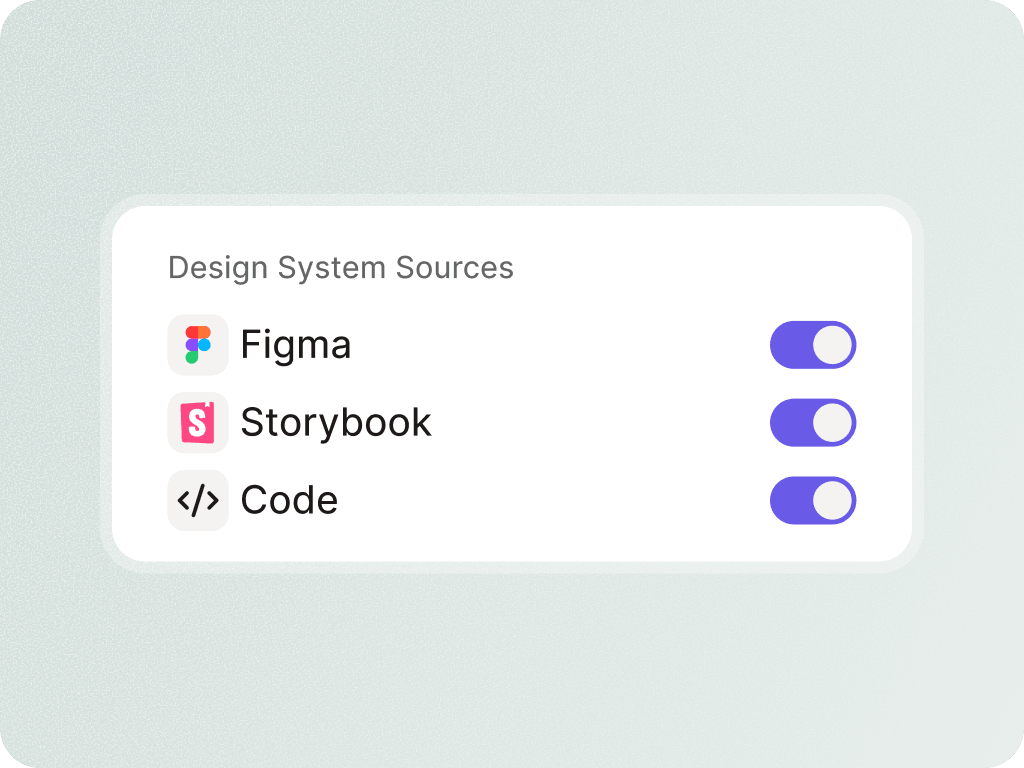
Mature products are shaped by more than Figma files. Components have real states, props, constraints, and behavior in code. Figr can use Storybook, code, CSS, and component context where available to help teams reason through UX and generate design directions that stay closer to what the product can actually support.
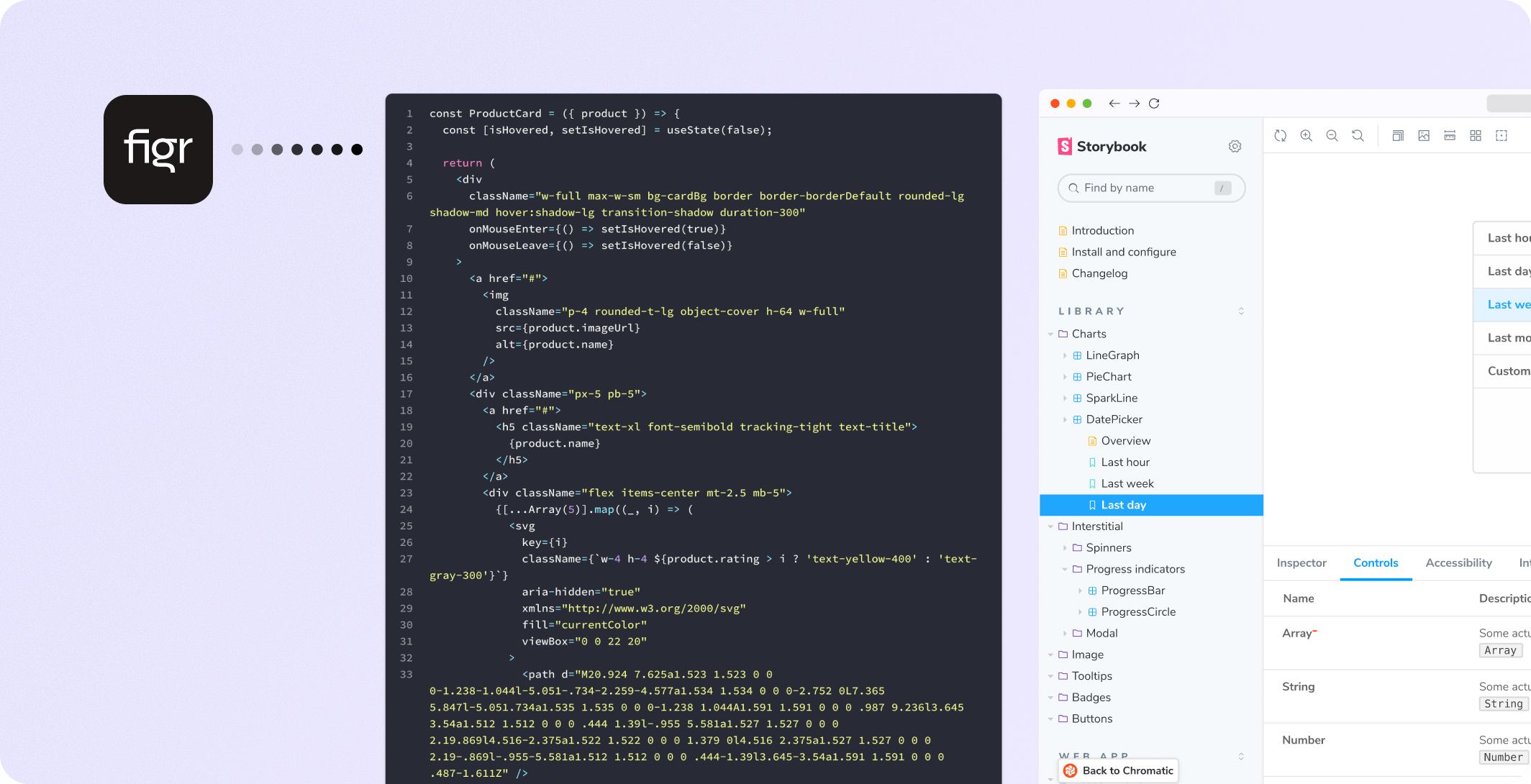


















A button may look one way in Figma and behave another way in production
A table may have props for density, row actions, loading states, pagination, and empty states.
A modal may have accessibility behavior or constraints designers do not want to recreate manually every time.
When AI ignores implementation context, it can suggest designs the product system does not support well.


Figr should help bring component reality into UX work.
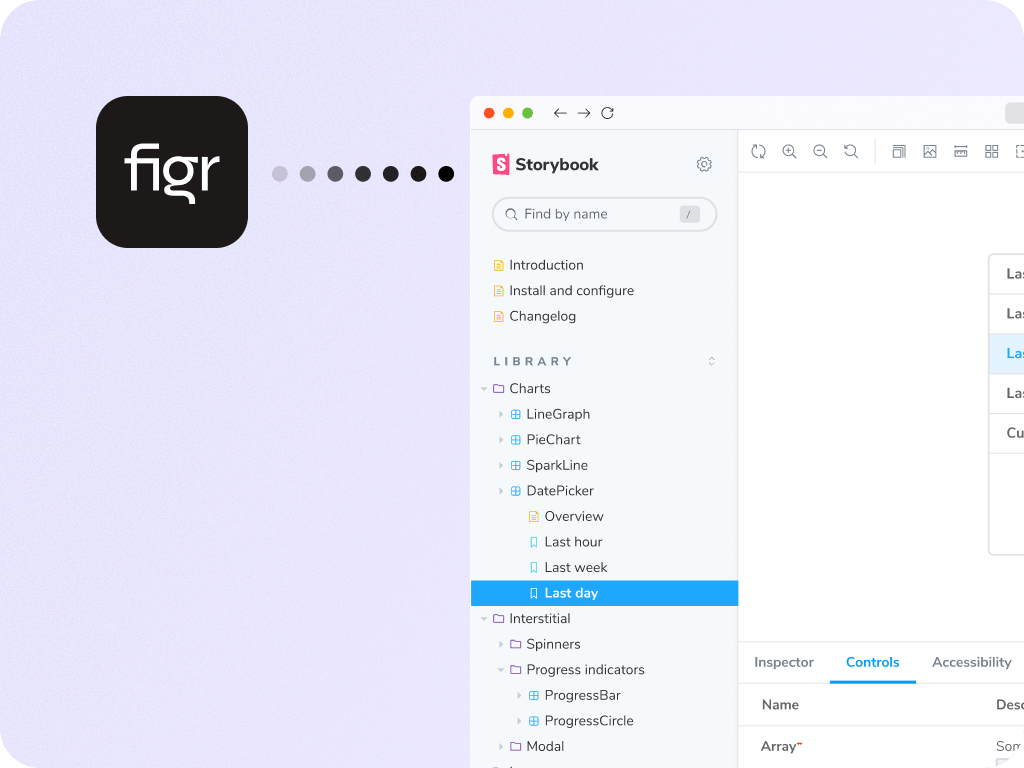
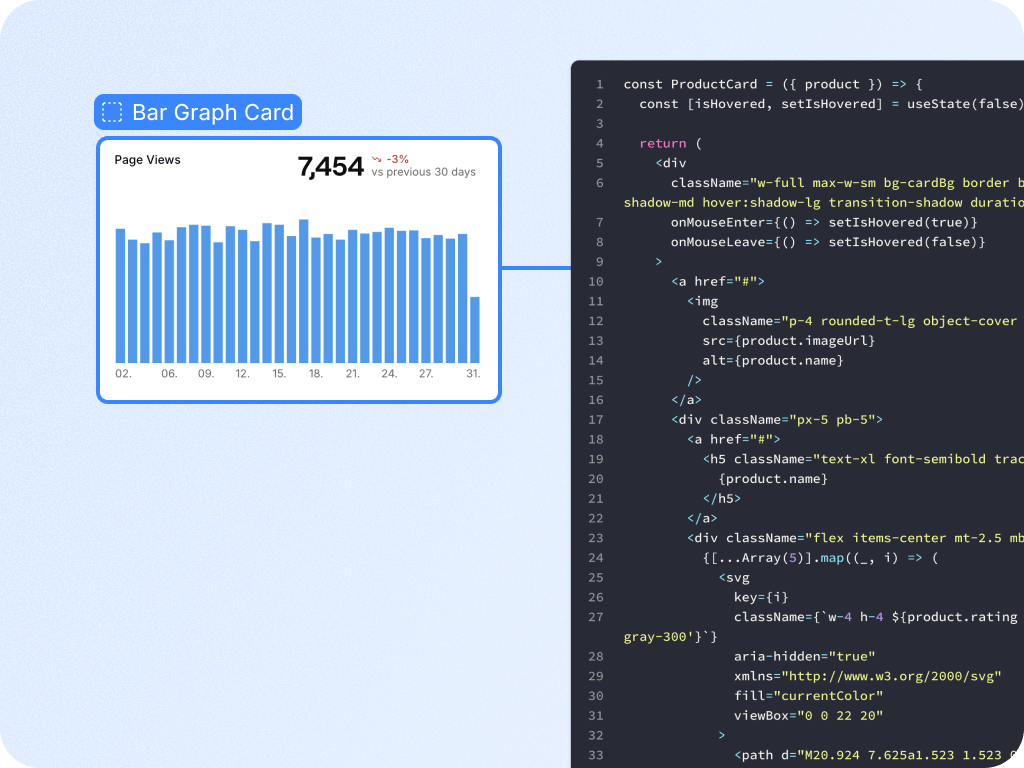
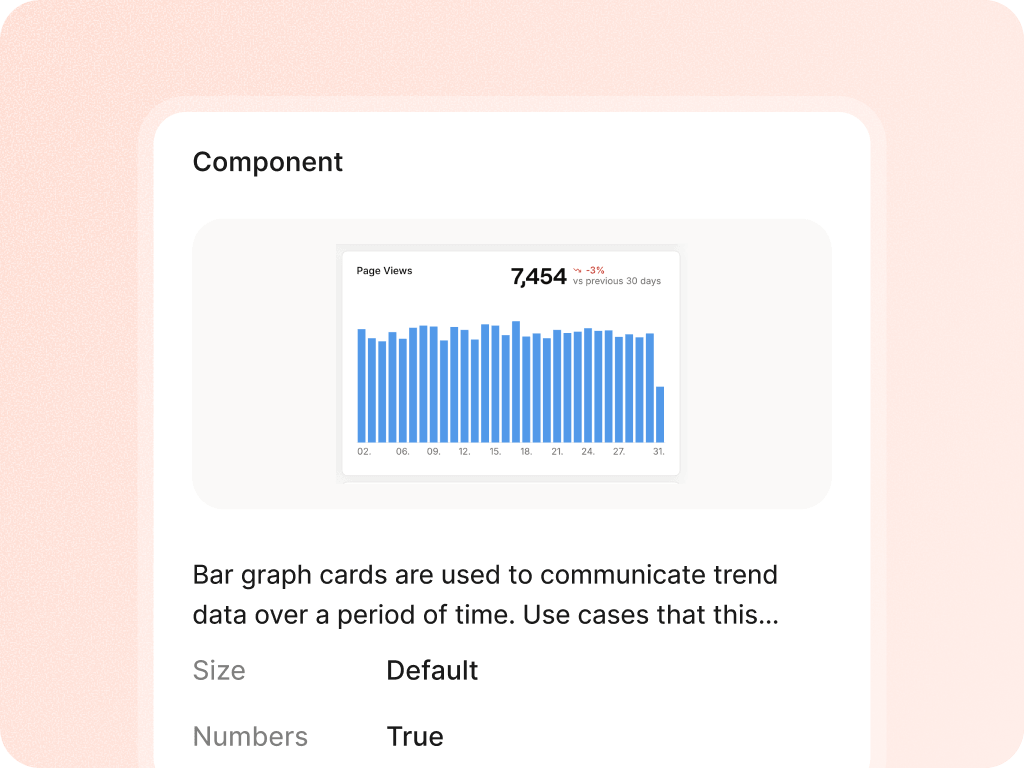

Figr can use component context to reduce invented UI and stay closer to available patterns.

When UX decisions are tied to existing components and states, engineers get less ambiguity.
%201.svg)
Teams can ask for design variants that respect known components, patterns, and implementation limits.

Storybook and code context help Figr serve the earlier product-design question without pretending implementation constraints do not exist.
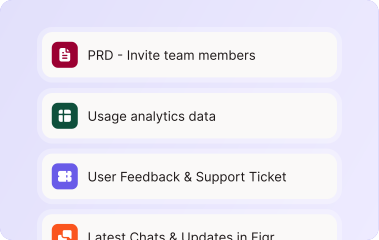
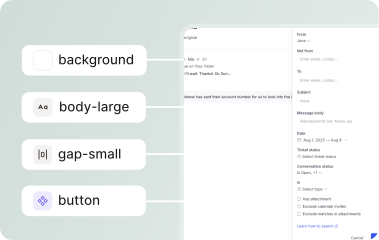
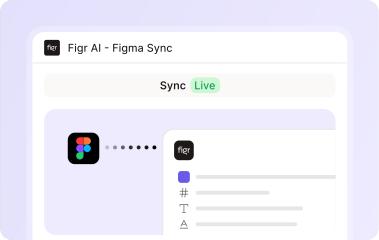

Bring Storybook, code, CSS, and component context into Figr so AI design work can stay closer to the product your team can build.


Storybook and component context can be used where available to support more grounded design work.
Both. Designers get output closer to the system. Engineers get UX artifacts that better reflect available components and states.
No. Figr can help bring implementation context earlier, but engineering still owns final feasibility decisions.