
Analytics can tell you where users struggle. It rarely tells you what the UX should become.Figr can use analytics files, funnel notes, product behavior signals, and supporting context as inputs for UX reasoning, helping teams form sharper hypotheses, review flows, and design better product experiences.


















A funnel drops at setup step three. A dashboard has low feature adoption. A report is opened but rarely exported. A configuration flow has repeated support tickets.
The analytics signal matters, but it is not the full answer.
Teams still need to inspect the flow, understand the user intent, connect research, review current screens, and decide what should change.


Figr should help connect product behavior to UX reasoning.
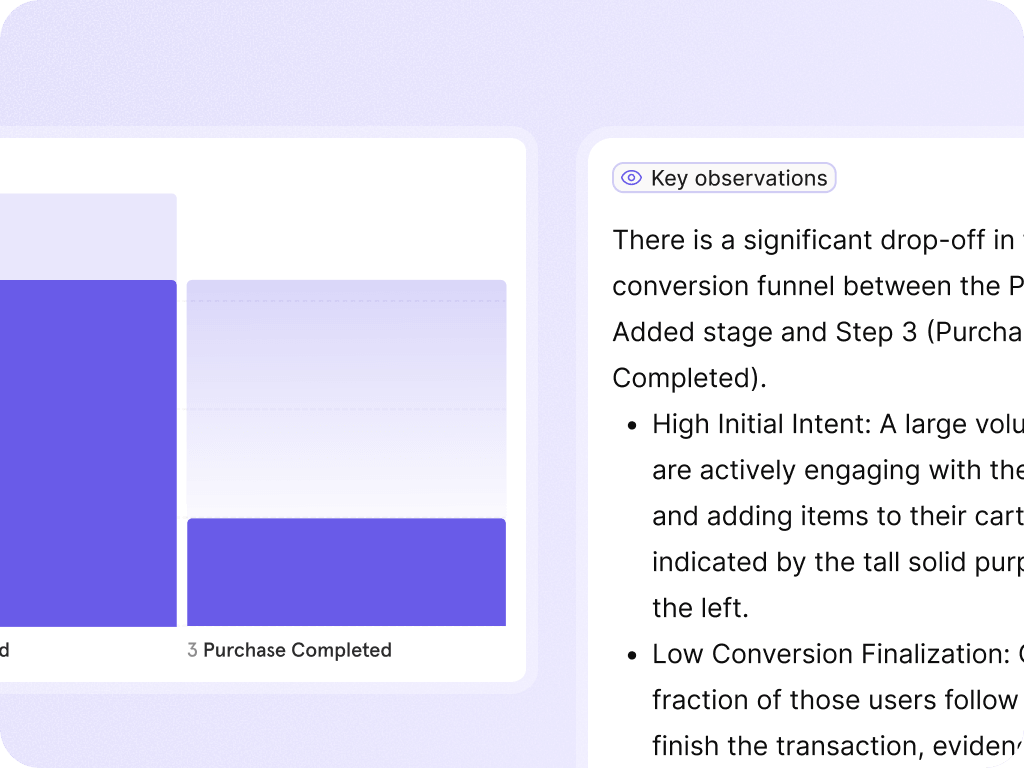
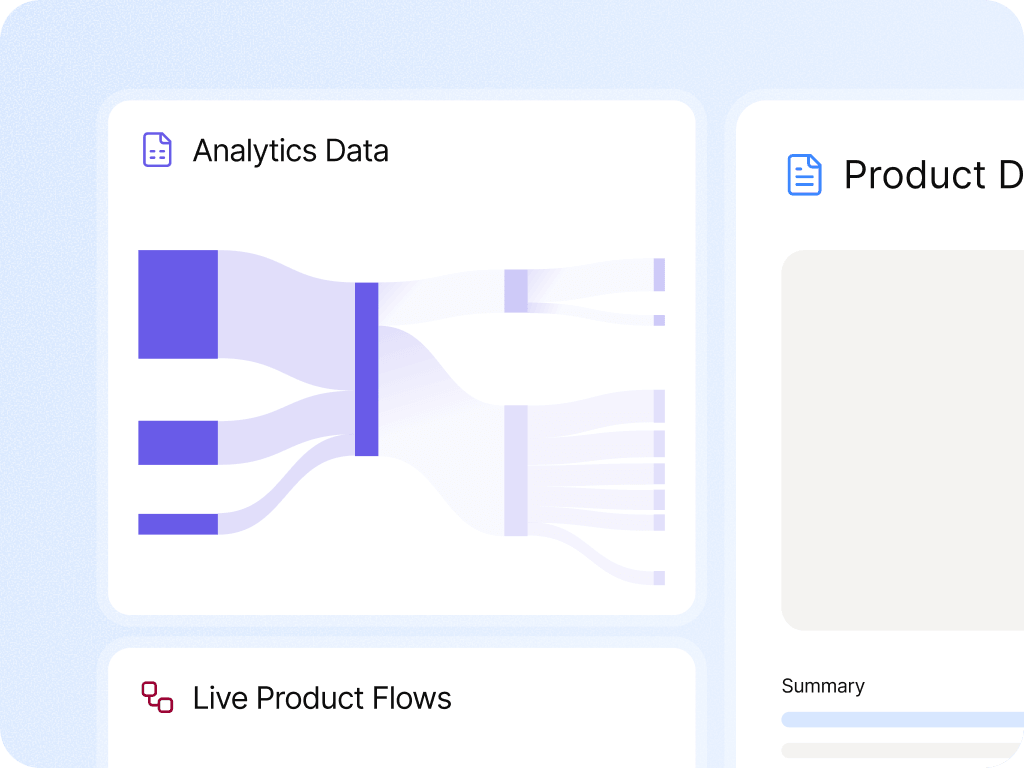
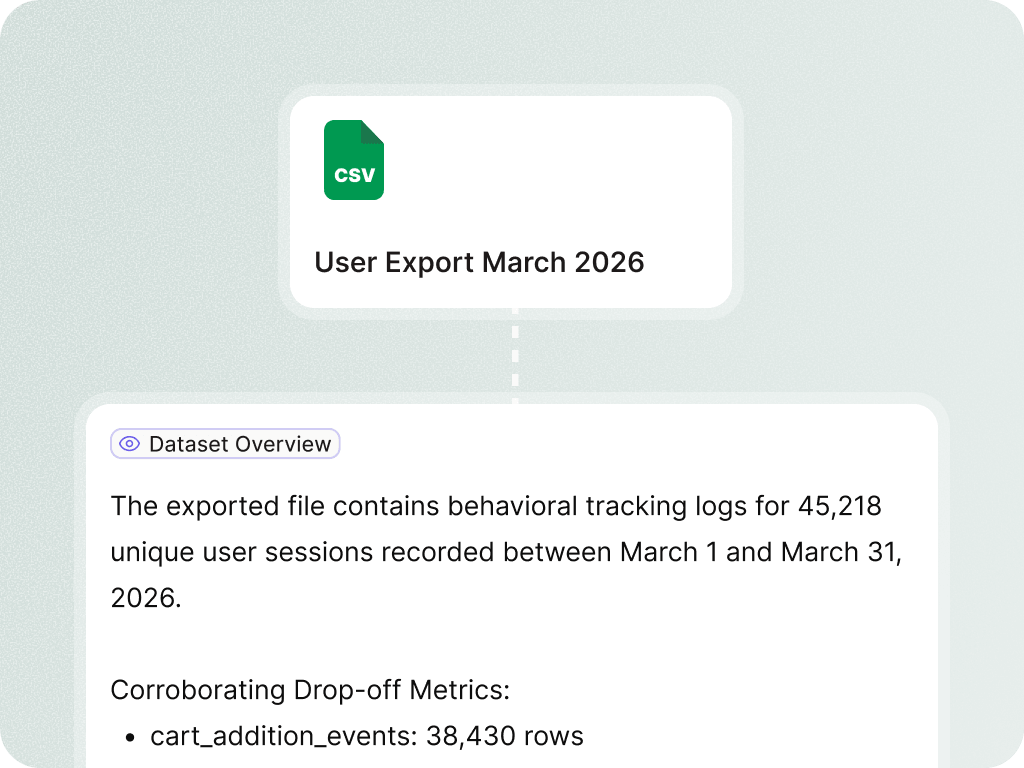
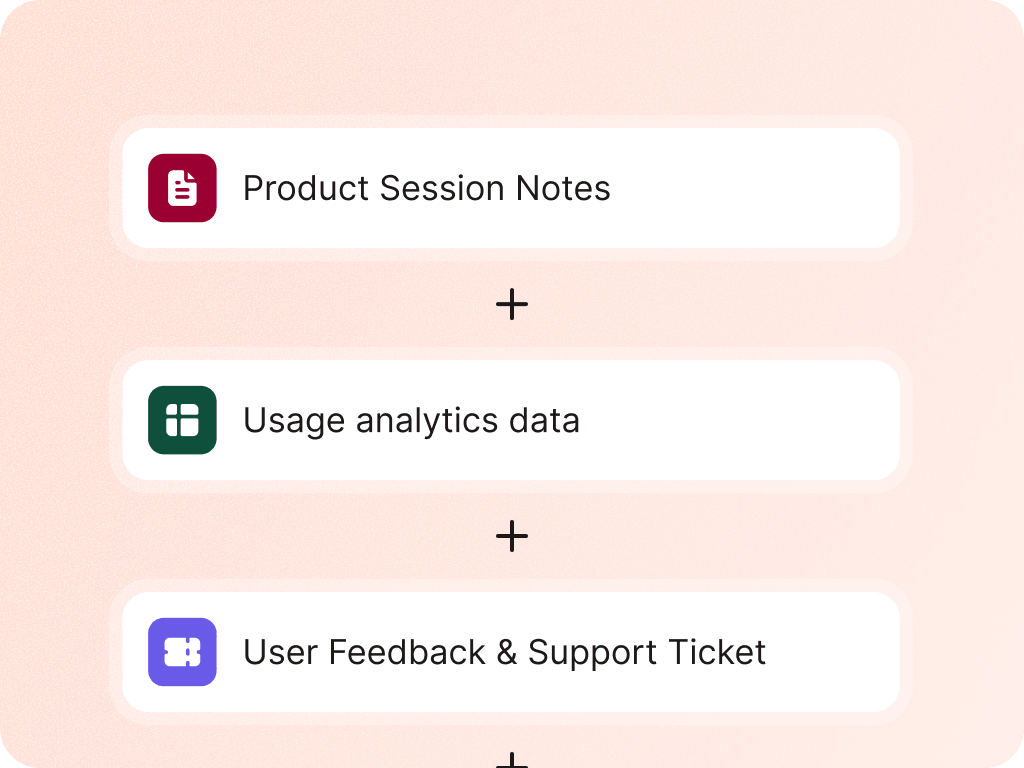

Turn analytics signals into testable UX questions: why users drop, what they may not understand, which states deserve review, and what product evidence is missing.

Use analytics context to decide which flows to inspect and what risks to look for.
%201.svg)
Figr can help group observations by user impact, product risk, and design effort.

Use behavior signals alongside visual product context to create a clearer redesign brief or prototype direction.
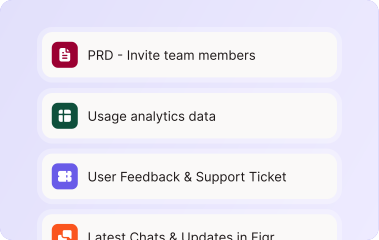

Use analytics context with Figr to connect product signals, UX review, and design direction before your team commits to a change.


Figr can use analytics files, exports, or notes as context where supported.
No. Analytics context helps form hypotheses and review flows. It should be paired with product context, research, and team judgment.
Both. Growth teams can use it for funnel and activation questions. Product teams can use it to connect behavior signals to UX decisions.