
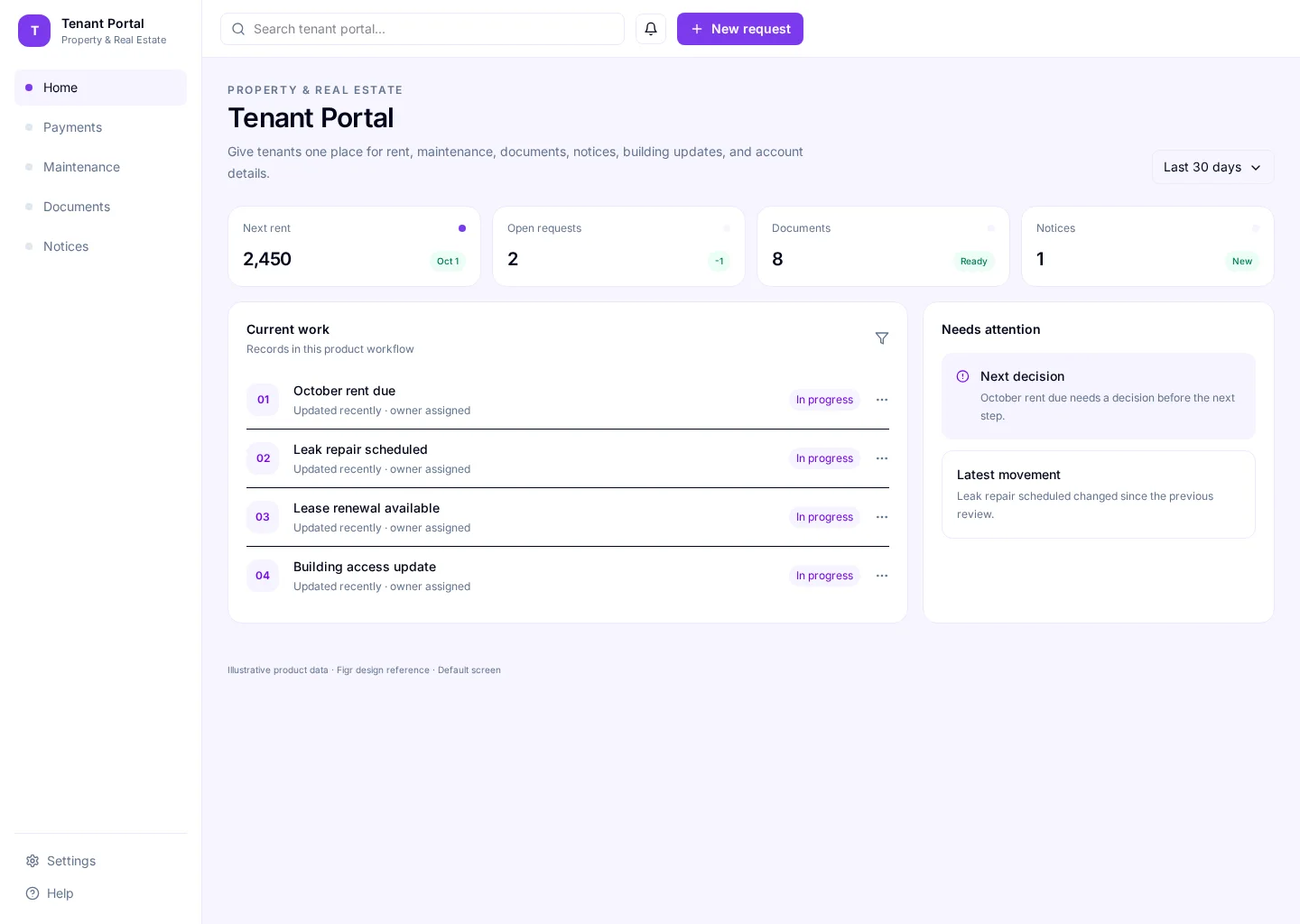
Give tenants one place for rent, maintenance, documents, notices, building updates, and account details. This example brings Home and Payments together so property teams can find the next task without losing context.
It includes representative records such as October rent due and Leak repair scheduled. Use the screenshot to study the layout, then adapt its components and product states to your own design system.
Workspace
New request
Workspace
Default, loading, empty, error, permission, success
Configurable product UI theme
Product teams need to new request while keeping next rent, open requests and exceptions visible. The interface should show what changed and who should act next.
Home → Payments → New request → Review outcome
Workspace, Home, Payments, contextual actions, error recovery
Give the main job visual priority, keep supporting signals nearby and surface exceptions where people must act.
Pay attention to home and payments. People need to distinguish October rent due from Leak repair scheduled. Keep next rent visible, especially when a record changes owner or status.
Before this screen reaches handoff, verify keyboard focus, empty and permission states, and what happens after someone chooses “New request”. Make error recovery as clear as the happy path.
Related screen examples to explore next: Maintenance Requests, Property Manager Dashboard, Lease Management.
Design a tenant portal screen inside our existing product. Use our current components, tokens and content language. Include Home and Payments views, credible records like October rent due, and a clear “New request” action. Use our product permissions and show loading, empty, error and success states. Keep the output editable in Figma.