
FIGR / UI TEMPLATE
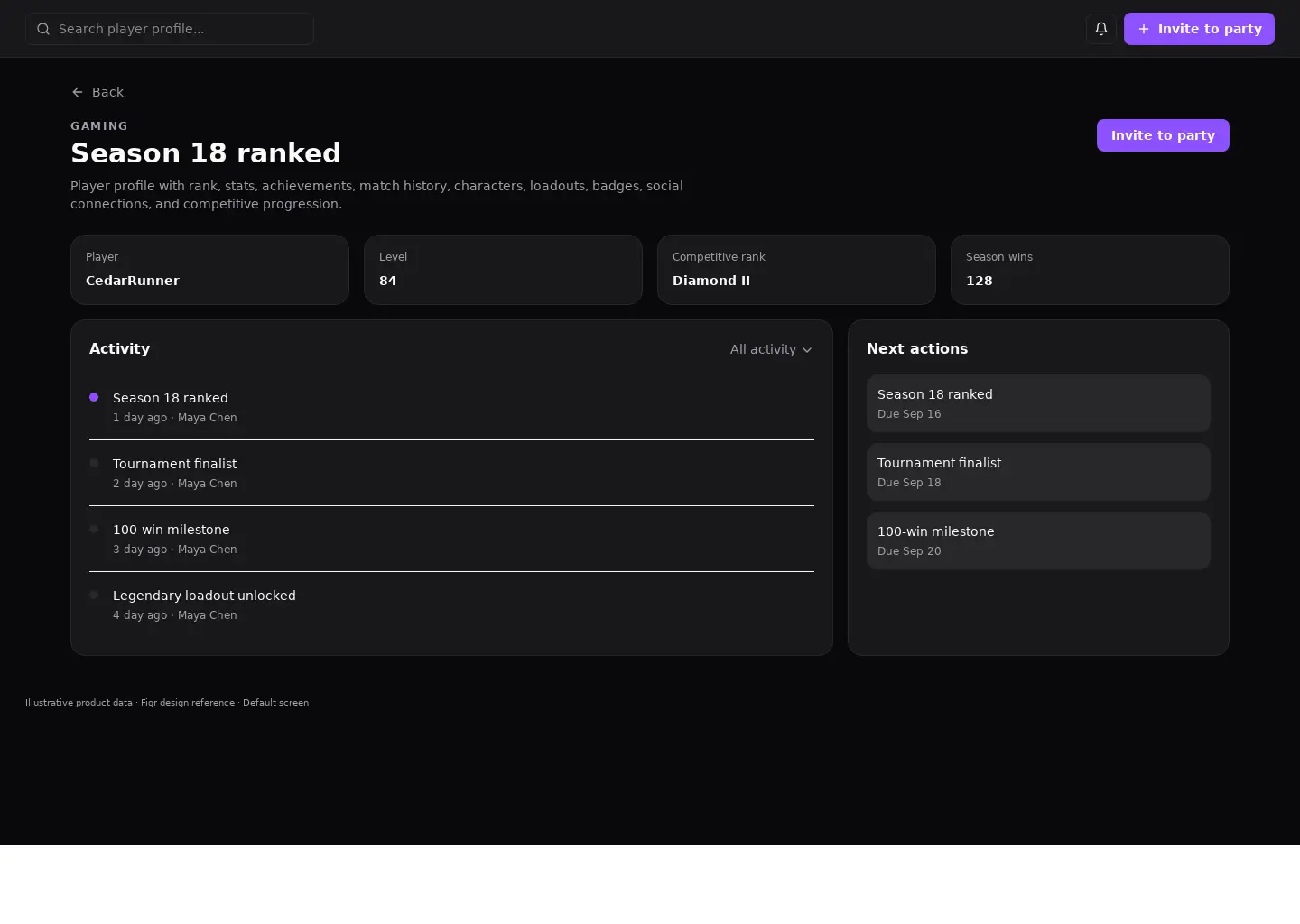
Player profile with rank, stats, achievements, match history, characters, loadouts, badges, social connections, and competitive progression.
This detail reference covers gaming. Its sample screen includes Season 18 ranked and Tournament finalist and the Invite to party action. Adapt its workflow to your product and design system.
BUILD ON THIS
Explore this screen, then bring in your own product and design system to shape the next version.
Detail
Invite to party
Player Profile detail
Default, loading, empty, error, permission, success
Adaptable product UI theme
The player profile screen supports “Invite to party” while keeping profile and matches in view. It should show the current state even when data is missing or access is restricted.
Profile → Matches → Invite to party → Review result
Player Profile detail, Profile, Matches, permission handling, error recovery
Keep the primary record and next action visible while people explore details
In this example, Season 18 ranked is one of the records worth checking. Keep the sample data clearly separate from a live system.
Place ownership, progress, and related information beside the current task
Show the history and permission context that explain a change
Design a player profile screen for an existing gaming product. Use our actual design system, components, and content rules. Cover Profile and Matches, include believable records such as Season 18 ranked, and make "Invite to party" easy to find. Map empty, loading, error, permission, and success states. Keep the result editable in Figma.
KEEP EXPLORING
Browse other product UI examples, compare patterns, and pick the direction that suits your product.