
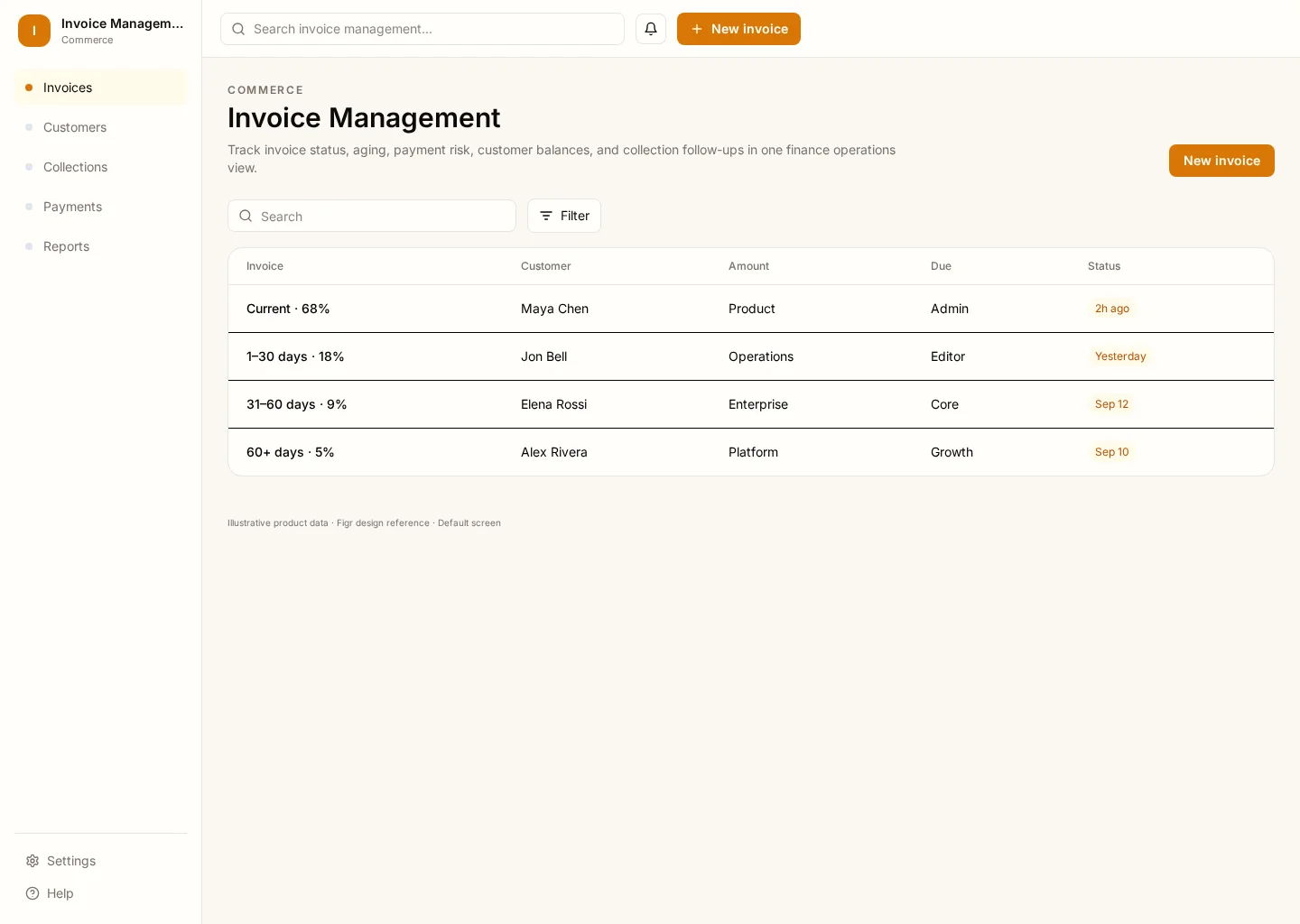
Track invoice status, aging, payment risk, customer balances, and collection follow-ups in one finance operations view. The screen connects Invoices and Customers so product teams can find the “New invoice” action while checking outstanding and overdue.
Use this reference when you need to design this workflow inside an existing product. The example includes practical records such as Current · 68% and 1–30 days · 18%, rather than an empty visual shell.
Analytics
New invoice
Analytics
Default, loading, empty, error, permission, success
Adaptable product UI theme
Product teams need a clear “New invoice” action without losing sight of outstanding, overdue and the affected records. Keep the decision and its outcome clear before moving to the next task.
Invoices → Customers → New invoice → Review outcome
Analytics, Invoices, Customers, Collections, accessible states, contextual actions
Make time ranges, filters and metric units clear. Show the data behind each trend so readers can test what changed.
In this design, people should be able to compare Current · 68% with 1–30 days · 18%. Make outstanding clear, then use overdue to explain whether the next step needs attention.
Before handing this to a designer or engineer, check keyboard focus, error copy, permissions and what happens after they choose the “New invoice” action. The happy path alone is not enough.
Related UI examples: Subscription Billing, Expense Management, Budget Planning.
Design a invoice management screen for our existing software product. Use our real design-system tokens, components and product language. Show Invoices and Customers, include believable records such as Current · 68%, and make new invoice easy to find. Map loading, empty, failure, permission and success states before you create editable high-fidelity screens.