
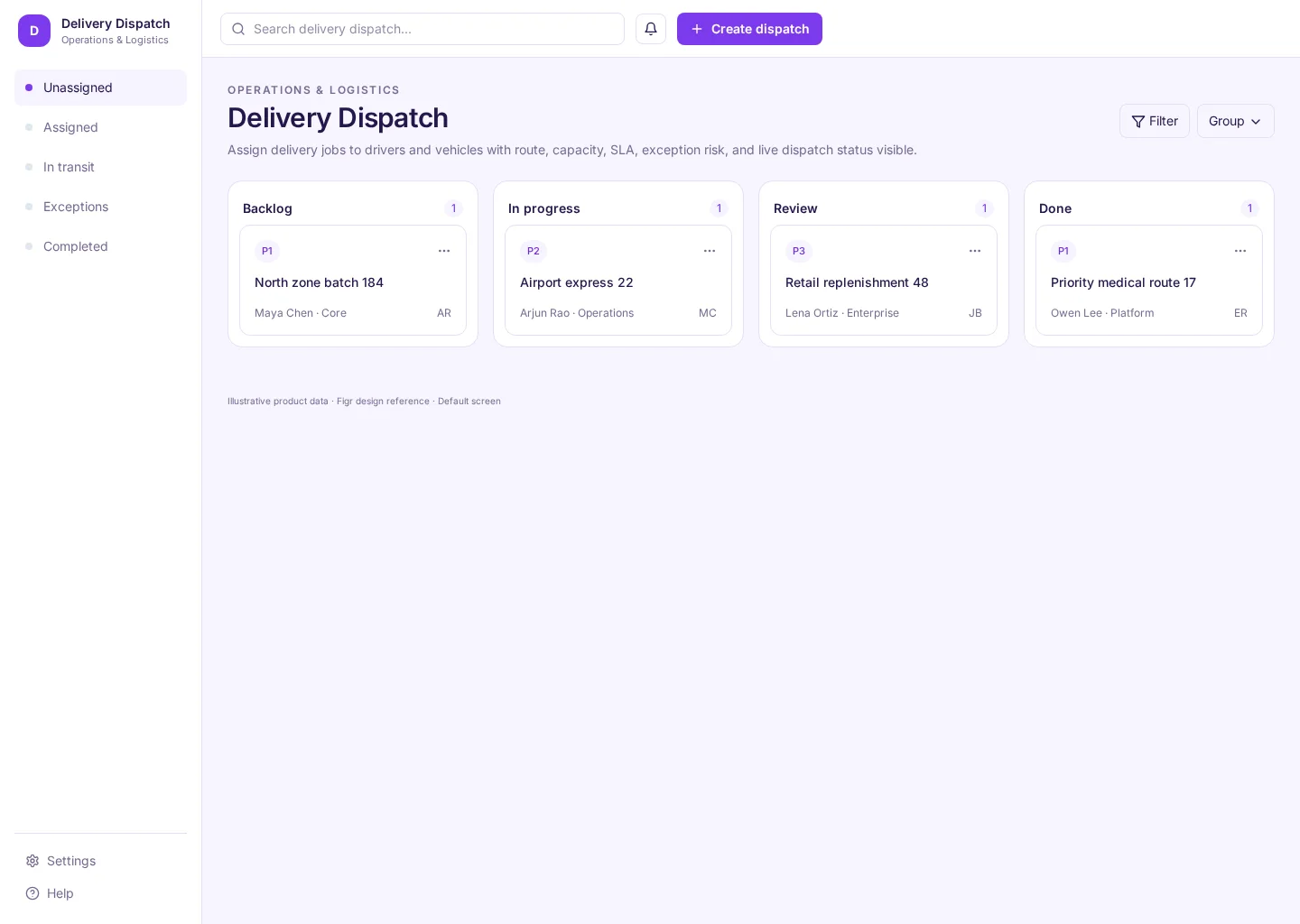
Assign delivery jobs to drivers and vehicles with route, capacity, SLA, exception risk, and live dispatch status visible. This example brings Unassigned and Assigned together so operations managers can find the next task without losing context.
It includes representative records such as North zone batch 184 and Airport express 22. Use the screenshot to study the layout, then adapt its components and product states to your own design system.
Board
Create dispatch
Board
Default, loading, empty, error, permission, success
Configurable product UI theme
Operations managers need to create dispatch while keeping unassigned, drivers active and exceptions visible. The interface should show what changed and who should act next.
Unassigned → Assigned → Create dispatch → Review outcome
Board, Unassigned, Assigned, contextual actions, error recovery
Use real domain stages with a clear owner. Confirm high-impact moves and explain when permissions or missing work block an item.
Pay attention to unassigned and assigned. People need to distinguish North zone batch 184 from Airport express 22. Keep unassigned visible, especially when a record changes owner or status.
Before this screen reaches handoff, verify keyboard focus, empty and permission states, and what happens after someone chooses “Create dispatch”. Make error recovery as clear as the happy path.
Related screen examples to explore next: Fleet Tracking, Procurement Requests, Shipment Planning.
Design a delivery dispatch screen inside our existing product. Use our current components, tokens and content language. Include Unassigned and Assigned views, credible records like North zone batch 184, and a clear “Create dispatch” action. Use our product permissions and show loading, empty, error and success states. Keep the output editable in Figma.