
FIGR / UI TEMPLATE
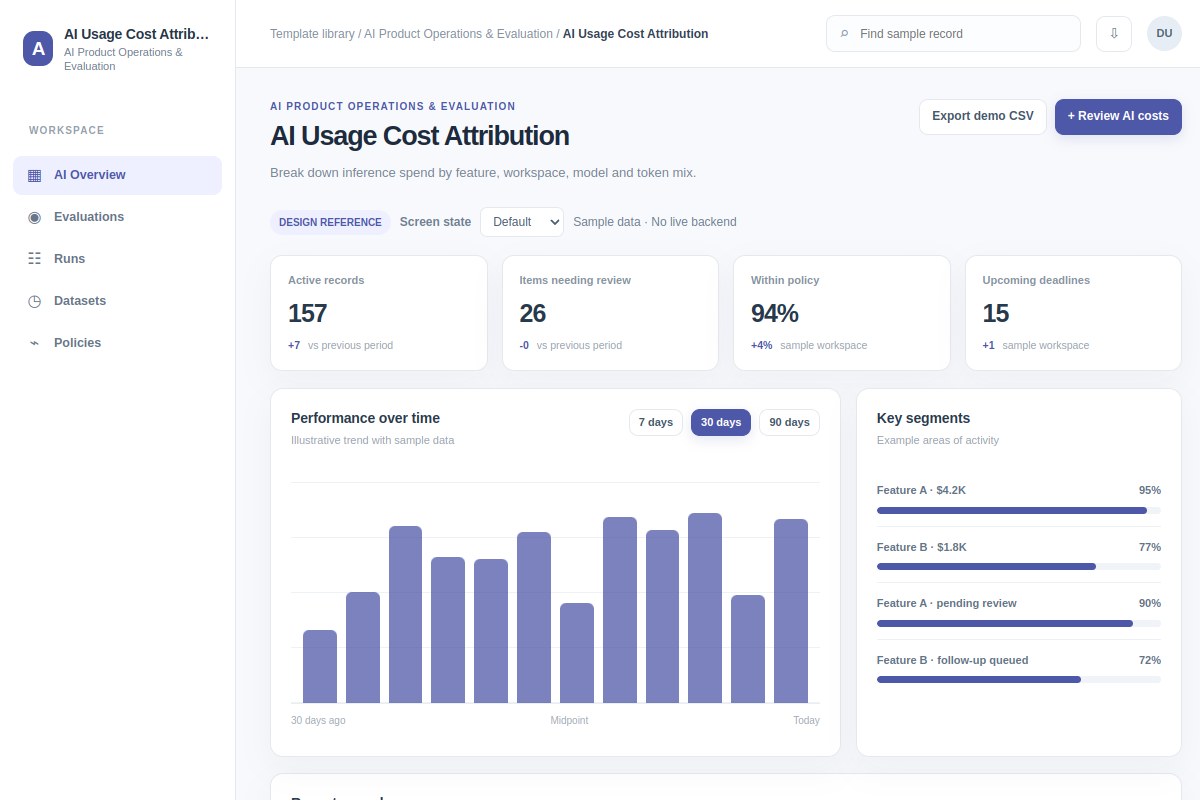
Break down inference spend by feature, workspace, model and token mix.
This analytics template covers ai product operations & evaluation workflows inside an existing product. All people, records and metrics shown are fictional.
BUILD ON THIS
Explore this screen, then bring in your own product and design system to shape the next version.
Analytics
Review AI costs
analytics workflow
Default, Selected, Filtered, Empty, Warning, Success
Independent product UI reference; no external / 1mg design system
Break down inference spend by feature, workspace, model and token mix. The user needs to review ai costs without losing context.
Product areas: AI Overview, Evaluations, Runs, Datasets, Policies. Task fields: AI Product Operations record, Assigned owner, Product area, Review status. Example metrics: Active records, Items needing review, Within policy, Upcoming deadlines.
Default, Selected, Filtered, Empty, Warning, Success. Also cover restricted access, interrupted saves and missing or stale data when relevant.
AI Overview → AI Usage Cost Attribution → Review AI costs
analytics, filters, status, record details, review actions
Show reporting periods, denominators, source freshness and why values changed. Distinguish zero from delayed or missing data.
Review review ai costs with a case such as Feature A · $4.2K. Make room for empty, warning, permission-denied and failed-save states.
Adapt AI Usage Cost Attribution to my existing product and design system. Keep our current screens, components and role rules. Explore default, selected, filtered, empty, warning, success and relevant edge cases before generating editable Figma-ready UI.
KEEP EXPLORING
Browse other product UI examples, compare patterns, and pick the direction that suits your product.