

A feature you thought was greenlit is suddenly blocked. Why? Because a senior counsel you’ve never met just flagged a compliance risk in a two-month-old spec. The project's invisible network just became painfully visible.
This network is your project's true government. It's a web of people with the power to champion, change, or completely cancel your work.
So, who are the stakeholders in a project? The simple answer is "anyone with an interest." But that definition is dangerously incomplete. A project isn't a conveyor belt carrying tasks from start to finish. It’s a switchboard, and each stakeholder holds a connection that can reroute power, light up a new path, or shut the whole thing down.
This is what I mean: their influence is a gravitational force, strongest at the beginning when the cost of change is lowest. Failing to see it dooms your project before a single line of code is written.
Beyond the Textbook Definition
A study on project performance in the National Library of Medicine found something that feels obvious once you hear it: projects with denser stakeholder networks, meaning more connections between stakeholders, showed better financial performance. They were also more likely to finish on budget.
This points to a critical economic truth. Well-managed stakeholder relationships are not about keeping people happy: they are about resource efficiency. A missed stakeholder is future debt.
The basic gist is this: you have to see projects not as linear task lists, but as complex systems of human influence. Last week I watched a PM present a beautiful user flow for a new signup process. The flow itself was a clean sequence of steps. But an overlooked stakeholder from the security team pointed out a critical authentication vulnerability.
One detail.
That one detail triggered a two-week delay. The PM had documented the user's steps but not the invisible network connected to them. For an example of a flow that does consider its network, see this task assignment component prototype, which maps various states and permissions from the start.
Your Map to the Human System
This guide is your map to this network before it maps your project’s fate for you. We'll move beyond textbook definitions to explore the real-world dynamics of who these people are. You will get the tools to navigate these human systems with confidence.
The Two Worlds of Stakeholders: Internal vs. External
A project’s stakeholder landscape isn't a single territory. It is two distinct worlds, each with its own climate, inhabitants, and unwritten rules: the internal world and the external one.
Getting this right is the first step toward having any real influence. It tells you who you need to persuade versus who you need to serve.
Think of your project not as an island, but as a port city. It is where your company's ships (internal stakeholders) dock to trade with the rest of the world (external stakeholders).
The Internal World: Your Organization
Internal stakeholders are the people inside your company whose jobs are directly tangled up in your project's success. Their reality is driven by operational pressures: timelines, resources, headcount, and internal politics. Who are these people? They're the familiar faces in your daily stand-ups and quarterly reviews.
This group includes:
- The Core Team: Your engineers, designers, and fellow product managers. They live the project's details every single day.
- Executive Sponsors: The leaders holding the purse strings, the ones who championed the project. Their main question is always about the return on investment.
- Adjacent Departments: Marketing, sales, legal, and customer support. They depend on what your project delivers to do their own jobs well.
A friend at a Series C company told me she struggled because she treated her Head of Sales like an outsider. She gave him the polished, customer-facing pitch. What he actually needed were the raw details on how a new feature would mess with his team's commission structure. The conversation fell flat because she was speaking the language of the wrong world.
The External World: Everyone Else
External stakeholders live outside your company’s walls, yet they have huge power over whether your project lives or dies. Their concerns are about the actual value, usability, and impact of what you build. They are the ones who decide if you are relevant in the market.
This group can be incredibly diverse:
- Users and Customers: The people who actually use or pay for your product. Their satisfaction is your ultimate report card.
- Vendors and Partners: Other companies whose tech or services your project relies on.
- Regulators and Government: Agencies that enforce the rules, like the bodies that define GHG Protocol standards.
- The Community: The wider public or industry that your project affects.
Misjudging the needs of one world to please the other is a classic recipe for failure. A project that makes engineers happy but leaves customers confused will not last long. The art isn't in choosing one over the other. It is in seeing them as connected parts of a single system.
Your job is to translate the needs of the external world into a language the internal world can understand and act on.
Mapping Your Stakeholder Universe
Knowing who your stakeholders are is one thing. Understanding the invisible lines of power connecting them is another. A simple list of names is just a roster, not a strategy. To navigate the human system behind your project, you need a political map.
This is where you move from a list to a strategy. Think of your stakeholder map not as a chart of people, but as a weather map forecasting political pressure. The Influence-Interest Grid is the tool that shows you where the storms might form. You place every stakeholder on a map with two simple axes: their interest in the project and their influence over it.
This exercise forces you to ask the real questions. Whose opinion carries disproportionate weight? Who quietly holds the purse strings? Who could torpedo your work with a single, skeptical email?
The grid reveals four distinct stakeholder climates, and each requires a completely different approach.
From a Roster to a Weather Map
Plotting this grid transforms that vague list of people into an actionable engagement plan. It is not just theory. A well-mapped and engaged network means fewer surprises and less costly rework down the line. Does that not just make sense?
This map breaks down the typical internal and external stakeholder groups you will need to account for.
The visualization is a great start, clearly separating your internal team from the external world. But the real power comes from layering your influence-interest analysis on top of it.
I watched a PM have a breakthrough with this grid last month. She realized her “quiet” VP of Engineering, whom she’d pegged as low-interest, was actually a high-influence player who felt completely ignored. That one insight, and the course correction that followed, saved the next sprint from being derailed by unspoken technical objections.
When you turn your attention to the external world, especially customers, mastering Voice of the Customer programs is essential. It gives you the raw data to accurately plot their true interest and influence.
Ultimately, this map is not a one-and-done task. It is a living document. For a more detailed guide on creating and maintaining one, check out our complete guide on https://figr.design/blog/what-is-stakeholder-mapping. It gives you a framework for turning this political map into your project’s most valuable navigation tool.
Turning Your Map Into an Action Plan
A stakeholder map is a great start. But it is useless if it just stays on a whiteboard. The real work begins now: turning insights into a concrete plan for engagement.
Your communication should not be a single broadcast to everyone. It is a series of tailored conversations. Your communication plan is less like a script and more like a diplomatic strategy: different channels for different allies.
The basic idea is to match your communication style to the stakeholder’s quadrant on your influence-interest grid. You need a different approach for each group.
Tailoring Your Engagement Strategy
For your ‘Key Players’ (high influence, high interest), you need proactive, one-on-one engagement. Their support is critical, so they deserve your focused attention. This means regular check-ins, pulling them into key decisions, and giving them high-fidelity previews.
For the folks you must ‘Keep Satisfied’ (high influence, low interest), concise, high-level summaries work best. They do not have time for the weeds, but they need to feel confident the project is on track. An executive summary email or a quick dashboard review is often all it takes.
The ‘Keep Informed’ group (low influence, high interest) appreciates broader, less frequent updates. Think sprint demos, internal newsletters, or access to a shared progress tracker. They want to follow along without being in the driver’s seat.
Finally, the ‘Monitor’ group (low influence, low interest) requires minimal effort. A periodic, automated update is usually enough.
Your job is to make each stakeholder feel seen and respected without overwhelming them or yourself. The goal is signal, not noise.
Take an executive sponsor, for example. Reading about a change in a document is abstract. Seeing and feeling that change is concrete.
Showing an interactive Shopify checkout flow like this lets a Key Player immediately grasp the new user experience. It can turn a 30-minute debate into a 5-minute approval.
Making Communication Tangible
Proactive, tailored communication does more than keep people happy. It actively prevents costly rework from late-stage surprises. A well-crafted artifact is often more powerful than another meeting.
Consider your QA lead, a classic ‘Keep Informed’ stakeholder. Instead of scheduling a long meeting, you could share the specific test cases. Sharing the tests for a Waymo trip modification gives them exactly what they need to do their job, without a lengthy handoff.
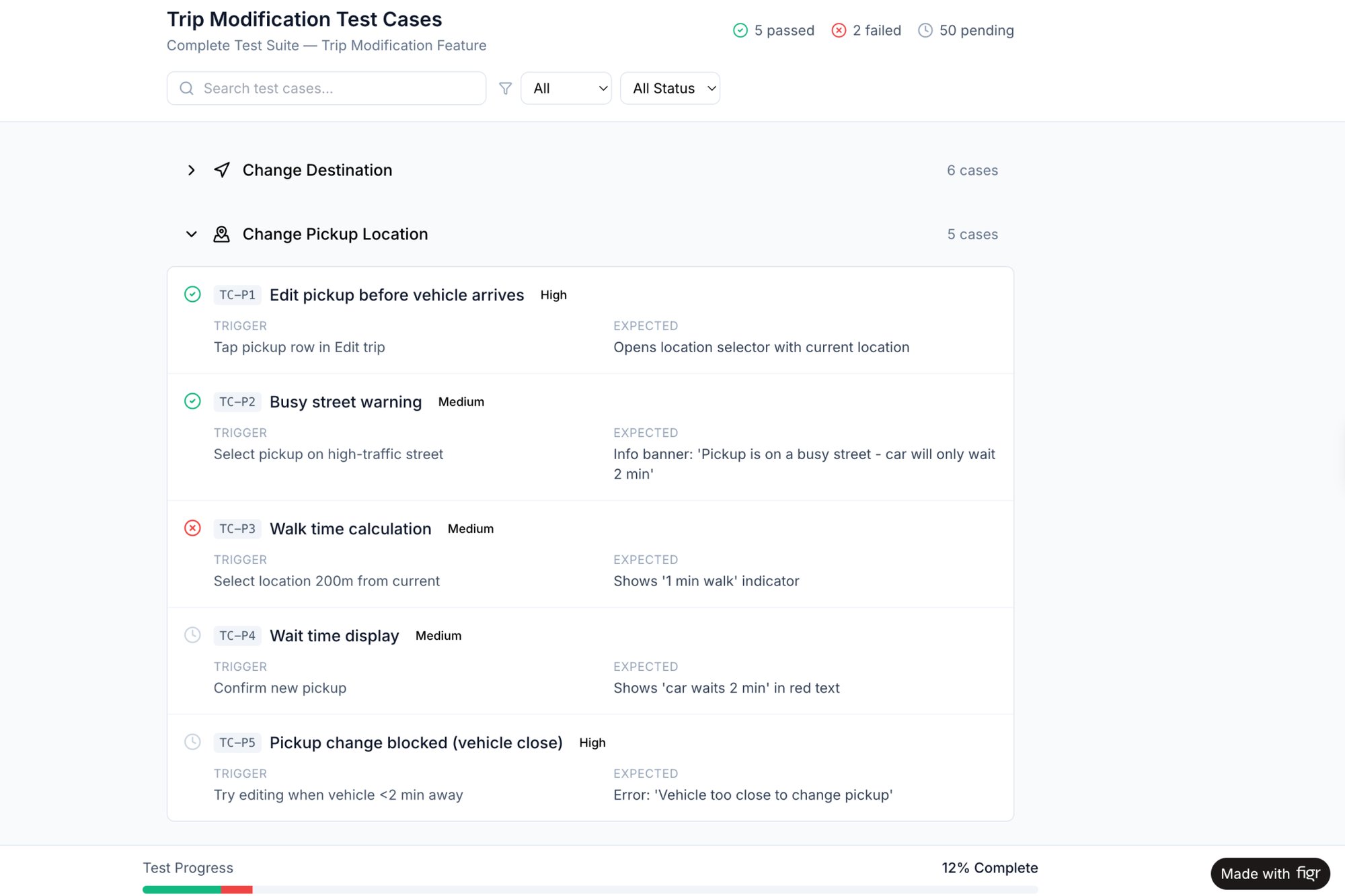
This approach respects their time and gives them a tangible asset. Building a clear communication plan is a core part of any strong project management effort. You can learn more by checking out our guide on creating a project proposal outline. This is how you translate your map into tangible progress.
Common Traps in Stakeholder Management
Projects rarely fail because the idea was bad. They fail because the people were not managed well. Navigating the human network around your project is just as critical as the project plan, yet it is littered with subtle traps.
The most common pitfall? Treating all stakeholders the same. Firing off the same exhaustive update to your CEO and an entry-level support agent is a fantastic way to waste everyone’s time. It’s like using a megaphone for a private conversation. The message gets lost, and no one feels like you are actually talking to them.
The Dangers of Silence and Shifting Priorities
Here is another classic mistake: assuming silence means agreement. Is that stakeholder in the corner of the room quiet because they are on board, or because they are completely disengaged? A silent stakeholder might be confused, quietly disagreeing, or just too swamped to pay attention. You have to actively pull feedback out of them. If you do not, their concerns will surface later, usually at the worst possible moment.
This gap is huge. Research from Content Snare's project management statistics shows that while nearly 80% of project managers want more stakeholder involvement, only 20% are happy with the collaboration they get. This disconnect helps explain why only 35% of projects globally are completed on time and on budget.
But maybe the most dangerous trap is forgetting that stakeholders are people.
Their priorities shift. The buy-in you celebrated can evaporate. A stakeholder’s job is not to care about your project: your job is to make them care, over and over again.
The Constant Work of Translation
You have to constantly translate your project’s progress into the language of their interests. How does this feature release move the revenue needle? Will this UX change bump our user satisfaction scores? Does this new process make the team faster?
If you stop doing this translation work, their attention will drift. Learning to navigate these dynamics is a core skill, and you can go deeper into how to handle stakeholder conflicts and competing priorities to really sharpen it.
The work is not just building the product. The work is also managing the web of human interests that will decide if your product ever sees the light of day.
Failing to see this, and act on it, is the surest way to find your perfectly planned project suddenly and inexplicably dead on arrival.
Your Next Step: A Living Stakeholder Document
Theory is great, but action is what gets projects over the line. Your project's success hinges on moving from knowing this stuff to actually doing it.
So here is your next concrete step: create a ‘living’ stakeholder document for your current project. Do not hunt for the perfect template. Open a doc and start listing every person who has a say, an interest, or a stake in what you are building. This is not a public-facing artifact, it is your private file.
For each name on that list, answer three blunt questions:
- What do they really care about? (Revenue? Risk? User adoption? Their team's reputation?)
- What is their true level of influence over this project's success?
- How will I consistently keep them in the loop and on my side?
This simple exercise is a forcing function. It makes you confront the human dynamics you have probably been sensing all along. If you want more structured approaches, you can find them in our guide on templates for product requirements documents.
Bridge the Gap from Knowing to Doing
This document is the bridge. It takes you from simply knowing who your stakeholders are to actively managing their engagement. The cost of skipping this step is steep. Recent project management data highlights that a staggering 52% of initiatives fail to deliver what they promised because of poor engagement. You can find more data on project performance here.
In short, a project without active stakeholder management is a project left to pure chance.
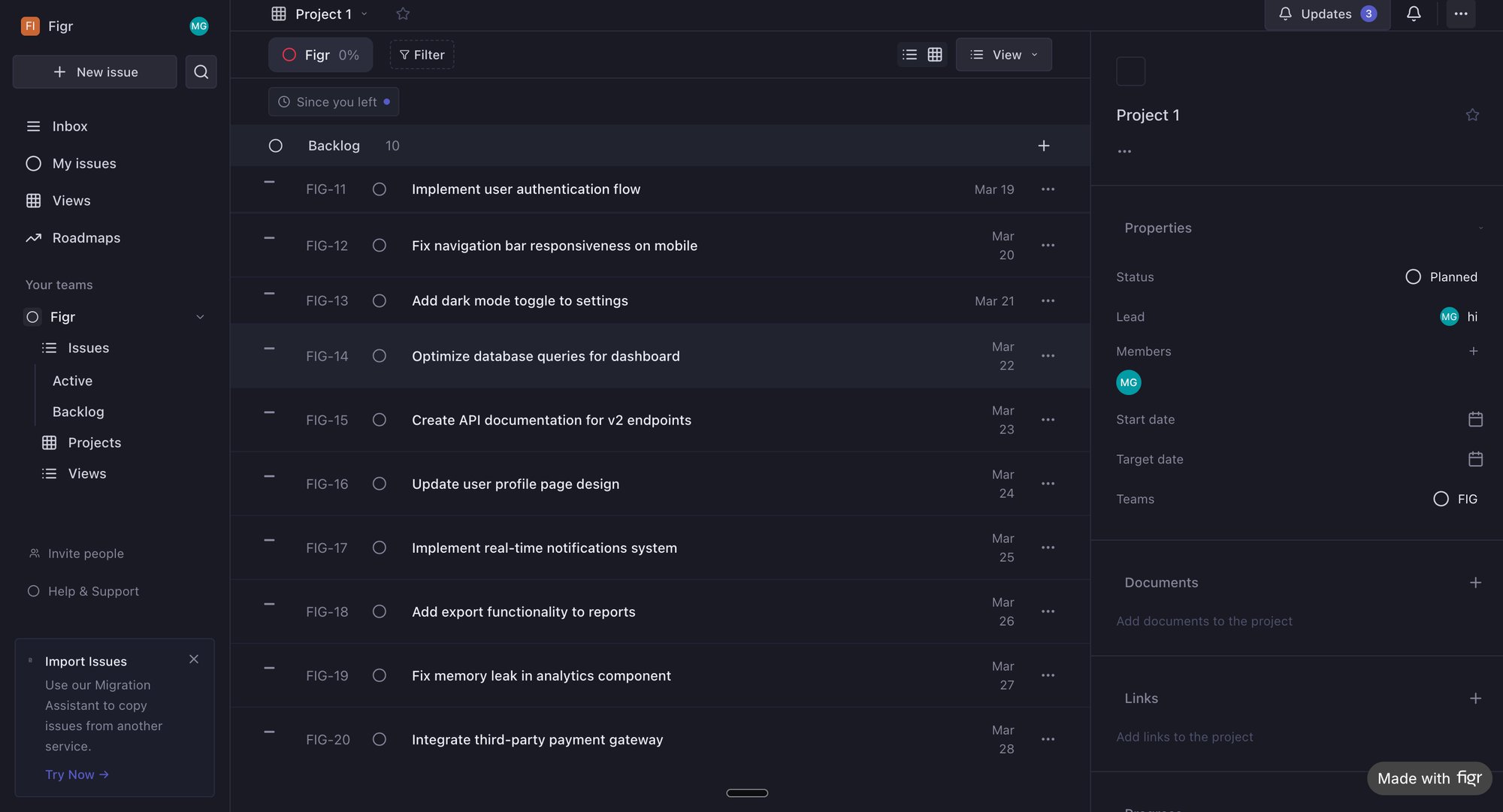
To make this real, find a specific artifact that addresses a key stakeholder's main worry. Let us say your Head of Product is nervous that a new feature will confuse users. Do not just tell them it will be fine. Show them.
Sharing an interactive prototype, like this one we built for a Linear 'Since You Left' Digest, can instantly turn a potential blocker into your biggest champion. It replaces vague assurances with tangible clarity.
Frequently Asked Questions
Navigating the web of people involved in a project always brings up a few tricky questions. Here are some of the most common ones that land on a product manager's desk.
How Often Should I Communicate with Key Stakeholders?
For the high-influence, high-interest folks, your ‘Key Players’, a weekly or bi-weekly sync is a good starting point. The right rhythm really depends on your project's speed and risk. What truly matters is creating a predictable cadence.
The goal is no surprises.
You will want to supplement these scheduled check-ins with real-time pings on critical issues or major breakthroughs. It is a balance. The predictable meetings keep them in the loop, and the spontaneous updates keep them engaged without flooding their inbox.
What Should I Do About a Resistant Stakeholder?
When a stakeholder starts pushing back, your first job is to listen. Resistance is not someone being difficult, it is a signal. It might be a valid concern about risk, a simple misunderstanding, or a fear of losing control.
Set up a one-on-one. Hear them out without getting defensive.
Then, use data and visuals to address their specific points. Showing is always more powerful than telling. Sharing an interactive prototype of a refined UI, like this one for a new dashboard in Intercom, can make the benefits feel tangible and real, not just theoretical.
Can a Person Belong to Multiple Stakeholder Groups?
Yes, and honestly, they usually do. Spotting these overlapping roles is how you understand what truly motivates someone.
Think about a Head of Engineering. They are often, all at once:
- An internal stakeholder who is part of the company.
- A key player on your influence-interest grid.
- Potentially a member of the project’s governance committee that holds the budget.
Recognizing these layers is the secret to communicating well. One day, their feedback might come from their role as a team leader worried about developer burnout. The next, it might come from their role as a budget gatekeeper. Getting a handle on this complexity is what separates good stakeholder management from great stakeholder management. Stakeholder management is one of the most critical skills for PMs. For the broader framework, see our guide on product management best practices.
Ready to turn those stakeholder conversations into something you can actually build? With Figr, you can generate user flows, prototypes, and edge cases that speak directly to your stakeholders' concerns, grounding your decisions in real product context. Design confidently and ship faster with Figr.