It’s 4:47 PM. You're staring at a video call window, trying to project confidence. The interviewer asks, "So, tell me about your favorite product." A simple question, right? But it's not. It’s a probe, a diagnostic tool designed to see how you think. Can you deconstruct a product to its core assumptions? Can you articulate its trade-offs and pinpoint the jobs it's truly hired to do?
Most candidates treat the product manager interview like a memory test, reciting frameworks they read online. The best candidates, however, treat it like a work session. They don't just answer the question, they reframe it, diagnose the underlying problem, and collaborate with the interviewer on a solution. An interview isn’t a quiz: it's a simulation of the job itself.
This is what I mean: it is a glimpse into how you will operate when the pressure is on and the path forward is not clear. So, how do you prepare for a simulation? You don't memorize lines. You master the system.
This guide provides a comprehensive list of product manager interview questions categorized by the core competencies they're designed to test. From vision and strategy to technical acumen and design sense, we will break down what hiring managers are truly looking for. You'll get model answers, frameworks for structuring your thoughts, and specific examples of what separates a good response from a great one.
1. Product Vision & Strategy Questions
The interviewer leans back and asks, "Where do you see this product in five years?" This isn't just small talk. It's a test. Can you see the entire chessboard, not just the next move? Product vision questions are designed to separate tactical thinkers from strategic leaders. They assess your ability to define a compelling direction, align diverse teams around it, and connect every feature back to that North Star.
A product roadmap isn’t a conveyor belt of features, it’s a portfolio of bets against an uncertain future. Last week I watched a PM candidate nail this by framing a simple feature request not as a task, but as a "down payment on our future platform strategy." That single phrase shifted the entire conversation. This is the leap interviewers look for, the ability to zoom out from a single user story to the overarching business narrative.
Why They Ask This
Interviewers use these questions to gauge your ability to think beyond the current sprint. They want to see if you can:
- Articulate a compelling future state.
- Connect product initiatives to business outcomes.
- Handle ambiguity and make difficult trade-offs.
- Communicate and align stakeholders.
How to Prepare Your Answer
Your goal is to demonstrate leadership and foresight. Don't just list features, tell a story about the future you intend to build.
- Structure with STAR: When providing examples, use the Situation, Task, Action, Result method. Describe a situation where the vision was unclear, the task to define it, the actions you took, and the measurable result.
- Translate for your audience: Explain how you'd communicate the vision differently to engineers, executives, and designers.
- Ground vision in data: A vision without evidence is a daydream. Reference how you use artifacts to validate your strategy. For example, analyzing a competitor's user journey, like this Shopify checkout flow redesign, provides data to inform a platform strategy and anchor your vision in real-world user behavior.
2. User Research & Discovery Questions
The team ships the feature. The metrics barely move. Everyone looks at you and asks, "I thought users wanted this?" This is the scenario that keeps product managers up at night. User research questions are designed to see if you have the discipline to prevent it. They test your ability to separate user feedback from user needs, validate assumptions before code is written, and serve as the voice of the customer.
The basic gist is this: they are testing if you can build a product based on evidence, not just intuition. A friend at a Series C company told me she once argued against a high-profile feature request from leadership by presenting five video clips from user interviews. The clips showed customers explicitly struggling with a more fundamental problem. That evidence shifted the roadmap more effectively than any slide deck could.
Why They Ask This
These product manager interview questions aren't just about empathy, they are about risk reduction. Interviewers want to know if you can:
- Validate assumptions rigorously.
- Synthesize diverse data points.
- Prioritize problems, not solutions.
- Translate insight into actionable requirements.
How to Prepare Your Answer
Your goal is to show you are a methodical, evidence-driven product leader. You build for the user, not for the backlog.
- Detail your process: Walk through how you conduct discovery. Mention methods like Jobs-to-be-Done interviews, contextual inquiry, or usability testing. Explain how you decide which method is appropriate.
- Show, don't just tell: Talk about a time your initial hypothesis was proven wrong by user research. This demonstrates intellectual honesty. For instance, you could describe how a team's plan was upended by a UX persona simulation that revealed unexpected user behaviors.
- Quantify the impact: Connect your research activities to business outcomes. "Our user research led us to pivot from feature X to feature Y, which increased activation by 15%." Tools for automating customer interviews can speed this up.
3. Metrics, Analytics & Data-Driven Decision Making
The interviewer says, "The VP of Sales wants to see daily active users go up. What do you do?" This isn't a simple question about a chart. It's a test of your analytical rigor. Can you distinguish a signal from the noise? Metrics questions reveal if you're a PM who chases vanity metrics or one who builds a logical chain from user action to business value.
The core idea is this: they are testing if you are guided by evidence or by opinion. A candidate I interviewed once responded to a metrics question by saying, "My first step isn't to increase the metric, it's to question if it’s the right metric." That reframe demonstrated a deeper level of thinking. It’s about building a dashboard that tells a story, not just a number that looks good on a slide.
Why They Ask This
Interviewers use these product manager interview questions to probe your quantitative skills. They need to know if you can:
- Define success accurately.
- Avoid analytical traps like vanity metrics.
- Prioritize initiatives with data.
- Communicate insights effectively.
How to Prepare Your Answer
Your objective is to show you are a data-informed, not data-led, product manager. Metrics serve the strategy, not the other way around.
- Start with the 'Why': Before defining a metric, articulate the user behavior and business outcome you're trying to influence.
- Use a metrics framework: Mention frameworks like AARRR or HEART to structure your thinking and show a systematic approach.
- Tell a data story: Describe a time a metric surprised you. What was the hypothesis? What did the data show? What action did you take?
- Connect data to real user flows: Ground your metrics in actual user experience. You might say, "To improve conversion, I'd first analyze the Shopify checkout flow, identify drop-off points, and then test a redesigned setup like this one focused on clarity." This ties analytical thinking directly to product improvement.
4. Technical Acumen & Engineering Collaboration
The engineering lead asks, "How would you handle this if we can't build it with our current microservices architecture?" They aren't asking you to write code. They're testing the boundary between your product vision and their technical reality. Technical acumen questions separate PMs who hand off specs from those who co-create solutions.
The basic gist is this: interviewers need to know if you can earn an engineer's respect. I once saw a candidate win over a skeptical engineering manager by discussing a past project not in terms of features, but as a deliberate choice to "invest in our component library to pay down design debt." That showed they understood engineering not as a feature factory, but as a system with its own long-term health.
Why They Ask This
Interviewers use these questions to see if you can be a true partner to the engineering team. They want to confirm you can:
- Understand technical feasibility and constraints.
- Communicate effectively between technical and business stakeholders.
- Make informed trade-offs between new features and technical debt.
- Facilitate solutions with engineering, not dictate them.
How to Prepare Your Answer
Your goal is to show you are a credible partner to engineering. How you build is as important as what you build.
- Frame trade-offs as investments: Don’t frame technical debt as a problem. Frame it as a strategic decision to prioritize speed, then explain how you plan to "pay it back" with dedicated refactoring sprints.
- Speak in outcomes, not implementation: Show you define the "what" and "why," but trust engineers with the "how." For instance, "My goal was to reduce latency by 50%; I left it to the team to decide between caching strategies or a database optimization."
- Demonstrate your process: Talk about how you use artifacts to create clarity. Explaining how you map out all potential failure states, like in this Dropbox upload flow analysis, shows you proactively de-risk projects and reduce engineering surprises. Detailing this in a PRD is even better, as shown in this guide on how to write an effective PRD.
5. Design Thinking & UX Sensibility Questions
"Critique this feature for me." The interviewer slides a phone across the table showing their app. This isn't about aesthetics. It’s about depth. Can you see beyond the pixels to the underlying user psychology? Design thinking questions test whether you are a partner to the design team or just a ticket-passer. They reveal your capacity to advocate for the user.
The basic gist is this: they are evaluating if you can speak the language of design and feel the user’s pain. A PM I coached recently faced this. Instead of just listing UI flaws, she mapped the user's emotional state at each step of the flawed flow. She didn't just critique the design, she diagnosed the empathy gap. That's the pivot from observer to owner.
Why They Ask This
Interviewers use these questions to see if you can be the user's champion in the room. They want to know if you can:
- Articulate design principles like cognitive load and information hierarchy.
- Collaborate effectively with designers through constructive feedback.
- Prioritize user needs against pressure to ship faster.
- Think in systems, understanding how one component affects the whole journey.
How to Prepare Your Answer
Your goal is to show you are a thoughtful product builder, not just a feature manager. Demonstrate empathy and structured thinking.
- Use a critique framework: First, state the product's likely goal and target user. Then, walk through the user flow, pointing out areas of success and friction. Finally, suggest hypothesis-driven improvements.
- Tell a story of advocacy: Prepare a story about a time you fought for a design decision that improved the user experience, even if it meant a delay. For example, delaying a launch to conduct an accessibility audit and implement fixes for visually impaired users.
- Connect design to business outcomes: Explain how a better UX leads to higher engagement, retention, or conversion. For instance, you could discuss how simplifying a complex process, like the Wise card freeze flow, builds user trust and reduces support tickets.
For a deeper dive, read about the importance of design thinking in modern product development.
6. Roadmap Planning & Prioritization Questions
The Head of Sales wants a custom dashboard. Engineering is pushing to pay down technical debt. Marketing is begging for a feature for the next campaign. Welcome to Tuesday. Roadmap planning questions test your ability to be the calm center of this storm. They probe your methods for turning a cacophony of requests into a coherent, defensible plan.
The basic gist is this: they want to see your framework for making tough calls. It’s less about picking the "right" feature and more about demonstrating a repeatable, logical process. A candidate once explained their prioritization not as a list, but as an "investment portfolio" balancing short-term wins with long-term strategic bets. That metaphor instantly showed they understood the economic reality of product management.
Why They Ask This
Interviewers use these questions to see if you can operate under constraints and lead with clarity. They are assessing if you can:
- Employ a logical framework like RICE or MoSCoW.
- Balance competing needs of user value, business impact, and technical feasibility.
- Communicate difficult decisions with data and empathy.
- Maintain strategic alignment with company goals.
How to Prepare Your Answer
Your goal is to show you are a strategic thinker who uses data and process to build consensus, not just a feature gatekeeper.
- Pick a framework and own it: Be ready to walk through a prioritization framework. Explain a real scenario where you used it, why you chose it, and the outcome.
- Tell a story about saying 'no': Describe a time you had to deprioritize a popular request. Explain your reasoning and how you communicated the decision.
- Show, don't just tell: Explain how you translate insights into roadmap decisions. For example, after analyzing user friction, you might map a new Shopify checkout flow to visually justify prioritizing its redesign.
- Communicate like a leader: Explain how you would present the roadmap to different audiences, tailoring the narrative to what each values most. For more detail, learn how to prioritize a product backlog with a structured approach.
7. Handling Ambiguity & Problem-Solving Questions
The interviewer gives you a vague prompt, like "How would you improve airport security?" This isn't a lapse. It's a deliberate test. Product management is the art of creating clarity from chaos, and these questions are designed to see how you navigate the fog. They want to observe your thinking process, not just your final answer.
The basic gist is this: they are testing your ability to structure an unstructured problem. I once saw a candidate draw a decision tree on the whiteboard, starting with broad assumptions and branching into specific, testable hypotheses. That act of externalizing their thought process was more impressive than any "correct" answer could have been. It showed they could take a messy reality and impose a logical framework on it.
Why They Ask This
Interviewers use ambiguity to simulate the real-world environment of product development. Perfect information is a luxury you never have. They want to see if you can:
- Deconstruct a complex problem into smaller components.
- Ask insightful questions before jumping to solutions.
- Formulate and test hypotheses.
- Think on your feet and maintain a logical flow under pressure.
How to Prepare Your Answer
Your goal is to showcase a structured, first-principles approach. The process matters more than the solution. When confronting ambiguous scenarios, mastering how to answer difficult interview questions is crucial.
- Verbalize your framework: Start by stating your approach. "First, I'd clarify the goal. Then, I'd identify the key users. After that, I would brainstorm solutions."
- Ask clarifying questions first: Before you propose an idea, clarify. "When you say engagement is flat, which specific metric are we focused on?"
- Show, don't just tell, your process: Explain how you would reduce ambiguity. You could reference mapping out all potential failure modes for a critical user action, like the edge cases for a Dropbox file upload, to turn a vague problem into concrete scenarios.
- Think out loud: The interviewer needs to follow your train of thought. Talk through your assumptions, potential dead ends, and how you're course-correcting in real time.
8. Cross-functional Leadership & Communication Questions
An interviewer asks, "Tell me about a time you disagreed with an engineer," not to hear gossip, but to test your connections. Can you lead without direct authority? Can you persuade a skeptical stakeholder? These questions are designed to find out if you are a collaborator or a dictator, a conductor or just another instrument.
The basic gist is this: they are testing your ability to be the organizational glue. A PM candidate once described a tense situation with marketing over a launch date. Instead of digging in, she framed it as, "We have a shared problem: hitting our revenue goal. Your timeline and my feature set are just two different hypotheses. Let's test them." She turned a confrontation into a collaboration. That’s the pivot from manager to leader.
Why They Ask This
Interviewers use these questions to see how you operate within the complex social fabric of a company. They want to know if you can:
- Influence without authority.
- Communicate with clarity to different audiences.
- Navigate conflict productively.
- Build trust and psychological safety.
How to Prepare Your Answer
Your goal is to show you are a multiplier, not a lone wolf. Demonstrate how you make every team around you more effective.
- Structure with STAR: Describe a Situation where teams were misaligned, the Task of bringing them together, the specific Actions you took, and the Result.
- Emphasize empathy: Explain how you work to understand the goals and constraints of other functions. Show you see their perspective.
- Show, don't just tell, alignment: Ground your communication in tangible artifacts. Explain how you use tools to create a single source of truth. For instance, a shared artifact like these test cases for a fintech feature can keep product, engineering, and QA perfectly synchronized on what "done" means.
9. Business Acumen & Commercial Understanding Questions
The CFO asks, "What’s the ROI on this feature?" and a dozen eyes turn to you. A great product that can't make money is a hobby. Business acumen questions are the litmus test for whether you think like a business owner or a feature builder. They probe your understanding of the P&L and your ability to connect a user story to a balance sheet.
The basic gist is this: they are checking if you can translate product value into financial value. I once heard a candidate answer a pricing question by saying, "We aren't selling a button, we're selling faster time-to-market. The price should reflect the cost of delay we're eliminating." That one sentence demonstrated a deep understanding of value-based pricing. It’s about connecting the dots from customer pain to company profit.
Why They Ask This
Interviewers want to confirm you can be trusted with the economic engine of the product. They need to know you can:
- Understand the company's business model.
- Connect features to financial impact.
- Think about profitability using concepts like CAC and LTV.
- Develop a go-to-market strategy.
How to Prepare Your Answer
Demonstrate that you view the product as a sustainable asset for the business, not just as a solution for users.
- Tell a commercial story: Frame a past project in business terms. Don't just say "we increased engagement." Say, "By increasing daily engagement by 15%, we reduced churn by 3%, which protected $50k in ARR."
- Think in levers: Talk about the different levers you can pull: pricing, packaging, customer segmentation. How would you decide which one to use?
- Ground your strategy in metrics: Show how you would model how a streamlined Shopify checkout setup flow could decrease merchant onboarding friction, lowering CAC and accelerating the time to first revenue.
10. Adaptability, Learning & Growth Mindset Questions
A competitor just launched the exact thing you've spent six months building. The market zigs when your entire roadmap was built for it to zag. Adaptability questions are not about avoiding mistakes. They are about what happens after the plan shatters. They test for intellectual humility and a relentless drive to learn.
The basic gist is this: interviewers are probing for your capacity to evolve. A PM I coached was asked about a failure. Instead of just describing the mistake, she walked through how the failure led her team to fundamentally change their spec review process. That's the pivot from recounting history to demonstrating growth. This is what interviewers want to see, evidence that you metabolize failure into fuel.
Why They Ask This
Interviewers use these questions to see if you are resilient. They want to know if you can:
- Learn from failure without ego.
- Stay current with new tools and methodologies.
- Change your mind when presented with new evidence.
- Embrace new technology to improve processes.
How to Prepare Your Answer
Your goal is to show you are not a static entity but a dynamic one. Frame your past experiences as learning loops.
- Tell a pivot story: Describe a time you changed your mind on a strategic decision. Detail the initial belief, the new data that challenged it, and how you led the team through the change.
- Show your learning process: Name the specific newsletters, podcasts, or thought leaders you follow. Explain how a specific insight influenced a recent decision. A good starting point is the discussion in Thinking, Fast and Slow by Daniel Kahneman on cognitive biases.
- Demonstrate tool adaptability: Explain how you'd use a tool like Figr to quickly map the edge cases for a complex user flow, such as a multi-step checkout process, ensuring a more resilient product from day one.

Your Next Move: From Theory to Practice
We've journeyed through the product management interview landscape. The common thread connecting every one of these product manager interview questions isn't a secret formula. It's a way of thinking. Interviewers are pressure-testing your mental models. They want to see the architecture of your thought process, not just the final blueprint.
In short, preparing for these interviews is less like studying for a test and more like training for a marathon.
It’s about building the intellectual muscle to deconstruct any problem, articulate a user-centric narrative, and ground your strategy in tangible business outcomes. Each question is a different piece of exercise equipment designed to test a specific muscle: your empathy, your rigor, your leadership, your creativity.
From Passive Knowledge to Active Demonstration
The gap between knowing the frameworks and executing them under pressure is where most candidates falter. This is why the most critical step you can take isn't to read another article.
It's to start doing.
The goal is to move from reciting answers to revealing your process. An answer is a static artifact. A process is a living system that can adapt to any new challenge.
Think of it like an architect's portfolio. Your interview is your live portfolio presentation. You need artifacts. For a deeper dive into common prompts, explore these resources on the top product manager interview questions to round out your knowledge, but remember that knowledge must be applied.
Your Actionable Next Steps
Stop being a theoretical product manager and start being a practical one, right now. Here's your homework:
- Pick One Question: Choose a "Design a product for X" question from our list.
- Create an Artifact: Open a tool and build a tangible piece of your response. Map out the user flow. Don't just describe the happy path, think through the unhappy ones. What happens when the network fails? An exploration of Dropbox’s upload failure states is a great example of this, mapping out everything from permission errors to size limit conflicts. You can see the full edge case map here.
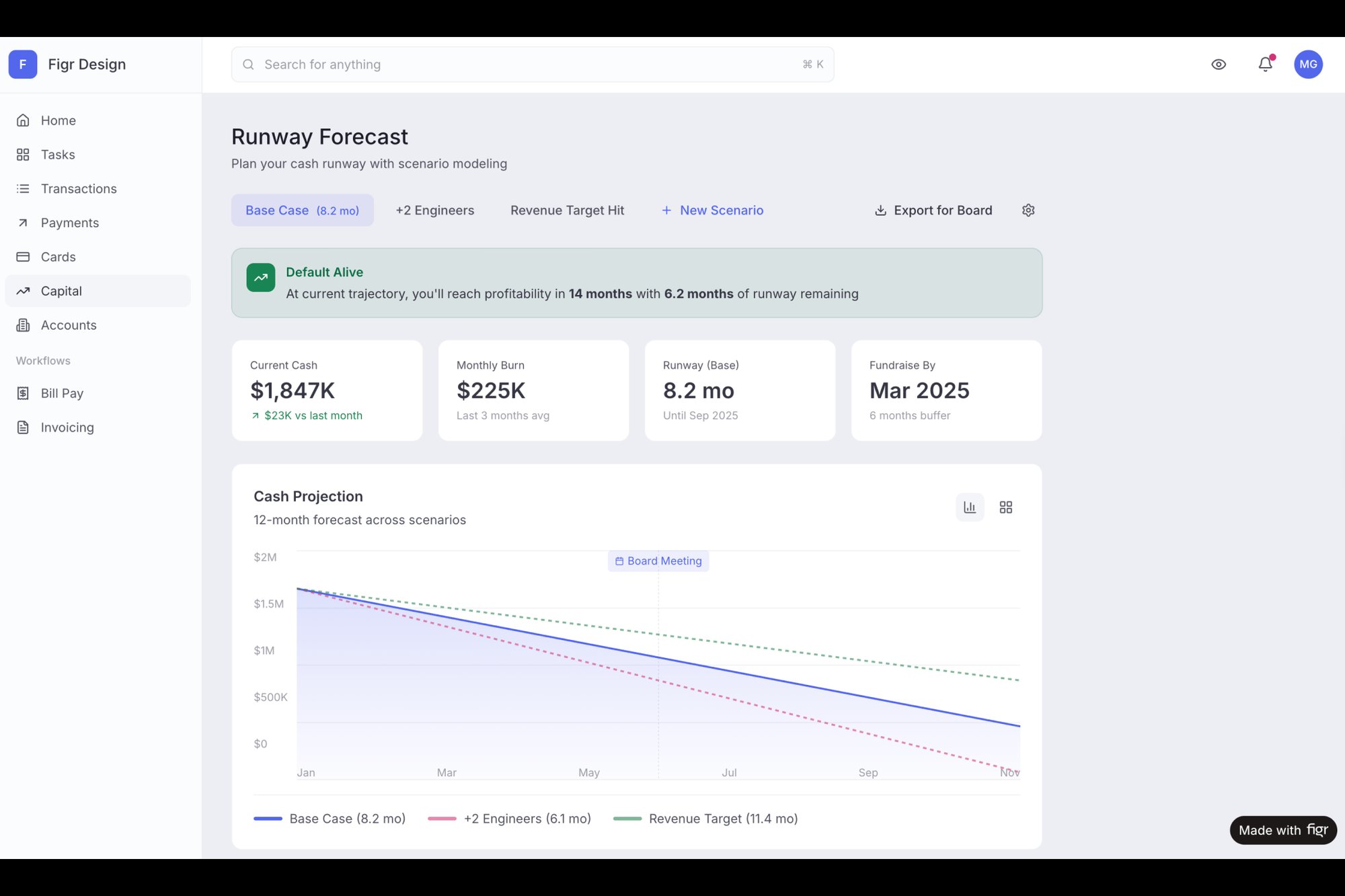
- Prototype Your Idea: For a "How would you improve product X?" question, don't just talk. Mock it up. A simple prototype, like this one reimagining a Mercury runway forecasting UI, communicates more in 30 seconds than a five-minute monologue. It shows you can translate ideas into reality.
By building these small examples, you are rehearsing the job itself. Walk into that room with more than just words.
Walk in with proof.
The best way to practice building is to build. Instead of just talking about user flows and prototypes, bring them to life in minutes with Figr. Use it to turn your interview prep from abstract theory into concrete artifacts that you can actually show.
Try Figr for free and walk into your next interview as a builder, not just a candidate.