

Your analytics report just landed and it's a gut punch. A 40% drop-off on the new checkout page. The numbers tell you what happened with painful clarity, but they are completely silent on why. And that's the moment your dashboard hits a concrete wall.
You have a crisis, but no map to the solution.
This is the precise moment for focus groups market research. But don't think of it as a formal, stuffy procedure. Think of it as a directed conversation. A deliberately structured discussion designed to pull out the human context your metrics miss: the hesitations, the small frustrations, and the subtle ways people influence each other's decisions. It’s a qualitative research method, meaning it’s about exploring the feelings, opinions, and group dynamics your analytics can never show you.
From Heatmaps to X-Rays
Analytics are your heatmap. They show you where users click and where they abandon ship. This surface-level view is critical, but it's only half the story.
A focus group is the X-ray.
It goes deeper, revealing the hidden structure beneath user behavior. The fractures and weak points that cause the surface-level problems.
A focus group is the X-ray for user behavior. It provides the depth to understand the 'why' behind the clicks, guiding you toward solutions that actually resonate with people.
This depth gives you the clarity to stop observing problems and start understanding their roots. You start to see friction points not as abstract metrics, but as shared human experiences. The whole point of primary customer research is to close the gap between what you build and what people actually need.
A Method Born from Necessity
This isn't a new idea. The method was forged during World War II, when sociologists Robert K. Merton and Paul Lazarsfeld were trying to figure out if anti-Nazi radio broadcasts were actually working. They quickly realized individual surveys only gave them flat, one-dimensional answers.
But when they got people talking in groups, something clicked. They uncovered far deeper emotional responses and motivations as participants built on, and reacted to, each other’s comments. The group dynamic itself generates data. A friend at a SaaS company told me a story about this last month. A focus group for a new scheduling feature went off the rails, turning into a heated debate about professional etiquette. The feature worked flawlessly, but the group’s conversation revealed it broke an unspoken social rule. Analytics would never have caught that.
The conversation exposed the real barrier.
This is what I mean: you can translate these conversations into action. For instance, as people talk about a confusing checkout flow, you could use a tool like Figr to map their journey, turning abstract complaints into a concrete artifact like this new setup flow for Shopify. It's a powerful way to bridge the gap between conversation and action.
Designing a Group That Delivers Signal, Not Noise
A successful focus group isn't a casual chat. It's a carefully engineered environment for discovery, much like a recording studio where every microphone and panel is calibrated to capture a pure performance. If the setup is wrong, all you get is static. A flawed design will always produce flawed data.
Just last week, I watched a product manager recruit "power users" for a new enterprise feature. The feedback was glowing, but the feature ultimately flopped. Why? The power users loved complexity, but the target market, the actual growth audience, needed simplicity. The recruitment was imprecise, so the feedback was just noise.
Thoughtful design is the difference between hearing what you want to hear and learning what you need to know.
The Architecture of a Session
Designing an effective focus group hinges on four critical choices. Get these right, and the conversation will yield genuine insights, not just a collection of opinions. Each choice stacks on the others, building a foundation for clear, actionable feedback.
These are the pillars of your design:
- Participant Recruitment: This is about finding your precise user, not just a warm body. It requires a detailed screening process to ensure participants match the exact demographic, psychographic, and behavioral profile of the segment you're studying.
- Sample Size: The goal is conversation, not a survey. The sweet spot is 6 to 8 participants. Any fewer, and the conversation can stall. More than ten, and quiet individuals get lost while dominant voices take over.
- Moderation Technique: The moderator is a neutral guide, not a participant. Their job is to steer the conversation toward your research objectives without influencing the answers, creating an environment where people feel safe to speak their minds.
- Script Design: Your questions are the keys. A well-designed script starts broad to build comfort, then moves to specific, open-ended questions that invite stories and reveal motivations, not just "yes" or "no" answers.
This diagram shows how focus groups fit into the broader data landscape, providing the qualitative "why" behind the quantitative "what."
The visualization neatly separates data into two worlds. Quantitative tells you what happened; qualitative, the domain of focus groups, explains the human experience behind it.
Recruiting for Precision, Not Convenience
Recruitment is the single most common point of failure. Vague criteria lead to vague insights. As Erika Hall notes in her book Just Enough Research, the goal is to find the people whose problems you are actually trying to solve.
Think of it like casting a play. You wouldn't cast a comedian for a dramatic role just because they were available. You need participants who genuinely represent the user segment in question.
For example, if you're testing a new fintech feature for first-time investors, recruiting seasoned day traders will give you expert feedback that is completely irrelevant to your actual users. You can learn more about structuring these studies in our complete guide to user research methods. A detailed recruitment screener is non-negotiable. It has to filter for more than just age and location. It needs to verify behaviors, past experiences, and attitudes that are truly relevant to your research question.
This precision is what turns a simple chat into a powerful research instrument. When you get the right people in the room, you get signal.
Walking the Moderator's Tightrope
You can nail recruitment, script the perfect questions, and book an amazing venue. But if your moderator drops the ball, the entire focus group fails. It’s that simple.
The moderator's job is the most critical and human part of the equation. It's a role that demands a delicate balance. It's like walking a tightrope between encouraging a natural, free-flowing conversation and gently steering it toward your research objectives.
Think of them as a documentary filmmaker. They show up with a story they want to explore, a core question to answer. But they can’t just hand their subjects a script. Their real work is creating an environment of trust where the story reveals itself through authentic, unprompted moments. A great moderator does the exact same thing.
This balance is the heart of their craft.
The Art of Guided Discovery
A moderator isn't a participant. They aren't a host, either. They are a neutral facilitator, and their primary tool is active listening. This means they aren't just waiting for a gap to speak; they are absorbing what is said, how it’s said, and what remains unspoken.
I once observed a focus group for a financial planning app where one participant, a classic dominant personality, took over the first 20 minutes. He sang the praises of a really complex dashboard. Instead of cutting him off, the moderator skillfully redirected.
"That's a really interesting take," she said. "I'm curious, for others in the group who might be less familiar with these kinds of charts, what’s your first impression?"
That one pivot accomplished three things instantly:
- It validated the loud speaker, making him feel heard.
- It created a clear opening for quieter members to offer a different view.
- It pulled the conversation back to the core research question about initial usability.
That's the tightrope walk in action. It’s a skill that goes way beyond reading questions off a script. The goal is to create psychological safety, an atmosphere where people feel comfortable enough to disagree and share candid thoughts without fearing judgment. Mastering these skills is a key part of any serious UX research course.
The High Cost of a Bad Moderator
This brings us to the economics of moderation. Why does this role matter so much? Because a poorly run focus group is an expensive way to collect biased, misleading data.
A bad session isn’t just a waste of time and money; it’s an engine for bad decisions. It gives you the confidence of data without the validity of truth.
Think about the incentives. A product team just invested thousands of dollars and weeks of planning into this session. They are hungry for answers. If the moderator lets one loud person steer the whole group, the team might walk away with a "clear" insight that actually represents just one person's opinion. This kind of false positive can send a product team down a very costly wrong path.
In short, investing in a skilled moderator isn’t a luxury. It’s a critical risk-mitigation strategy. Their ability to manage group dynamics, draw out quiet participants, and follow unexpected threads is what turns a chat into a source of powerful, actionable insight.
How to Navigate the Pitfall of Groupthink
It’s the perfect storm of positive feedback. You've just wrapped a series of focus groups for a bold new product idea. Everyone loved it. The quotes are glowing, the consensus is clear, and the team is buzzing. But a quiet, nagging question hangs in the air: was it too perfect?
Focus groups have a well-known vulnerability. A hidden current that can pull even the most carefully designed study off course.
It's called groupthink.
This is the tendency for people in a group to conform to the dominant opinion, prioritizing harmony over an honest critique. It’s a natural human instinct, but in focus groups market research, it’s a silent killer of genuine insight. The loudest voice, not the most common feeling, can end up steering the ship.
The New Coke Disaster: A Case Study in Groupthink
The most infamous example is the 1985 New Coke debacle. Coca-Cola invested millions in over 200,000 taste tests and dozens of focus groups. The data all pointed to consumers preferring a sweeter formula. Yet when they launched it, the public backlash was massive and immediate.
Analysts later pointed to classic groupthink. A few dominant voices in each session likely swayed others, and the format failed to capture the deep-seated brand loyalty people had to the original Coke. As you can read in this detailed exploration of the failure, the research measured taste preference, not cultural identity.
This story isn't just a historical footnote. It’s a critical lesson on the limits of group discussion. When we ask people what they think in a group, we get their opinion filtered through social desirability bias, a desire to be agreeable, and the influence of others.
From Consensus to Robust Debate
So how do you fight this? How do you make sure your focus group is a forum for real debate, not just a machine for easy consensus?
The key is to think like a jury. A jury's goal isn't a quick, unanimous vote. It's a structured process of argument and evidence review, designed to surface disagreement. Your focus group should run on a similar principle.
Here are concrete tactics to build this into your sessions:
- Individual Brainstorming First: Before opening the floor for discussion, give everyone two minutes of silent time to write down their thoughts. This ensures initial ideas are authentic, not just reactions to the first person who speaks.
- Actively Solicit Dissent: A moderator’s job isn’t just to ask questions but to create balance. They should use phrases like, "Does anyone see it differently?" or "We've heard a few people agree on this. I'm curious to hear an alternative view."
- Round Robin for Key Questions: For your most important questions, go around the table and ask each person to respond one by one. This stops dominant personalities from setting the tone early and gives quieter participants a dedicated space to contribute.
The objective of a focus group is not to achieve consensus. It is to understand the range and depth of opinions, especially the ones that conflict.
A friend who runs research at a Series C company told me he has a rule: if a focus group ends with everyone in perfect agreement, he considers it a failure. That uniformity is a red flag.
The goal is to turn potential pitfalls into productive artifacts. For instance, if a discussion reveals a user flow is confusing, map it out. You can use a tool like Figr to instantly visualize the complex path users are describing, like in this exploration of Zoom's network degradation states. This turns a messy conversation into a clear artifact engineering and design can act on.
Turning Messy Transcripts Into Actionable Insights
The session is over. You’re left with hours of recordings, a pile of scattered notes, and a transcript that feels a mile long. The energy of the live discussion is gone. Now what?
This is where many research efforts die on the vine. Raw data from a focus group isn't insight. It's potential insight, buried in messy, unstructured conversation.
Your job isn't to be a stenographer. It’s to be an archaeologist. You have to sift through the raw material, clean off the conversational dirt, and piece together the fragments to tell a story. A single shard is just a piece of pottery. Piecing them together reveals the shape of the entire vessel.
The Three-Step Excavation Process
The basic gist is this: you’re not just transcribing, you’re systematically looking for patterns, themes, and powerful quotes that bring the data to life. This process is often called thematic analysis. It’s less about counting words and more about identifying recurring ideas.
- Transcribe and Familiarize: First, you need a clean transcript. To speed things up, you can use specialized voice to text transcription software. Once you have the text, read through it while listening to the recording to catch tone, emotion, and hesitation.
- Code and Categorize: This is the deep work. Go through the transcript line-by-line and "code" it by highlighting key quotes, ideas, and pain points. As you find them, group related codes into broader categories, a technique known as affinity mapping. You might end up with buckets like "Pricing Concerns," "Onboarding Confusion," or "Feature Wishlist." One powerful artifact from this stage can be a set of clear test cases for a new feature based on real user scenarios.
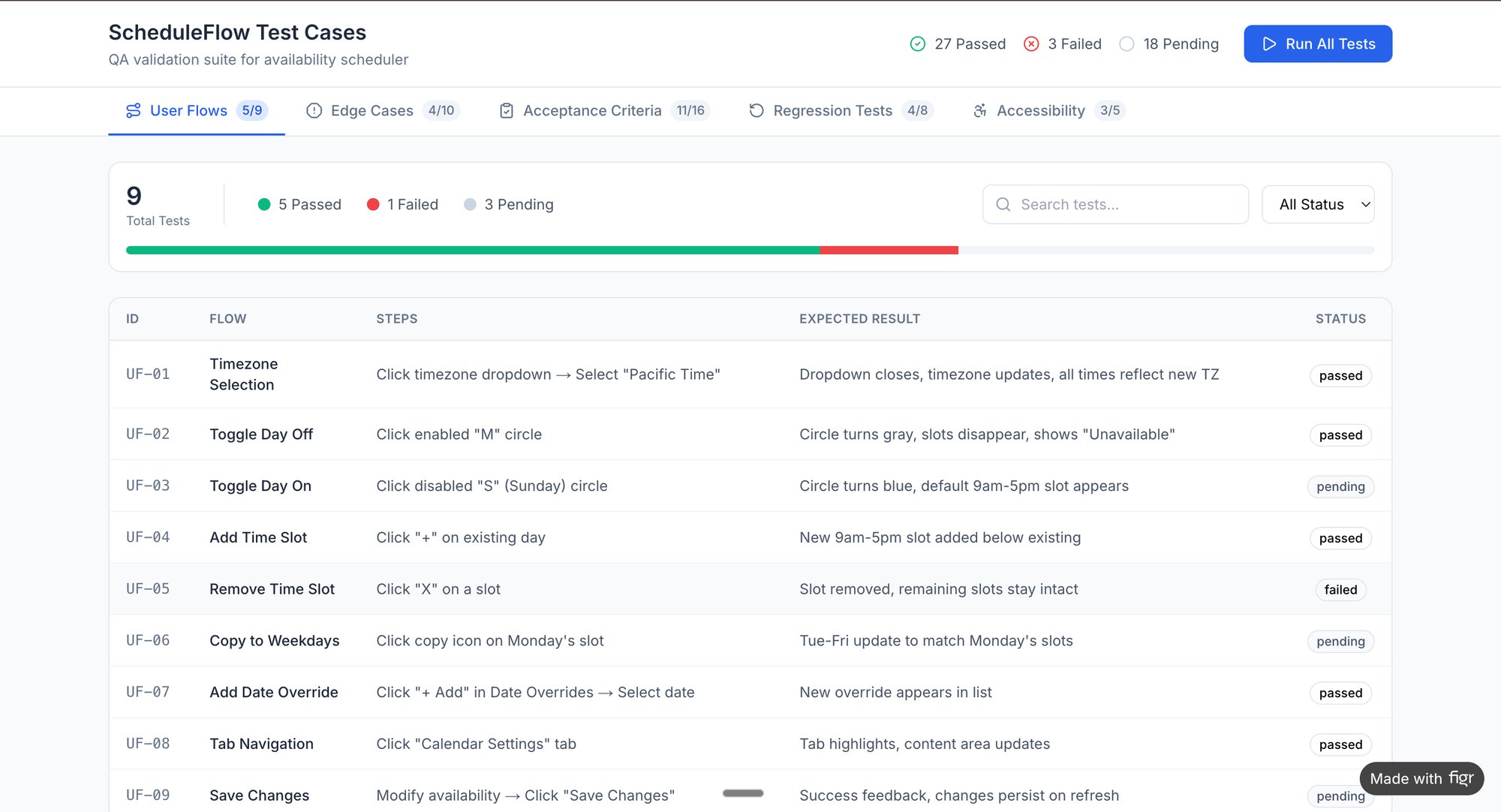
- Identify Core Themes: Now, step back and look at your categories. What are the big stories they tell? A theme is more than just a category; it's a central, unifying concept that runs through the whole discussion. For example, a dozen different comments about cost might point to a larger theme of a “perceived value mismatch.”
This systematic approach is how you turn raw opinion into evidence. It's a fundamental part of the work, which you can explore further in our guide explaining what is qualitative analysis.
From Report to Reality
Your final output should not be a 50-page document that gathers digital dust. Your stakeholders are busy. They need a focused summary that connects the dots from conversation to consequence.
A strong report does three things:
- Presents the major themes with 2-3 powerful, verbatim quotes to illustrate each one.
- Quantifies the qualitative where possible (e.g., "Five of the eight participants struggled with...").
- Provides clear, actionable recommendations based on what you found.
This matters at scale. In the modern market research landscape, qualitative approaches like focus groups account for approximately 16% of global spending. With the worldwide industry exceeding $80 billion, this share highlights the immense value companies place on uncovering attitudes and group dynamics that surveys alone can't match.
A finding is an observation. An insight connects that observation to a user motivation and a business opportunity.
Last year, I watched a team present focus group findings about their confusing settings page. Instead of just saying "it was confusing," they showed three conflicting user quotes right next to a screenshot of the messy UI. Better yet, in the meeting, they used an AI tool to instantly generate a first-draft of a streamlined user flow for a redesigned page. It immediately turned a complaint into a concrete proposal.
That’s how you turn messy transcripts into momentum. You don’t just report on the past; you build a bridge to the next version of your product.
Your Next Step Is A Question, Not A Focus Group
So what's the most powerful, actionable next step? It’s not booking a facility or recruiting participants.
It’s finding a question.
Pick one specific, high-stakes question your team is wrestling with right now. Is it why paying users are ignoring that new premium feature? Is it why trial users consistently bail on your onboarding at step three? Don’t try to boil the ocean. Isolate the single most important unknown. The one that, if answered, would give your team clarity and direction. This is where you start.
Simulate Before You Synthesize
Once you have your question, fight the urge to schedule a focus group. Instead, run a mini-synthesis exercise with your own team first. Grab three people, a product manager, a designer, and an engineer, and ask them to role-play. Have them act as different user personas grappling with your core question.
What's the point of this? By simulating the user's perspective internally, you force your own team's assumptions and biases out into the open. What does the skeptical user think? The power user? The brand-new customer? This small-scale simulation is like a whetstone. It sharpens your inquiry before you spend a single dollar on external research.
This process builds a foundation for effective research, and there are tools to help. You can use an AI agent to quickly generate user personas from your product context, like in this AI project comparison canvas. It gives you a solid base for your role-play session.
This internal exercise will do one of two things. It might just answer your question outright, saving you the time and expense of a focus group. More likely, it will refine your question into something much sharper and more potent.
When preparing for a focus group, the conversation you have with your team about what you need to learn is often as valuable as the conversation you have with customers.
Sometimes, the output of this internal session is just a recording of your team's debate. To get a handle on it quickly, a reliable free audio to text converter can be a lifesaver, turning all that talk into text you can actually review. This transcript becomes your first piece of data, a map of your own team's thinking.
The path to understanding your customers starts with a moment of internal clarity. Focus your own team before you ever try to lead a focus group with your users.
Even with a solid plan, you'll still have questions. That's normal. Think of these answers as signposts, not rigid rules. They’re here to help you figure out if this method is the right tool for your current challenge.
How Many Focus Groups Is Enough?
The goal isn't hitting a magic number. It's about reaching saturation.
You keep running groups until you stop hearing new things. A good rule of thumb is to plan for 3 to 5 groups for each distinct customer segment you’re exploring.
If the fifth group is just echoing what you heard in the first four, you've probably hit saturation. You can feel confident. But if new themes are still popping up? You might need one more session to be sure.
Focus Group vs. User Interview: What's the Difference?
It all comes down to the dynamic of the conversation.
A user interview is a one-to-one conversation. It’s the right choice when you need to understand an individual's unique workflow, their mental model, or a private context without group influence. Think of it as a deep dive into one person's world.
A focus group is a one-to-many conversation. The point is to use the group dynamic to your advantage. You want participants to react to and build on each other's ideas. This is your go-to for brainstorming concepts, testing brand messaging, or getting reactions where social context matters.
It boils down to this: interviews uncover individual truths, while focus groups explore shared perspectives.
Can Focus Groups Actually Work Online?
Absolutely. Online focus groups are not just a workaround anymore; they're standard practice, and for good reason.
They make it much easier, and often cheaper, to recruit people from all over the place. As a research paper on the topic points out, platforms like Zoom make moderation and screen sharing pretty seamless.
You might lose a few of the subtle, in-person non-verbal cues, but the benefits often outweigh the downsides. The trick is to design for the online format. For online sessions, it's a good idea to keep your groups a bit smaller, usually 4 to 6 participants. This makes sure everyone gets a chance to speak up and you don't lose people in a grid of muted faces.
Turning those rich conversations into something your team can actually use is the final, most important step. Instead of letting insights fade away after the call, Figr helps you translate them into user flows, prototypes, and PRDs on the spot. Go straight from discussion to development. Find out how at figr.design.