

It’s 10:21 PM on a Tuesday. The board wants an expansion plan for Q3, and all you have is a world map with a hopeful circle drawn over Southeast Asia.
That circle represents millions in potential revenue. It also represents millions in potential waste if you get it wrong. The old way of thinking about market entry was purely geographical: a pin on a map.
The new way is behavioral.
It’s not about where your next customers live. It’s about how they work, what digital corners of the internet they call home, and which problems they are desperately trying to solve. For a SaaS company, this shift is everything.
Beyond Picking a Spot on the Map
Software isn’t bound by physical borders, it’s defined by needs and workflows. A product manager in Berlin faces many of the same daily frustrations as one in Boston. Their professional identity is a much stronger signal than their physical location. This is the first, most crucial mind-shift in building a real market entry strategy. You can dig into some detailed audience analysis examples to see how this focus on user behavior plays out.
A friend at a Series C company told me they spent six months planning a big launch in France. They did all the "right" things: analyzed GDP, business density, and national tech spending. Three months after launch? Almost zero traction.
Why? Their software relied on an integration with an accounting platform that had less than 5% market share in France. It was a tiny detail their macro-level analysis completely missed. They studied the map, not the local digital ecosystem.
This isn't another academic checklist. It’s a practical guide for leaders who need to make smart, data-informed bets without burning years on maybes. We're going to build a system for:
- Identifying markets based on the density of a problem, not the size of a population.
- Validating those opportunities with real-world signals before you commit real budget.
- Entering new markets with a clear plan and tight feedback loops for learning.
The goal here is to move from drawing hopeful circles on a map to running a confident, repeatable process for growth.
Using a Compass, Not a Map, to Navigate New Markets
A map shows you every possible road, but most of them lead nowhere. A compass just points you in the right direction. An effective market entry strategy framework is your compass.
It’s a structured way of thinking that forces you to ask the hard questions before you commit a single dollar or engineering cycle. A framework doesn't give you a turn-by-turn route, it gives you a bearing. It ensures you’re always moving toward your true north: product-market fit in a new context.
The basic gist is this: it breaks down the monumental task of ‘going global’ into manageable, logical pieces.
A System of Inquiry, Not a Checklist
Think of this less like a rigid, waterfall plan and more like a series of agile sprints. Each sprint is designed to systematically chip away at uncertainty.
For a SaaS business, this isn't about tariffs and shipping lanes. The questions are different. They're about data residency laws, finding local integration partners, and understanding regional payment gateway preferences. What are the ingrained user expectations?
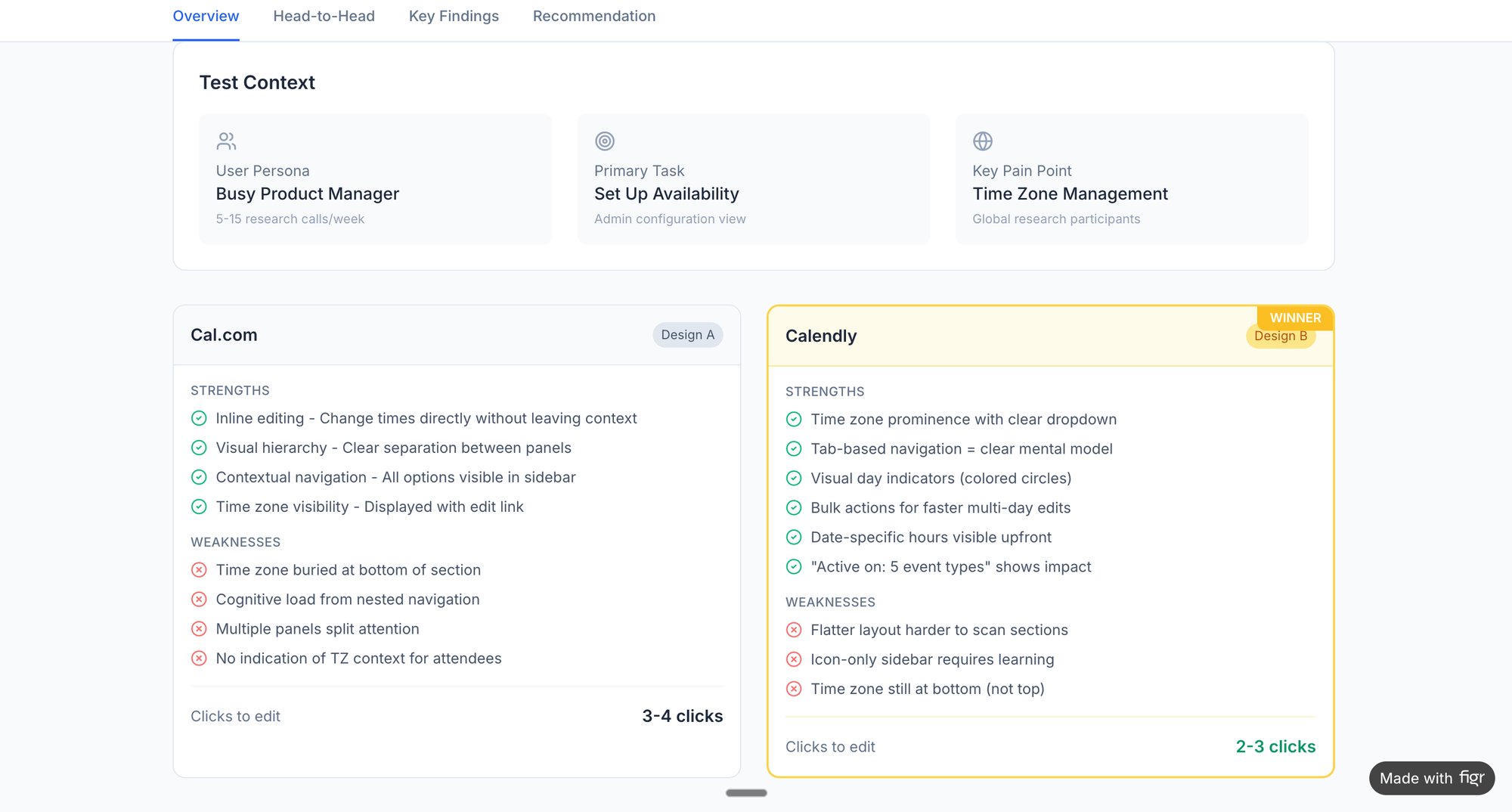
Last week, I watched a product manager start digging into a potential European expansion. Instead of just pulling economic data, she started by mapping the user flow for a key local competitor. She wanted to feel the expectations in that market, a detail a high-level report would never reveal. You can see a similar thought process in this analysis of the Cal.com vs Calendly setup flow, where the focus is on the user's actual journey, not just the feature list.
This system of inquiry is built on a few core components that work together. Each one builds on the last, turning a broad ambition into a specific, testable plan.
The Core Components of the Framework
A modern market entry framework is built on several key investigative pillars. Think of them as the big questions you need to answer.
- Market Identification & Selection: This is about moving beyond country size to find pockets of high "problem density." Where is the pain you solve most acute? Who feels it the most?
- Viability & Risk Assessment: Here, you uncover the hidden barriers. These could be regulatory hurdles like GDPR or the quiet dominance of a local competitor who already owns the ecosystem.
- Go-To-Market (GTM) Strategy: This is where you define your tactical approach. It includes choosing your entry model (e.g., direct sales vs. channel partners) and tailoring your messaging so it resonates.
- Financial Modeling & KPIs: You have to project the costs, map out potential revenue, and define what success actually looks like with clear, measurable targets. No vanity metrics.
- Phased Execution & Learning: The final piece is structuring the rollout not as a single launch event, but as a series of experiments designed to generate feedback and guide your next move.
To effectively navigate the complexities of new markets, particularly in the SaaS sector, developing a robust B2B marketing strategy is paramount. This strategic layer is what turns your framework into real customer engagement. These components provide a structure for your investigation, ensuring you build a plan based on evidence, not just enthusiasm.
You can learn more about how to combine AI-powered market trend analysis with product planning and roadmapping to make this process even sharper.
Finding Your Next Ten Customers, Not Your Total Market
So many market entry plans get stuck in the clouds. Leaders obsess over TAM, SAM, and SOM: big, impressive numbers that look great on a slide but offer zero guidance on where to actually start.
For a SaaS product, the real signal isn't the size of the population. It’s problem density.
How many companies in a given market are wrestling with the exact problem your software solves, right now? The goal isn’t to map the entire addressable market, it's to find your next ten paying customers.
Moving From Geography to Behavior
I have a friend at a B2B fintech company who told me they spent an entire quarter analyzing the German market. The numbers looked fantastic. But after weeks of digging, they realized their ideal customer profile was a ghost there. Local accounting practices made their core value proposition totally irrelevant.
They shifted their focus to the UK and landed their first enterprise client in six weeks. They stopped chasing a massive market and started chasing a concentrated problem. The difference was night and day.
The question isn't "is this market big enough?" The real question is, "is the ground here fertile for what we do?" To answer that, you need to hunt for specific, behavioral signals.
Uncovering the Signals of Problem Density
Your job is to become a digital anthropologist. Forget census data. You’re looking for clues that a market is already primed for your solution. You can find these clues in a few key places:
- Hiring Trends: Are companies in a region suddenly hiring for roles your software supports? A spike in listings for "Data Governance Manager" is a massive flare for a compliance-focused SaaS.
- Adjacent Technology Adoption: Look at what complementary tools are already popular. If a market has high adoption of Salesforce, a new marketing automation tool with a deep Salesforce integration has a ready-made entry point.
- Local Search Volume: Dig into search queries for problem-aware, non-branded keywords. High search volume for things like "how to reduce customer churn" tells you a market is hurting for a retention platform.
These indicators are far more predictive of success than a country's GDP. For more on this, check out these excellent startup customer acquisition strategies.
The diagram below breaks down a simple process for validating these signals before you go all-in.
This flow takes you from broad questions to validated commitments, making sure you don't burn cash until you see clear, positive signs. This kind of focused digging is critical. A Visa survey found that while 79% of businesses see expansion as a core strategy, a staggering 56% of failed expansions happen because of bad market research. We have a whole guide on how to conduct effective primary customer research if you want to go deeper.
Ultimately, you're building a shortlist of markets based not on their size, but on the intensity of the need you can fill. This is the bedrock of a smart, modern market entry strategy.
Running the Viability and Go-To-Market Gauntlet
Finding a market with a high density of problems is like finding fertile soil. It’s a great start, but it doesn't guarantee a harvest. The next steps, checking for viability and building your go-to-market plan, are the gauntlet you have to run. This is where you stress-test every assumption before you plant a single seed.
This is the part where promising ideas get a cold dose of reality.
Viability is about the barriers, both the ones you can see and the ones you can't. Can you actually build a sustainable business here? This isn't a theoretical exercise, it's a deep dive into the operational friction that can kill an expansion before it even starts. You have to dig into regulatory hurdles, data sovereignty laws like GDPR, and the real competitive landscape.
Is there a dominant local player who owns the market through deep relationships and ecosystem lock-in? Sometimes the biggest barrier isn’t a better product, it’s just that a competitor was there first.
From Barriers to Battle Plans
If viability is your defense, your go-to-market (GTM) plan is your offense. This is where your market entry framework gets ruthlessly tactical. A GTM plan isn’t about buying billboards, it's about achieving channel-market fit. You have to align your sales and marketing with how customers in that specific market actually buy things.
Will your slick, product-led growth model work in a culture where big business decisions are made over months of relationship-building? Will your SEO strategy actually work in a market where buyers trust industry consultants, not Google? Getting these questions wrong is the fastest way to burn through your launch budget with nothing to show for it. You can see how a well-structured GTM plan fits into the bigger picture by reading more about how AI analytics can improve product launch success rates.
Deconstructing the Competition to Find Your Wedge
Trying to out-play a local competitor without understanding their product inside and out is like navigating blind. You have to understand their strengths and weaknesses from a real user’s point of view to find your wedge: your unique entry point.
A friend at a project management software company was looking at a new market in Northern Europe where a local incumbent dominated. Instead of giving up, his team mapped out the competitor's entire onboarding and task creation flow, screen by screen.
This is what I mean by going deep. They didn’t just read reviews, they reverse-engineered the entire experience. It's a process similar to this detailed analysis of Linear vs. Jira, where a side-by-side comparison shows the small but critical differences in user experience.
That granular analysis revealed the competitor's product was powerful but notoriously painful to set up. That single insight became the cornerstone of their GTM strategy. They positioned their product as the simple, fast alternative, and their first marketing campaigns targeted the competitor's frustrated users directly.
This is a key zoom-out moment. The viability and GTM phases are where you translate big-picture opportunities into small, deliberate actions. It’s where you connect high-level strategy to the day-to-day reality of your future customers. A key part of this is mapping out every single thing that could go wrong, a process you can see in this detailed breakdown of Dropbox's upload failure states. This proactive work turns a hopeful expansion into a targeted, evidence-based assault on a new market.
Executing the Entry With Learning Loops, Not Launch Parties
The confetti settles. The splashy launch announcement is live, but the real work of market entry has just begun. The final phase of your strategy isn't a single, loud event. It’s a quiet, methodical process of learning, executed through a phased rollout.
Think of it like deploying a new feature, not building a skyscraper. You don't build the entire thing behind a curtain and then unveil it. You build the first floor, invite a few people in, and see how they use the space before you design the second.
Start Small to Learn Fast
Your execution should kick off with a small beta cohort or a geographically-fenced pilot program. The goal isn’t immediate revenue or mass adoption. It's to get real-world feedback loops running as fast as possible.
This is the moment your beautifully crafted strategy makes first contact with the unpredictable reality of user behavior. Are support tickets revealing unexpected use cases? Is your analytics data showing a massive drop-off at a specific point in the onboarding flow? These aren't failures, they're critical data points.
This is what I mean by a learning loop. It’s an engine for turning user friction into product improvements. The raw insights from a small, focused group of early adopters are infinitely more valuable than the vanity metrics from a big, noisy launch. For instance, teams can discover crucial failure states, just like this deep analysis of Wise's card freeze flow, which maps out every single thing that could go wrong in a critical moment.
Shift KPIs From Launch to Learning
I once watched a PM meticulously plan an expansion where the KPIs were all tied to launch day sign-ups. The team hit their numbers, and bonuses were paid out. Great, right? But three months later, churn was through the roof.
The real, actionable insights came much later, after they started digging into the edge cases and failure states in their new market’s payment flow. Turns out, they’d missed a local payment preference, causing massive frustration and abandonment. That single, hard-won learning, not the initial sign-up number, is what ultimately determined their long-term success.
Your initial KPIs need to reflect this learning-first mindset.
- Activation Rate: What percentage of users complete a critical "first value" action within their first session?
- Time to First Ticket: How quickly are new users running into problems? What are the common themes?
- Cohort Retention: Are users from week one still active in week four? This is the ultimate test of early product-market fit.
Successful market entry isn't a one-time decision followed by flawless execution. It is an ongoing, often messy process of adaptation. It’s about building a system that assumes you got some things wrong and is designed to help you find and fix them, fast. You can find more on this in a great report about the future of market entry and resource planning.
The grounded takeaway is this: structure your entry to maximize learning, not launch-day headlines. Your first move should be a small, controlled experiment that gives you the feedback you need to make your second move smarter.
Making Your First Move
All this theory is great, but execution is what separates the winners from the rest. Your next step is not to write a 50-page global domination plan.
Your next step is to pick a single market from your list and spend the next two weeks becoming obsessed with one tiny, critical piece of it. Don't try to boil the ocean.
Instead, find one core assumption and go prove it right or wrong.
From Broad Plans to Focused Experiments
In short, frame your market entry like a new product feature, not a moonshot mission. You wouldn't build an entirely new app without first making sure people actually want it. So why would you treat entering a new country any differently?
Let's say your big assumption is: "Product managers in Australia are actively looking for a better way to build roadmaps and are frustrated with their current tools."
Your job now is simple: prove or disprove that statement.
- Talk to five PMs in Australia. Find them on LinkedIn, offer to buy them a virtual coffee, and just listen. What are their biggest daily headaches?
- Analyze local job descriptions. Are companies hiring for roles that need your solution? What tools are they listing as “must-haves” or “nice-to-haves”?
- Hang out where they hang out. Scour local Slack communities, forums, and subreddits. What questions do they ask? What problems keep popping up in conversation?
This kind of small, focused work will give you more real-world clarity than months of high-level strategizing ever could. The EY Global Market Entry Index 2023 found that businesses using structured, iterative strategies like this have a 42% higher five-year survival rate in new markets. That’s a massive difference. You can dig deeper into these practical strategies for global expansion to see how it works.
Treat your market entry like you treat your product. Start with a small, testable hypothesis. Measure the results. Learn. Your confidence will grow with every validated step.
Common Questions, Answered
Planning your market entry is one thing. Actually doing it? That’s where the real questions pop up. Here are a few of the most common ones we see leaders wrestle with as they move from a strategy doc to the messy reality of execution.
What’s the biggest mistake teams make when entering a new market?
Hands down, it's underestimating what localization truly means. So many teams think it stops at translating their UI into another language. It doesn’t even come close.
Real localization is about adapting your entire go-to-market motion. It means rethinking your pricing to fit local buying habits, offering the payment methods people actually use, and staffing support for their time zones. The mistake isn’t a single tactic, it’s a failure to switch from a product-first mindset to a truly market-first one.
How long should the initial research phase take?
There’s no magic number, but a good rule of thumb is six to twelve weeks for a single target market. The goal here isn't a perfect, multi-year academic study. The goal is to learn as fast as possible.
You have to time-box this. Otherwise, you'll fall into the trap of analysis paralysis, endlessly gathering data without making a decision. A healthy rhythm is to spend a couple of weeks forming a strong, testable hypothesis, then a few more weeks trying to prove it right or wrong with actual in-market conversations and data.
Direct vs. Indirect Entry: How do we choose?
This boils down to three things: your resources, your appetite for risk, and how complicated the market is.
- Direct Entry: Going in with your own team gives you total control over your brand and the customer experience. But it demands a huge upfront investment in people and infrastructure. This is the right move for markets that are absolutely core to your long-term vision.
- Indirect Entry: Working with local partners, distributors, or resellers gets you into the market much faster with way less capital. It’s the perfect way to test the waters and see if there’s real demand before you go all-in.
A lot of companies split the difference. They'll start with an indirect strategy to learn the ropes, then switch to a direct model once they’ve found product-market fit and have a predictable revenue stream.
What are the first KPIs we should track after launch?
Sure, you need to watch your Monthly Recurring Revenue (MRR) and Customer Acquisition Cost (CAC). Those are table stakes. But the real story is in the leading indicators that tell you if your entry is actually working long-term.
Zoom in on your activation rate. Are new users actually doing the one key thing they need to do to get value? Next, watch your cohort retention like a hawk. Are people sticking around week after week? Finally, calculate your payback period. Just as important is the raw, qualitative feedback from your first sales and support conversations. That’s where you’ll find the “why” behind all the numbers.
Turning strategy into shippable reality is hard. Figr helps product teams ground their decisions in real product context, generating user flows, edge cases, and high-fidelity prototypes that mirror your existing app. Reduce the guesswork in your market entry and design your expansion with confidence. Explore how Figr can help you ship faster.