

It’s 3:14 PM on a Tuesday. The roadmap is set. The plan is approved. You’re building a feature meant to solve a clear problem. But for whom, exactly? Is it for the engineer who sees a user valuing raw performance? The designer who imagines a user craving simplicity? Or the enterprise buyer that sales pictures, armed with a specific checklist of compliance needs? As the product manager, you're tasked with holding the single, coherent image of this user.
A focal point for everyone's efforts.
Effective audience analysis is not about creating generic personas that gather dust. It’s the rigorous work of building a shared, high-fidelity picture of the people you serve. It transforms team debates over opinions into discussions grounded in evidence. Getting this right is the difference between shipping a tool and solving a problem for a specific group of humans. Without it, you’re just guessing with expensive engineering time.
In these deep-dive audience analysis examples, we will move past the theoretical. We'll see how product teams translate user data into actionable strategy. You will see the specific methods they used, the segments they identified, and how those findings directly influenced their product roadmaps. These are not just stories: they are blueprints for understanding your own users with greater depth.
1. SaaS Product Manager Onboarding Flow Analysis
It’s 9 AM on a Monday, day one for your new Product Manager. They are brilliant, driven, and completely lost. They face a maze of outdated Confluence pages, fragmented Slack channels, and a product architecture diagram from two years ago. How long until they can make a meaningful contribution? Weeks? This friction-filled ramp-up is where many product teams bleed momentum.
This type of audience analysis focuses not on external customers, but on a critical internal user: the new PM. The goal is to treat their onboarding as a product, meticulously analyzing their journey to reduce "time-to-value." It’s a direct response to high turnover in growth-stage companies, where knowledge transfer is a constant bottleneck.
Strategic Breakdown
The core problem is that institutional knowledge is often trapped in people’s heads. A friend at a Series C company told me their new PM spent their first month just trying to map out a single critical user flow. This analysis aims to make that process proactive, not reactive.
The onboarding journey isn't a conveyor belt: it's a switchboard that needs to connect the new PM to the right context at the right time.
Live App Capture: During the first week, a senior PM captures the current state of key product flows. This creates a visual baseline that reflects reality, not an idealized spec doc.
Contextual Documentation: Key decisions and business logic are attached directly to the relevant UI elements within the captured flow.
PRD Generation: This visual documentation is then used to generate a comprehensive Product Requirements Document (PRD). It becomes a single source of truth for the new hire. For a glimpse, you can see a PRD generated for a Spotify AI playlist feature.
Actionable Takeaways
For product leaders, this isn’t just about helping one person. It’s about building a scalable onboarding system. By analyzing the new PM audience, you identify the most significant knowledge gaps and build assets to fill them. The insights gained allow you to turn a chaotic first 90 days into a structured learning path. You can learn more about how AI tools can create interactive checklists to guide the process.
2. Enterprise Feature Rollout Audience Segmentation
You’ve just shipped a powerful new analytics dashboard. Engineering celebrates, but the support channel is chaos. End-users are confused by advanced settings they’ll never touch. Admins can’t find the critical configuration options they need. A single “successful” launch has created three distinct fires.
This is the classic enterprise rollout problem. This form of audience analysis deconstructs a monolithic user base into its functional roles: administrators, end-users, and power users. The goal is to move beyond a one-size-fits-all launch. It’s a direct response to the complexity of B2B software, where success depends on how well value is translated to each specific segment.
Strategic Breakdown
Different user roles have fundamentally different jobs-to-be-done. An admin’s world revolves around control and security, while an end-user’s is about efficiency. Their needs aren't just different: they're often in direct opposition.
Last week I watched a PM at a large CRM company realize their beautiful onboarding flow was completely invisible to end-users because it required an admin to enable it first. The admin, who had no context, never flipped the switch.
The basic gist is this:
Role-Based Flow Mapping: Before the rollout, map the distinct user flows for each segment. How does an admin configure the feature versus how a new team member uses it? Visually capturing these journeys side-by-side reveals hidden dependencies. For instance, comparing the setup flow for a feature like Linear's task creation versus its daily use highlights different user needs.
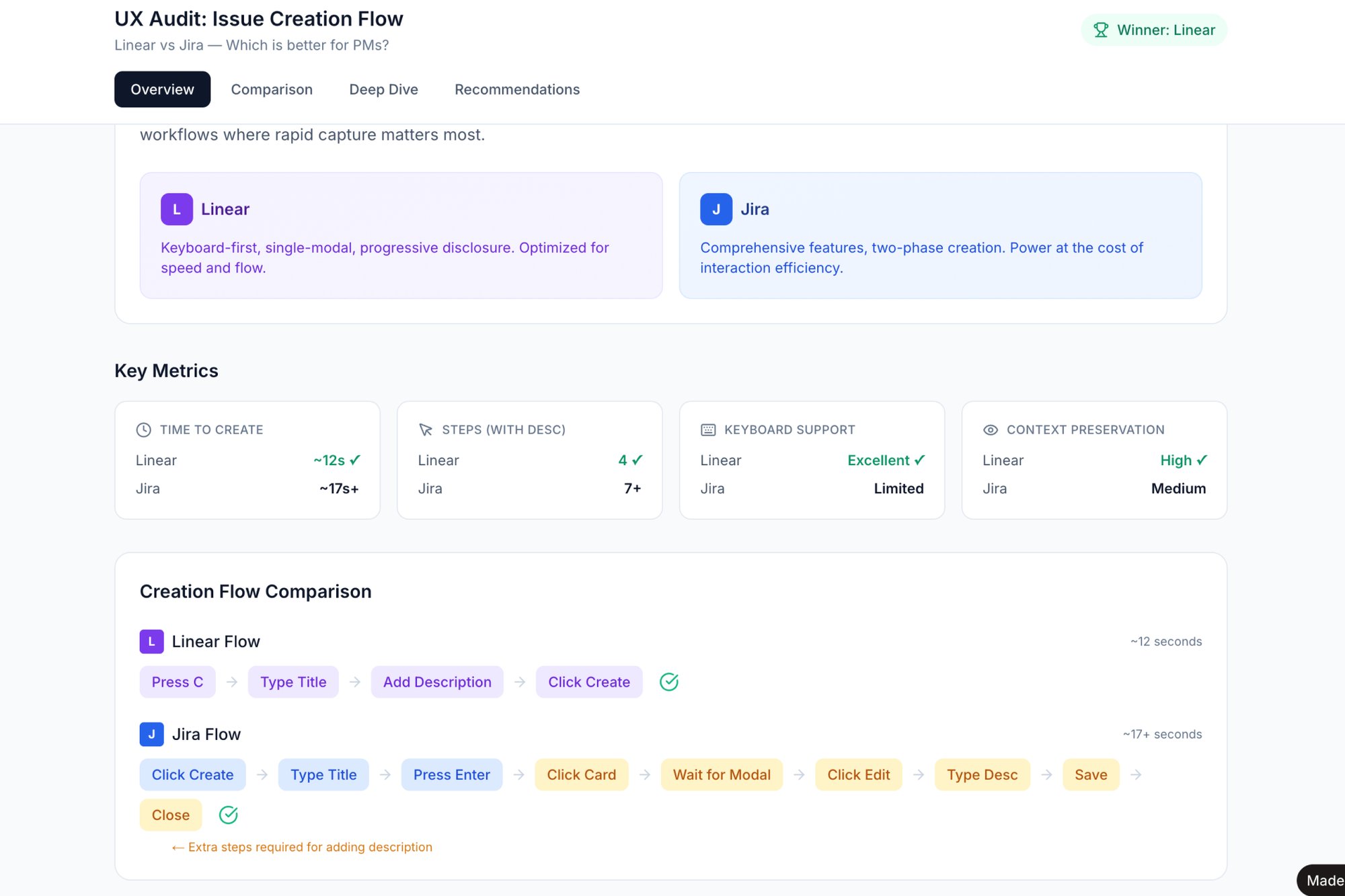
Segmented Communication: Create unique messaging for each audience. Admins get a technical guide on configuration. End-users get a two-minute GIF showing how the feature saves them time.
Tiered Success Metrics: Define what success looks like for each group. For admins, it might be the percentage of accounts with the feature correctly configured. For end-users, it might be the adoption rate.
Actionable Takeaways
For product leaders managing enterprise software, this is about mitigating risk. By performing this audience analysis, you can anticipate roadblocks for each user segment before they derail your launch. The insights allow you to craft a multi-threaded rollout plan that speaks directly to each user’s context. This can be refined by learning how to use AI tools to segment users by behavior patterns.
3. Healthcare/Regulated Industry Compliance Audience Mapping
Your team ships a new patient portal. It’s elegant, intuitive, and the user feedback is glowing. Then, the email from legal arrives. A single sign-on flow violates a HIPAA clause. An audit trail is missing a data field. The entire release is on hold. In regulated industries, is the most important audience the end-user, or the auditor who shows up six months from now?
This specialized audience analysis expands the definition of "user" to include regulatory bodies. It treats compliance not as a final checklist, but as a primary set of user needs. It’s a direct response to the massive financial and reputational risks of non-compliance. A product without an audit trail is like a building without a fire escape: functional, until it's not.
Strategic Breakdown
The core problem is that compliance requirements are often treated as an abstraction, separate from the user journey. This analysis makes compliance a proactive part of the design process.
Instead of tacking on security at the end, teams use visual tools to map these "compliance personas" alongside traditional users. This is what I mean:
Persona Layering: Create distinct personas for auditors and internal compliance managers. Each persona has its own "jobs to be done," which for an auditor might be "verify data immutability."
Compliance-Driven User Flows: Map key user journeys, like a patient accessing medical records, and overlay the specific regulatory constraints at each step. This visualizes where HIPAA or GDPR rules impact the UI.
Evidence Generation: Use tools to generate documentation that serves as evidence of compliance. This can include creating specific test cases that validate audit trails. You can see how this works by viewing these test cases for a fintech card freeze flow.
Actionable Takeaways
For product teams in regulated spaces, this analysis shifts the mindset from avoiding penalties to building trust. By mapping the needs of auditors, you turn regulatory hurdles into product features. For those looking to deepen this approach, it's beneficial to analyze compliance as a continuous system, informing ongoing product strategy.
4. B2B API-First Product Audience Analysis
Your new developer documentation just dropped. It's clean, comprehensive, and technically perfect. Weeks pass. The adoption dashboard barely moves. A support ticket reveals the problem: a junior developer is stuck on authentication. Their senior architect doesn't understand your rate limits. You didn't build a product for one user, you built it for an entire ecosystem.
This is a critical type of audience analysis for any API-first company. The audience isn't a single persona but a team: the hands-on developer, the systems architect, and the technical decision-maker. This analysis moves beyond "developers" as a monolith and segments them by skill level, role, and the specific problem they are trying to solve.
Strategic Breakdown
The core failure of many developer products is treating documentation as a one-size-fits-all instruction manual. A developer’s journey with an API isn’t a single path: it’s a network of potential entry points and exits. Your docs need to serve all of them.
The process involves treating your API's adoption path as a user journey, with specific checkpoints and potential drop-off points.
Persona-Based Flow Mapping: Instead of one generic "getting started" guide, capture the ideal integration flow for different personas. Map the path for a developer implementing a simple SMS notification versus one building a complex communication platform.
Contextualize API Endpoints: Attach the "why" to the "how." For a specific API endpoint, document not just the parameters but the common use cases and potential error states directly within the flow. This turns a reference document into a strategic guide.
Generate Persona-Specific Test Cases: Create test cases that reflect real-world scenarios for each audience. A test for a high-volume e-commerce client should include scenarios for handling payment retries. You can see an example with these test cases for a Waymo trip modification feature.
Actionable Takeaways
For product leaders in the API space, this isn't just about better documentation. It's about engineering a better developer experience. By deeply analyzing your technical audience segments, you stop building for a generic "dev" and start designing for specific integration jobs-to-be-done. The insights allow you to proactively address friction and make your product the path of least resistance.
5. Mobile-First International Audience Localization Analysis
Your fintech app is crushing it in the US. Now, the board wants to expand into India. You push the same app to the new market, and the metrics are a disaster. Engagement is low. Drop-off is high. Support tickets are flooding in. What went right in one market went spectacularly wrong in another. Success doesn’t copy and paste across borders.
This audience analysis focuses on the complex variables of global expansion. It treats each new geographic market as a distinct audience with its own cultural norms, technical constraints, and behavioral patterns. The goal is to move beyond simple language translation to achieve deep product localization. A user's device in Mumbai is not the same as a user's device in Miami.
Strategic Breakdown
The core problem is assuming user behavior is universal. True localization analysis prevents unforced errors by systematically mapping regional differences before shipping to a new market.
The method involves treating localization as a feature, not an afterthought:
Capture Regional Variants: Instead of working from a single "master" user flow, teams capture and document region-specific variants of critical flows. This could be a payment flow that accommodates local wallets or an authentication flow optimized for low-bandwidth scenarios.
Document Local Constraints: Technical and cultural requirements are documented directly within these visual flows. This includes device capability benchmarks, accessibility laws, and data residency regulations.
Generate Localized Test Cases: From these documented flows, teams can generate comprehensive test cases tailored to each market. This moves testing from a generic QA process to a targeted validation of the localized experience, as seen in this example of test cases for a Waymo trip modification flow.
Actionable Takeaways
For product leaders managing global expansion, this analysis is a risk-mitigation strategy. It turns the guesswork of international launches into a structured process. By deeply analyzing each geographic audience segment, you can proactively adapt your product's UX, feature set, and technical architecture to meet local expectations. The insights gained allow you to build a scalable localization playbook.
6. Enterprise Account-Based Marketing (ABM) Audience Profiling
It’s the final meeting before a major renewal. Your champion loves the product, but their new CFO is questioning the ROI. Meanwhile, IT is raising concerns about a niche integration. Suddenly, your one-size-fits-all strategy feels fragile. You aren't selling to a user: you're navigating a political ecosystem disguised as a customer.
This audience analysis is for B2B SaaS companies in the enterprise space. It shifts the focus from broad user personas to deep, account-specific intelligence. Instead of analyzing a generic "manager," you analyze "Jane Doe, VP of Logistics at Acme Corp," understanding her specific pains and her influence. It's a response to the reality that a single enterprise account can be worth more than a thousand smaller customers.
Strategic Breakdown
The central problem in enterprise SaaS is that the "user" is not one person. It’s a committee of buyers, influencers, and end-users, each with conflicting priorities. This analysis makes identifying and serving those needs systematic.
The method involves treating each high-value account as its own market segment:
Stakeholder Mapping: Identify every individual involved in the buying and renewal process, from the economic buyer to the technical buyer. Map their influence, motivations, and success criteria.
Account-Specific Flow Documentation: Use a tool to capture the custom workflows and unique configurations that a specific enterprise account depends on. This creates a living blueprint of their reality. One example is mapping the unique checkout setup flow for a large Shopify Plus merchant, which can be visualized in tools like Figr.
Targeted Roadmapping: Analyze feature requests from key accounts for their strategic impact on the relationship. A useful resource for this is a guide on the LinkedIn Ads Audience Insights Reporting Guide.
Actionable Takeaways
For product leaders, this type of analysis is a retention and growth strategy. By profiling the complex audience within a single strategic account, you move from reactive problem-solving to proactive partnership. You can de-risk major renewals, identify upsell opportunities, and build a product that becomes deeply embedded in your most valuable customers' operations.
7. Product Accessibility Audience Inclusive Design Analysis
A user opens your app. Instead of tapping, they speak: “Tap Continue.” Nothing happens. They try navigating with keyboard shortcuts, but focus gets trapped in a modal, a digital dead end. For millions who rely on assistive technologies, this isn't an edge case.
It's a locked door.
This audience analysis shifts focus from the “average” user to those with permanent, temporary, or situational disabilities. It treats accessibility not as a final compliance checkbox, but as a primary design constraint. The goal is to understand the needs of users navigating with screen readers or voice controls, ensuring the product is functional for everyone. It’s a response to the massive, often-ignored market of users with disabilities.
Strategic Breakdown
The core problem is that most product teams design for an idealized, able-bodied user. Accessibility becomes an afterthought. This analysis flips the script, embedding accessibility into the first stages of product definition. The "curb-cut effect," as described by Angela Glover Blackwell, shows that designing for the most constrained users often creates a better experience for everyone.
Instead of guessing, teams can use methodologies to proactively design for inclusivity:
Assistive Tech Personas: Create detailed personas for users who rely on different technologies. For example, a user with low vision using a screen magnifier, or a user with motor impairments navigating via keyboard.
Automated Design Audits: Before code is written, run designs through automated checks for issues like insufficient color contrast, missing alt text placeholders, and improper heading structures.
Inclusive User Flow Mapping: Explicitly map the journey for assistive technology users. For a banking app, this would mean documenting the exact screen reader announcements for a complex flow like freezing a payment card.
Actionable Takeaways
For product leaders, inclusive design is a strategic advantage. It expands your addressable market and builds deep brand loyalty. By analyzing the accessibility-dependent audience, you uncover usability flaws that affect everyone. You can start by exploring tools that check product UI for accessibility using AI to build these checks directly into your workflow.
8. SaaS Usage Analytics Cohort Analysis for Feature Adoption
You launch a new AI feature. The announcement gets traction. But a month later, adoption is flat. You dig into the data and see a confusing picture: some users are obsessed, while most haven't touched it once. Who are these power users? And why is everyone else ignoring a feature you spent a quarter building?
This is where averages fail. This analysis moves beyond vanity metrics and focuses on behavior over time. A cohort is a group of users who share a common characteristic, most often their sign-up date. It's an essential practice for data-driven teams, where understanding who is adopting what directly informs the roadmap.
Strategic Breakdown
The core problem with aggregate data is that it blends new user behavior with veteran behavior, hiding crucial trends. A cohort isn't just a data point: it's a fossil record of your product's evolution, showing which versions created the most loyal users.
The method involves using a product analytics tool to segment users and track their actions.
Define Cohorts: Group users by sign-up month, company size, or plan type.
Track Key Actions: Identify the specific events that signal adoption of the new feature.
Visualize Retention: Create cohort charts that show the percentage of users in each cohort who performed the key action over their first 7, 30, or 90 days.
Compare and Contrast: Look for discrepancies. Are newer cohorts adopting the feature faster than older ones? Do enterprise users ignore it while startups love it?
Actionable Takeaways
In short, this is about diagnosing product-market fit at a granular level. By isolating how different audience segments behave, you can move from guessing to knowing. Instead of asking "Is this feature working?", you can ask "Who is this feature working for, and how can we make it work for others?" The insights you gain are the foundation for targeted onboarding or feature redesigns. You can explore how some of the top product analytics tools that integrate AI for better insights can accelerate this process.
From Analysis to Action
The journey through these audience analysis examples reveals a fundamental truth: understanding your user is not a static portrait. It is a live diagnostic, a continuous stream of signals that tells you where to focus, what to fix, and what to build next. We've seen how a SaaS company can map an onboarding flow to find the precise moment a new user feels lost. We've examined how an enterprise team segments its audience by their role in a complex compliance workflow.
Each example serves as a different lens. Some, like cohort analysis, provide a wide-angle view, showing broad patterns of adoption. Others, like the deep dive into API documentation, zoom in to the granular frustration of a single developer. What connects them all? They translate abstract notions of "the user" into concrete, evidence-backed realities.
Your Next Step: From Passive Reading to Active Analysis
The goal isn't to create a perfect persona document. The goal is to build a reflexive muscle for asking: who is this for, and what are they really trying to do right now?
Here is your immediate, actionable path forward:
Select a Single Flow: Pick one critical path. It could be the first five minutes of a new user's experience, the process for upgrading a subscription, or the steps to resolve a common support ticket.
Capture the Ground Truth: Document the flow as it exists today. A series of screenshots is perfect. This isn’t for a formal presentation: it’s for your own clarity.
Ask Three Questions: Look at your captured flow and ask:
Who is the primary user for this specific sequence?
What is the one job they are trying to get done here?
Where is the moment of maximum friction or confusion?
This simple exercise, taking no more than an hour, moves you from theory to practice. It transforms a vague user concept into a specific problem statement anchored in your actual product. A PM I know did this for their "invite a teammate" flow and discovered the process required three more steps than she realized. That single insight became a high-priority ticket that shipped in the next sprint.
The Zoom-Out Moment
Why does this small loop of "capture, question, act" matter so much? Because it creates a flywheel of clarity. This is a behavioral economics principle in action: making the invisible visible changes incentives. When you have a tangible artifact of a user's struggle, conversations with engineering and design become grounded. You're no longer debating opinions, you are solving a visible problem. This is how you shift from building features to solving problems.
The most effective product teams are not those with the most data, but those who are most adept at translating that data into a specific point of view about their audience. They see the product not as a collection of screens, but as a series of conversations with their users. The audience analysis examples in this article are just scripts from those conversations. Your job is to start recording your own.
The examples throughout this article were captured and analyzed using Figr. Instead of just talking about user flows, you can capture them from your live product, map out edge cases, and generate test plans in minutes. Stop guessing and start seeing what your users see. Begin your first analysis for free at Figr.