
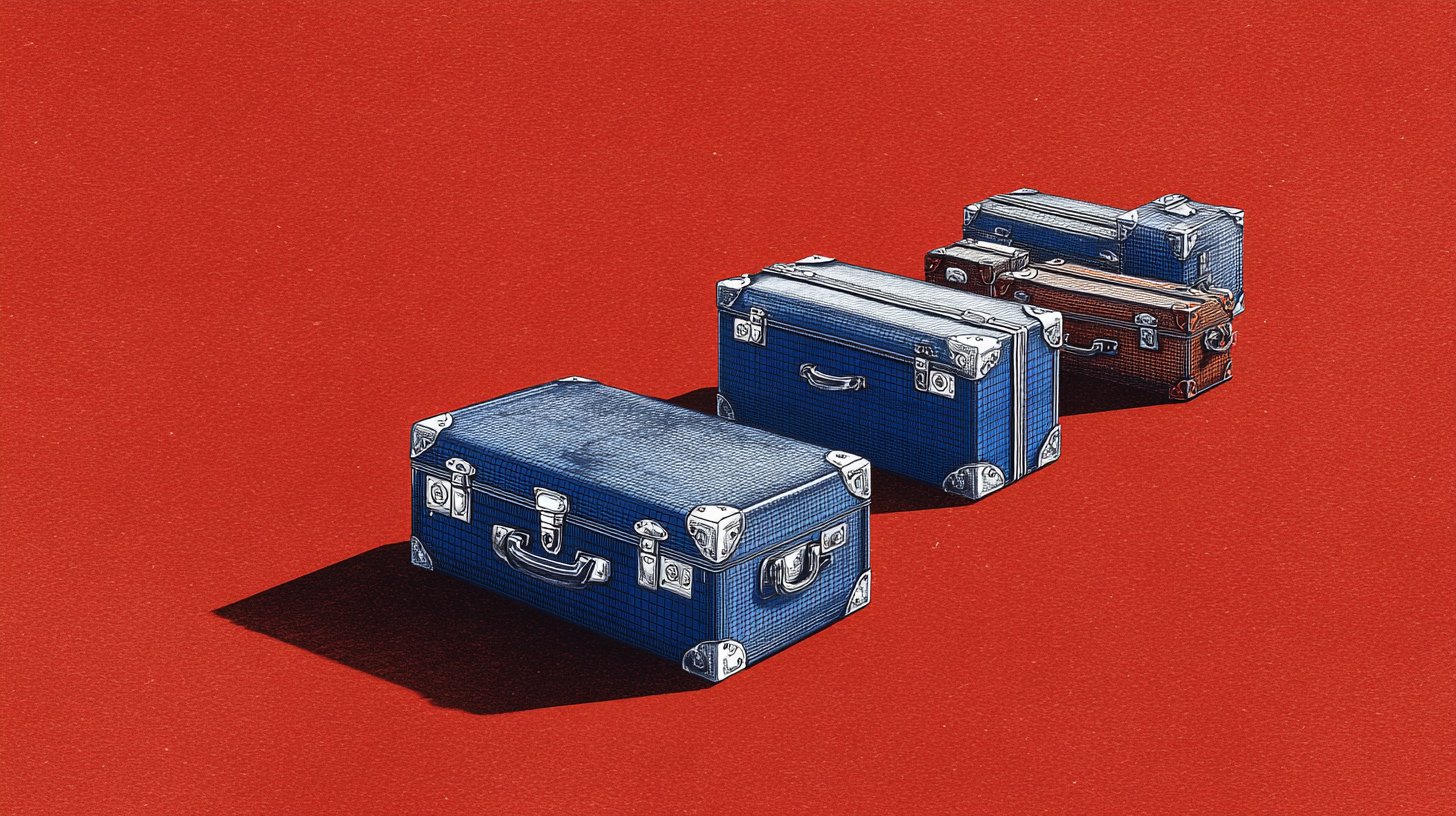
We used to see the customer journey as a conveyor belt, a clean, predictable line moving from awareness to consideration to conversion. We built our funnels on this simple idea, assuming we could guide people neatly from one stage to the next.
That model is broken.
Today’s digital customer journeys are not conveyor belts. They are switchboards, sprawling and chaotic.
A customer might see your ad on Instagram while waiting for coffee. Later, they search for reviews on a laptop. A work notification interrupts them, and they forget. The next day, a retargeting ad reminds them. They click, they browse, but they don’t buy. They finally convert a week later after asking a chatbot a specific question at 11 PM.
Who orchestrated that journey?
No one. The customer did.
The Customer Is The New Architect
This is the fundamental shift: brands no longer manage the journey. Customers direct it. According to Adobe, these paths are sprawling and multi-threaded, with people engaging across dozens of digital and human interactions. The idea of a single, linear funnel feels almost quaint now.
A friend at a fast-growing e-commerce company shared his frustration. His team had perfected their email nurture sequence and A/B tested every call to action. And yet? His analytics showed users dropping into their funnel from bizarre, unexpected angles, skipping entire stages of their carefully crafted experience.
This is what I mean. We are designing for a process we no longer control. The power has shifted. Customers now use an arsenal of digital tools to forge their own paths, jumping between channels and devices on their own terms. Your website is just one stop among many.
The challenge isn’t to force customers back onto a path we defined. It's to understand the chaotic, self-directed web they navigate and build experiences that meet them wherever they are.
Embracing The Chaos
Acknowledging this complexity is the first step toward building better products. It’s validating, isn't it? The neat diagrams in marketing textbooks don't reflect the messy reality you face every day. You aren't trying to tame the chaos: you are trying to build for it.
Getting your head around this non-linear reality is critical, especially when thinking about how new tools can help. For instance, you can now automatically create UI components that fit perfectly within these fragmented, unpredictable user flows.
The gist is this: to succeed, we must stop thinking like assembly line managers and start thinking like city planners. We don’t dictate the route. But we can build better roads, clearer signs, and helpful intersections to make the journey smoother, no matter which way a person decides to go.
Your Customer Now Has An AI Co-pilot
The most important shift in digital customer journeys isn't a new social network. It’s a new actor on the scene, one sitting right next to your customer, whispering in their ear.
Your user now has a co-pilot, and it's an AI.
This changes everything. We are walking into an era of agentic commerce, where AI tools are fast becoming the primary way people research and buy.
The Great Bypass
A product manager I know recently watched a user session that made her go cold. The kind that comes from watching a quarter's worth of work evaporate in seconds. Her team had just shipped a beautiful, intuitive onboarding flow.
But the user never saw it.
Instead, they opened an AI assistant and typed, "Find the quickest way to set up a new project in this app and invite three teammates." The AI, having scraped documentation and forums, served up three direct links. The journey her team designed was bypassed by a single query. A great example of this is when we mapped Spotify's current playlist creation, then built a PRD for a better, AI-powered flow. You can see how an existing user flow that can be visualized and improved by an agent.
This is the new reality. Your meticulously crafted funnels and user flows are about to be ignored. Why would anyone click through five pages to find an answer when an AI can deliver it in five seconds?
The data points to a profound shift. By 2026, AI is expected to become the second most influential source in shopping decisions, ranking higher than retailer websites and even recommendations from friends. As the 2026 CX trends report highlights, with nearly 60% of online shoppers already using AI for research, we're watching a massive move from browsing to conversational, assistant-driven queries.
Designing for a New Gatekeeper
This shift from human-led discovery to AI-mediated access is the central design problem for product teams today. The AI is the new gatekeeper. It doesn't care about your brand story or clever landing page copy. It only cares about solving the user's problem as fast as possible.
If your product’s value is buried five clicks deep, the AI assistant won't find it. It will, however, find your competitor's solution that's more direct.
The basic gist is this: your product must be designed to be understood by machines, not just humans. Your features, benefits, and critical paths need to be so clearly structured that an AI can parse them and serve them up as the definitive answer.
The new digital customer journey begins with a query to an AI. Your job is to make sure your product provides the best answer.
Think about the incentives at play. Users want speed. AI agents are built to deliver it. If your product creates friction or hides information, you're fighting against the powerful current reshaping user behavior. Your job is no longer just mapping the human journey. You have to anticipate the AI-mediated one, making your product’s value radically accessible. You can learn more about how AI assistants can guide users inside your product in our related article.
In short, you are no longer just designing for your user. You are designing for your user’s AI co-pilot.
How To Map The Unseen Journey
If digital customer journeys aren't straight lines anymore, how can anyone map them? The idea feels like trying to draw a map of the wind.
We need a different mental model.
Think of it like this: your product’s analytics are a seismograph. Most of the time, they show the small, predictable tremors of normal activity. But if you know how to read the charts, you can spot the faint signals of intent and friction that come before a major event, like a conversion or a drop-off. Mapping the unseen journey is about learning to read those signals.
Start With Reality, Not A Blank Canvas
The biggest mistake teams make is starting with a blank whiteboard to brainstorm a user journey. That’s how you get ideal, imaginary paths that don't survive first contact with a real person. You must start with what is actually happening.
This is what I mean: you capture your live application to get the ground truth. You record screen interactions, you pull analytics data, you see the messy, non-linear reality of how people truly use your software. This isn't about validating assumptions, it's about discovering what’s really going on.
The basic gist is this: document reality first, then design the ideal state.
The goal isn’t to invent a perfect journey. It’s to find the real one, with all its detours and dead ends, and make it better.
This initial capture gives you a baseline. It shows you the ‘happy path’ that a tiny fraction of users follow. More importantly, it reveals the 'unhappy paths' where most users get stuck or frustrated. These unseen journeys are where your greatest opportunities live. You can learn more in our guide on what a user journey map is and how to build one.
Map The States, Not Just The Steps
A journey map shouldn't just be a sequence of screens. It should be a map of states. What happens when a user’s network drops? What if they upload a file that’s too large or in the wrong format?
These are not edge cases; they are part of the core experience for many users. A friend at a fintech startup told me his team spent weeks arguing about a single button. The argument wasn't about the color: it was about the state. What should the screen show after you click it? A loading spinner? A confirmation message? What if the action fails?
This concept map shows how users, often with an AI co-pilot, interact with different website states.
The visualization highlights that the path through an AI is becoming a thicker route to your product's states. Mapping these transitions is where you uncover the hidden friction that kills conversion. For instance, we analyzed the complex journey for a simple Dropbox file upload. The number of potential failure states is staggering, and each one is a possible dead end. You can explore the full Dropbox failure state analysis to see how deep these unseen paths go.
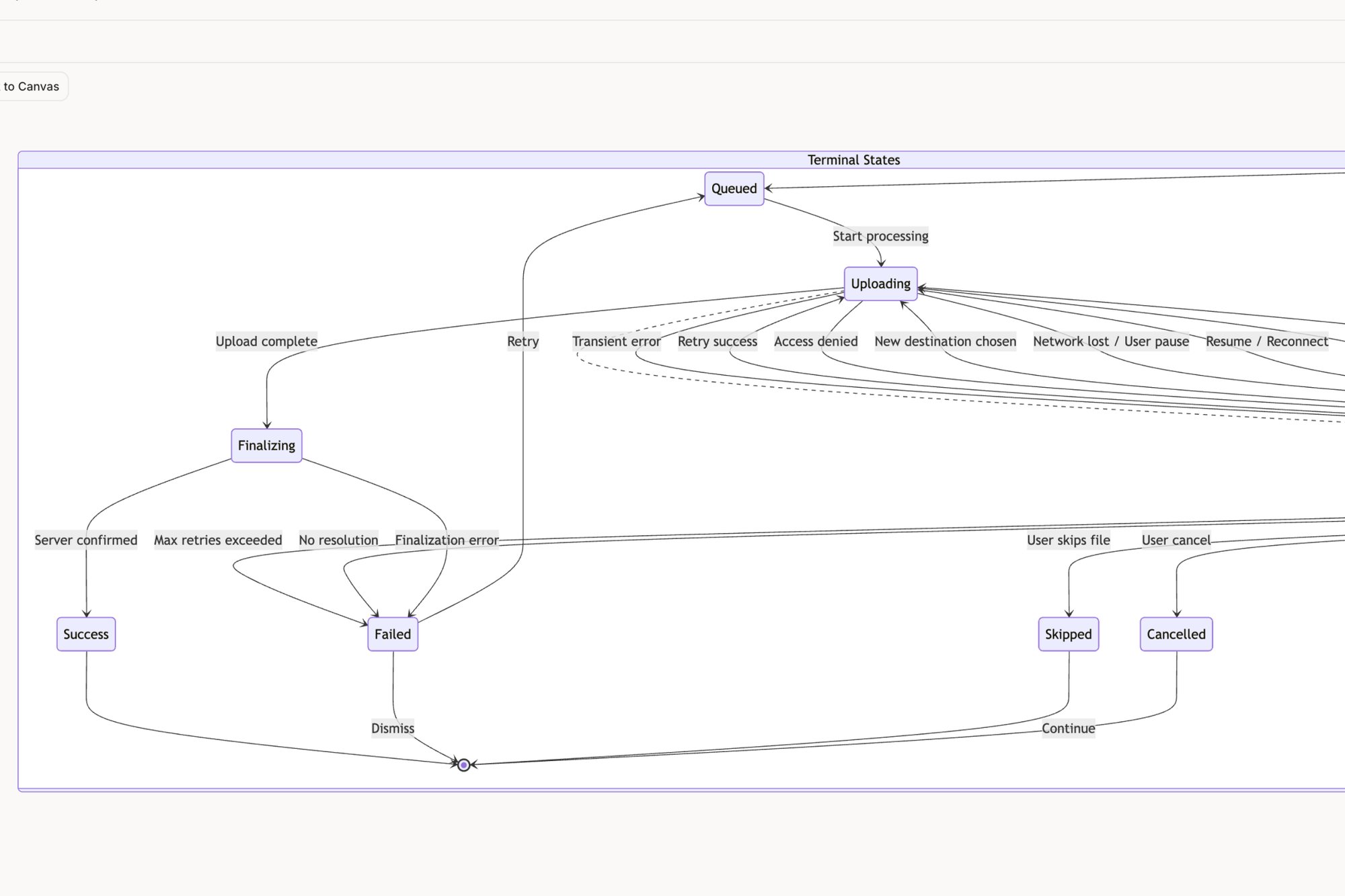
To uncover these intricate paths, it's essential to apply robust methodologies, like those in guides on B2B customer journey mapping. These frameworks provide a structured way to trace interactions across multiple touchpoints.
Your next step is to make this tangible. Stop drawing ideal flows and start documenting the real, messy states of your product. Capture a core flow, identify the failure points, and you'll have a map that points directly to where you're losing customers.
So you’ve mapped the tangled, invisible paths your users take. What do you do with this map?
You optimize. But optimization isn't a single action. It’s a process of working through four distinct layers of the user experience.
Think of the journey to your product's core value like reaching the center of a planet. A user has to pass through several layers. If any one of them is too thick or confusing, they give up.
The Friction Layer
This is the surface layer, all about the mechanics of using your product. Are you making things effortless or are you adding clicks, confusing menus, and dead ends? The goal here is to make every interaction feel like a stone skipping across water, not sinking into mud.
Last week, a PM at a Series B startup was comparing project management tools. He was tired of the mental tax his current system charged for every task. He wanted to know: which tool let him log a bug and get back to work faster, Jira or Linear?
One flow took multiple menus and a dozen fields. The other took three clicks. That’s friction. It's the small price your product charges for every interaction. A detailed side-by-side comparison of the task creation flows reveals just how quickly these small taxes add up.
Reducing friction isn’t about making things pretty; it’s about respecting your user’s time.
The Context Layer
Right below the surface is the context layer. This is all about relevance and anticipating what the user needs right now. Does your interface adapt to their situation, or does it force everyone down the same rigid path?
Think about a scheduling tool. If you’re booking a meeting with someone in another country, the question is always, "Is this 3 PM my time or their time?" A journey that understands context solves this instantly by showing both timezones. It does the mental math for the user.
This small detail changes the entire experience from merely functional to thoughtful.
The Trust Layer
Deeper still is the trust layer. This is where you build confidence, especially when your user is stressed. When something goes wrong, does your product cause more panic or offer a clear, calm way forward?
Imagine a user loses their wallet. Their first instinct is to freeze their cards. They open their banking app, heart pounding. A well-designed journey here is critical. The card freeze flow in an app like Wise is a masterclass in building trust. It’s immediate, obvious, and reassuring. For an example, you can see how we mapped out all the test cases for a feature like a card freeze to ensure it works every time.
It doesn’t just give you a button. It confirms the action, explains what "frozen" means, and shows how to unfreeze the card later. This isn’t just a feature; it’s a promise.
The Value Layer
At the very core is value. This is the fundamental reason the user showed up. Did they solve their problem? The other three layers only exist to clear a path to this core.
Getting this layered approach right has massive economic consequences. A recent Qualtrics report found that while 73% of customers use AI in their journeys, only 30% ever give direct feedback. That means there's a huge, silent majority hitting friction you never hear about.
As you can discover in the full trends report, companies that master these four layers don't just see a small bump in conversions. They build loyalty.
And loyalty is a more durable advantage than any single feature. It's why customers stick around even when a newer, cheaper alternative shows up.
Your next step is to audit your own product through this four-layer lens. Pick a critical user path and ask: Where is the friction? Where does the context break? Where could we build more trust? The answers will point you to a more resilient business.
Building Journeys With AI-Powered Precision
Journey maps are a picture of the customer's reality. But turning that picture into a better product is where the work begins. A new kind of AI tool is changing that. Instead of just drawing flows, we can now automate the most time-consuming parts of mapping and optimizing, shrinking work that used to take weeks into an afternoon.
This isn't about replacing product teams. It's about giving them a serious advantage. An AI agent like Figr doesn't just guess; it grounds every decision in the reality of your live product.
From Live Product to Testable Artifact
The process starts by capturing what's real. Forget sketching flows from memory. An AI agent can literally capture your live application, creating a pixel-perfect baseline of the current user experience.
Suddenly, you're not speculating. You're analyzing. The AI takes that captured flow and immediately generates the things your team needs.
User Flow Diagrams: It traces every click and screen to map how users really move through a task.
Edge Case Maps: It surfaces all the ways a flow can break, from a dropped network connection to an invalid discount code.
Think about adding a stop to a self-driving car ride. The "happy path" is easy. But what about the dozens of things that can go wrong? An AI can instantly generate a comprehensive edge case map for a Waymo trip modification, showing every scenario that needs a design solution. As you build journeys with AI, it's crucial that the outputs align with the core principles of Modern Digital Customer Experiences.
Generating Prototypes With System Intelligence
A map is just a map. You still have to validate your new ideas. This is where an AI agent becomes a true partner. It uses its knowledge of your product to generate high-fidelity, on-brand prototypes ready for testing.
The goal is to make experimentation cheap. When you can build and test a new flow in an afternoon, you’re free to explore more ambitious ideas. You can take bigger swings.
Because the AI has analyzed your live product, it knows your design system. The prototypes it creates aren't generic wireframes. They are realistic, interactive flows built with your actual components and styles.
One team I know was struggling with a complex Shopify checkout setup flow. It was a huge drop-off point, but the thought of re-imagining it was daunting. Using this approach, they generated a completely new setup flow prototype in a couple of hours. They got real feedback before a single engineer was pulled into a meeting.
This is how you make journey optimization a continuous, high-speed habit. You can use these tools to not just see what users are doing but to act on it immediately. It's a critical skill, and we explore more AI tools for segmenting users by behavior in our other guides.
The entire workflow is flipped. You move from a theoretical map to a testable artifact in a fraction of the time, grounding every decision in the living reality of your product.
Your Next Step: Audit a Single, Critical Path
You’ve read the theory. You understand the tangled, non-linear reality of Modern Digital Customer Experiences. So what now?
Grand plans to "reimagine the entire customer experience" sound great in a slide deck. In reality, they often collapse under their own ambition.
A better approach is to start small.
Forget boiling the ocean. Pick one critical path in your product and make it your world for a day. This could be your new user onboarding, the setup for a key feature, or even the cancellation flow. Find a path where user friction has a real, measurable business cost.
Make the Abstract Concrete
The instruction is brutally simple: record yourself or a colleague going through that single flow.
Don't talk. Don't explain what you think a user would do. Just use the product. Click the buttons. Fill out the forms. Capture the entire screen from the first step to the last.
Then, take that recording and feed it to a tool like Figr. Ask its AI agent to map the user flow from your video and flag every potential edge case.
This is the moment of truth. The map it generates isn't a theoretical diagram from a whiteboard session. It's a direct, unflinching reflection of your product's reality. How many clicks did that "simple" task actually take? Where did you feel the drag? What moments of confusion did you uncover that you’ve become blind to?
From Insight to Action
Suddenly, "digital customer journey" is no longer an industry buzzword. It's a concrete set of screens, clicks, and pain points you can fix.
This focus matters more than ever. The internet swelled to 6.04 billion users by late 2025, and e-commerce is projected to blow past $32 trillion by 2026. As the 2026 global overview report shows, this massive scale amplifies every point of friction in your product.
This simple audit is your first, grounded step toward building experiences for the world as it actually is, not as you imagine it in meetings.
You aren't just creating another map. You're creating an agenda. The insights from this single audit give you a specific, evidence-backed project that directly impacts your users and your metrics. It's focused, it's achievable, and it's how real improvement begins.
Frequently Asked Questions
What Is The Biggest Mistake Companies Make With Digital Customer Journeys
Designing in a vacuum. It’s the single most common mistake, and it’s a killer.
Teams gather and map the "ideal path" based on how they think the product should work. They draw a straight road. The problem is, your users are navigating a maze, full of wrong turns, dead ends, and distractions.
This kind of map ignores the messy reality of errors, multi-tabbing, and channel-hopping. The result is huge drop-off at friction points the team never knew existed, because they weren’t part of the "official" flow. This is where most optimization efforts die.
How Often Should We Update Our Customer Journey Maps
Think of your journey map as a living snapshot, not a framed blueprint. It goes out of date faster than you think.
At a minimum, review it quarterly. But you absolutely need to do a significant update after any major product release, redesign, or noticeable shift in your analytics. If you don't, you're making decisions based on old intelligence.
And with AI-driven features changing how people discover and use products, you should re-evaluate your core journeys at least twice a year. Your map must reflect how users behave now, not how they behaved six months ago. Otherwise, it's just a relic.
Can A Small Team Effectively Map And Optimize Journeys
Absolutely. The trick is to be ruthlessly focused. Don't try to map every interaction in your entire product. That's a recipe for burnout.
Start with the one journey that matters most. This is usually the new user onboarding flow or the primary conversion funnel. Nail that one first.
Use tools that speed up the work of capturing what’s really happening, finding the friction, and testing fixes. By concentrating on a single, high-impact digital customer journey, even a small team can ship massive, measurable improvements. For instance, an AI can instantly surface the critical test cases for a feature like a card freeze, letting you skip the guesswork and focus on what breaks.
Stop guessing what your users are doing and start knowing. Figr’s AI agent captures your live product, automatically maps the complex flows your users actually follow, and generates the artifacts your team needs to ship better UX, faster. See how to turn product thinking into production-ready work at https://figr.design.