

It’s 4:47 PM. Your VP just asked for a “small tweak” to the checkout flow for a promotion launching tomorrow. Seems simple. A quick text change, maybe a new button. You write a ticket, pull in an engineer, and push it live just before signing off.
By Saturday morning, support tickets are piling up. That “small tweak” inadvertently broke the payment gateway for international users. The weekend becomes a frantic scramble of rollbacks, hotfixes, and apologies.
This isn't a failure of engineering. It's a failure of process.
This chaotic, reactive cycle is the default state for far too many product teams. We treat product development like an assembly line: build it, ship it, move on. Quality becomes a gate we pass through at the very end, a final checklist before launch.
But quality isn’t a gate. It’s a current that runs through the entire river of development.
Shifting From Assembly Lines To Feedback Loops
Continuous quality improvement (CQI) offers a different model. And no, it’s not another heavy framework or a list of meetings to cram onto your calendar. It’s a mindset shift. It replaces the linear assembly line with a constant, looping system of feedback.
This is what I mean: instead of waiting for a feature to break in the wild, you build ways to anticipate failures before they happen. You turn every step of your workflow, from initial idea to final QA, into an opportunity to learn and refine.
Last week I watched a product manager at a fintech company preparing for a new feature. Instead of just writing a spec, she used a tool to map every single failure state for a proposed file upload. This simple artifact, an edge cases map for Dropbox's upload feature, completely transformed the conversation with engineering. It went from "here's what to build" to "here are the scenarios we need to solve for."
That is the essence of continuous quality improvement.
It’s about making the invisible visible. It’s about admitting that complexity is a constant, and that seemingly minor changes can have massive, cascading effects. This proactive approach is also how teams learn how to prevent scope creep by identifying hidden work early on.
The Real Cost Of Ignoring CQI
When you zoom out, the economic truth is brutally simple. The cost to fix a problem grows exponentially the later you find it. A design flaw caught during a review is cheap to fix. That same flaw discovered by users after launch costs engineering time, damages customer trust, and can lead to real churn.
The core principle is that you can’t inspect quality into a product at the end. It has to be built in from the start.
This idea, rooted in the work of quality pioneers like W. Edwards Deming, is more relevant than ever. In a world where users can switch services with a single click, the quality of their experience isn't a luxury, it's your most critical competitive advantage. Your ability to consistently deliver a high-quality experience is the only moat that really lasts.
So where do you start? You don’t need a massive organizational overhaul. You just need to change how you approach the very next feature. Ask one simple question: what could go wrong here, and how can we know before our users do?
What Continuous Quality Improvement Actually Means
The best chefs don't just follow a recipe. They taste the sauce as it simmers, adjusting the salt, the acid, the heat, moment by moment. They don’t wait until the dish is plated to discover it's bland. They improve it during the act of creation.
That’s what I mean when I talk about continuous quality improvement. It’s not a formal ceremony or another line item in a sprint retrospective. It’s a constant, active process of tasting the sauce.
CQI isn’t about chasing perfection. It's about a systematic, deliberate approach to getting better, every single day. We can distill this mindset into three core pillars of action.
The Three Pillars of CQI
These pillars transform "quality" from an abstract goal into a repeatable practice. They give any team a simple loop to follow.
- Identify What Is Happening: This is the measurement phase. You start by collecting both quantitative data, like task success rates or drop-off percentages, and qualitative feedback, like user session recordings or support tickets. The goal is to see the product not as you designed it, but as users actually experience it.
- Understand Why It Is Happening: Data tells you what, but it rarely tells you why. This is all about root cause analysis. Is a low conversion rate due to a confusing UI, a hidden bug, or an unclear value prop? You have to dig deeper than the surface metric. A detailed task analysis can be a great way to reveal the hidden friction points in a user’s journey.
- Decide How to Improve It: Based on your understanding, you form a hypothesis and run a small, iterative experiment to fix the root cause. The key is to keep changes small and measurable. This lets you validate your assumptions quickly without betting the entire roadmap on one big release.
A product manager I know at a Series C company recently put this into practice. Her team was seeing a troubling drop-off in their onboarding flow. The analytics showed where users were leaving, but not why.
Instead of guessing, she watched three recorded user sessions. In one, she saw a user get stuck for nearly two minutes on a single screen, silently clicking around, clearly confused by the button labels. There was no bug report. No error message. Just quiet frustration.
That single observation was more powerful than a dozen dashboards.
From Reactive Fixes to Proactive Refinement
The basic gist is this: continuous quality improvement shifts a team from being firefighters to being architects. Instead of reacting to alarms, you are deliberately reinforcing the structure of your product and processes over time. This proactive stance has a profound impact.
This philosophical shift is being mirrored by a significant market trend. The global Continuous Improvement Tool Market grew from USD 4,904.38 million in 2021 and is projected to hit USD 6,410.4 million by 2025. This growth highlights a widespread recognition that systematic improvement is essential. You can explore more about these market dynamics in this comprehensive report.
In short, CQI is the engine of durable growth.
It’s about building a system where discovering a flaw is seen not as a failure, but as a valuable opportunity to learn. It’s about creating a culture where everyone is responsible for tasting the sauce, ensuring the final product is better not by chance, but by design.
How To Embed CQI Into Your Product Workflow
It's Tuesday morning. The team is looking at a user request: "Make the reporting dashboard easier to use."
What does "easier" mean? Faster? Fewer clicks? More flexible? This vague starting point is where most feature work goes off the rails before it even begins.
A CQI-driven workflow isn't a conveyor belt, it's a switchboard. It doesn’t start with solutions. It starts by translating vague desires into testable hypotheses. It reframes the work from building a thing to solving a specific, measurable problem. The process isn't a straight line from idea to launch, it’s a series of controlled loops designed to gather intelligence at every single step.
Instead of just accepting the feature request, you ask different questions. What is the user trying to accomplish? How do they do it now? Where are they getting stuck? This tiny shift in perspective moves the entire team’s focus from output to outcome.
From Planning to Post-Launch
Embedding CQI isn't about adding more meetings. It’s about changing the questions you ask at each stage of the game.
- Planning and Discovery: Transform vague requirements into sharp, falsifiable hypotheses. Instead of "Improve the dashboard," the goal becomes, "We believe that by adding a date range filter, we can reduce the time it takes for users to find a specific report from 90 seconds to under 30 seconds." This immediately gives you a success metric.
- Design and Prototyping: Use design artifacts to test assumptions, not just showcase aesthetics. A high-fidelity prototype isn't a picture of the final product, it's a tool for learning. A great first step is to map the existing user journey to find hidden friction. For instance, mapping the current Shopify checkout setup flow can instantly reveal where merchants are dropping off, long before you’ve designed a single new screen.
- Development and QA: Make quality everyone's job by defining it upfront. Developers shouldn't have to guess what happens when a network connection drops. Proactively mapping failure states, like these edge cases for a component, turns QA from a reactive bug hunt into a systematic verification process.
- Launch and Analysis: Treat every launch as the beginning of a new learning cycle, not the end of a project. Did your change achieve the hypothesized outcome? Why or why not? This final step feeds directly back into the planning phase for the next iteration.
The Feature Factory Trap
Let's zoom out for a moment. Why do so many teams default to just shipping features without this rigor? The incentives are often the culprit.
In many organizations, success is measured by velocity, the number of tickets closed, the sheer volume of output. This creates what’s known as the "feature factory." When the primary incentive is to ship more, quality inevitably becomes a secondary concern. Teams are rewarded for moving fast, not for creating lasting value. The result is a product bloated with half-baked features, mounting tech debt, and a user experience that slowly degrades over time.
Continuous quality improvement is the necessary antidote.
"There’s a saying in quality that you can’t improve what you don’t measure," Rony Gadiwalla, CIO of GRAND Mental Health, explained in a recent discussion. While he was speaking about healthcare compliance, the principle is universal. It enables teams "to keep a consistent, up-to-date pulse on their compliance performance, which in turn empowers them to take swift and informed action for improvement."
This mindset realigns incentives away from pure output and toward tangible outcomes.
Making Quality Concrete and Actionable
Last quarter, a friend at a B2B SaaS company was tasked with redesigning their user invitation flow. The old process was slow and error-prone. The traditional approach? Jump straight into Figma and design a shiny new interface.
Instead, she started by generating a complete set of test cases for the existing flow. This artifact, similar to these test cases for a Waymo trip modification, documented every possible path, error, and success state. It took a few hours.
The payoff was immediate.
The document revealed three critical edge cases the team had never considered, any of which would have broken the new design. By investing a small amount of time upfront to define "what right looks like," she saved her team weeks of potential rework.
That is the power of embedding CQI. It transforms quality from a vague ideal into a series of deliberate, tactical actions you can take every day. It’s not about slowing down, it's about eliminating the wasteful, reactive work that holds your team back.
Turning Unknowns Into Strengths With AI
A simple feature request lands on your desk. The initial estimate is two weeks. Six weeks later, after a dozen painful "what should happen when..." conversations, it finally ships. What happened?
The timeline wasn't blown up by a single catastrophe. It was bled dry by a thousand tiny cuts, each one an unforeseen edge case, an unexpected user state discovered deep in the development cycle. These unknowns are the silent killers of product quality and team morale.
This reactive, fire-fighting mode is a fundamental weakness for many teams. But what if you could systematically turn that weakness into a competitive advantage? This is where an AI design agent completely changes the game.
Proactively Mapping The Unknown Territory
Instead of relying on manual brainstorming and past experience, which are always incomplete, an AI agent can analyze a design or user flow and systematically generate a comprehensive map of what could go wrong. Think of it as a pre-mortem for your feature. We used a similar approach to identify potential issues in Zoom’s network degradation states, forcing the necessary conversations to happen before code is written.
This isn’t about replacing human intuition. It’s about supercharging it with computational rigor. An AI can explore the combinatorial explosion of states, permissions, and network conditions far more exhaustively than any human possibly could. It turns the abstract idea of "proactive quality" into a tangible artifact the whole team can use.
The process flow below shows how this proactive approach gets woven right into the product workflow, embedding quality checks into planning and design rather than saving them for the end.
This workflow isn't just a prettier diagram. It represents a real shift from a linear handoff model to an integrated loop where intelligence gathered early prevents expensive rework later.
From Abstract Risk To Actionable Artifacts
The basic idea is this: you make potential problems visible and concrete so you can solve them when it's cheap to do so. An AI agent doesn't just wave a red flag about edge cases, it generates the specific documentation needed to actually address them.
Consider these real-world applications:
- Edge Case Mapping: For a feature like a file upload, an AI can generate a visual map of every possible failure, from network drops and size limits to permission errors. This document becomes the source of truth for designers and engineers, ensuring a truly resilient user experience.
- Test Case Generation: When designing a critical flow like a credit card freeze, an AI can produce a full suite of test cases covering both happy paths and every conceivable failure scenario, just like in this test case generation for Wise's card freeze flow. This bridges the gap between design and QA, making quality a shared responsibility.
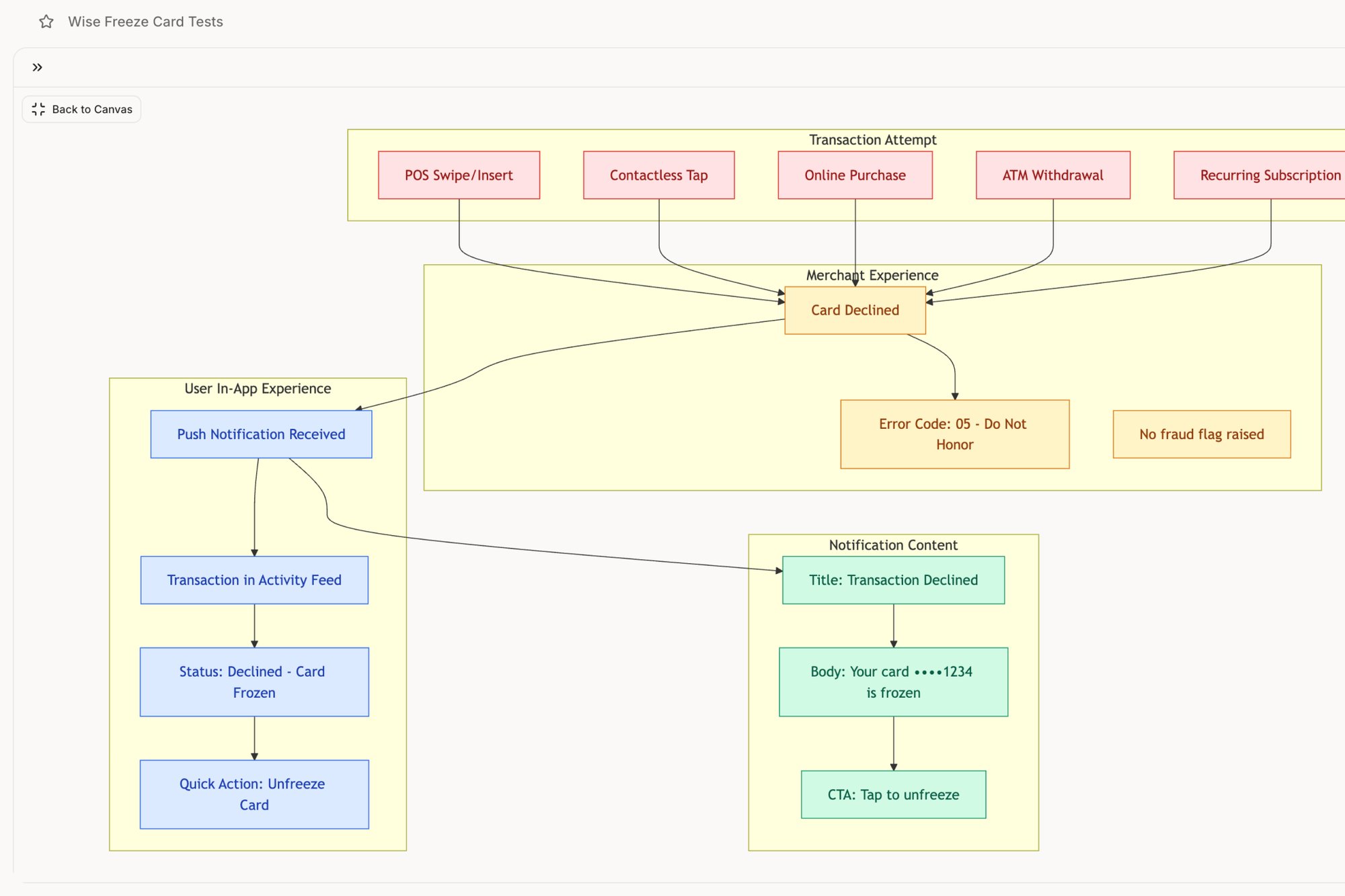
This approach aligns perfectly with the core principles of CQI. It’s a system for learning and prevention, not just detection and reaction. It builds a safety net that allows your team to move faster and with more confidence because you’ve already illuminated the dark corners of the project. A deep dive into the role of AI for product development reveals how these tools are becoming essential for modern teams.
The New Economics of Quality Assurance
Let's zoom out to the underlying economics. The traditional model treats quality assurance as a cost center, a final gate before release. Every hour spent in QA is an hour not spent building the next feature. CQI, especially when supercharged by AI, flips this script entirely.
By front-loading the work of identifying edge cases and defining test criteria, you drastically cut down on the most expensive activities in software development: unplanned work and rework. A bug found in production is orders of magnitude more costly to fix than a flaw caught during the design phase.
By making risk visible early, teams can redirect their energy from firefighting to innovation. The AI doesn't just find problems; it creates the space for teams to build better solutions.
To truly turn unknowns into strengths, using the right technology is critical. It's worth exploring the latest list of the best AI tools to boost your productivity and see how they can fit into your workflow. This proactive investment in tooling and process is how you escape the feature factory and start building a product with compounding value. The goal isn't just to ship faster, but to ship smarter, with quality built in from the very first click.
The Metrics That Truly Define Quality
Quality feels subjective, right? Like trying to describe a feeling or a flavor. But what if it wasn't? What if quality was something you could actually measure, track, and improve, just like you track conversion rates or server uptime?
It can be. The first step is to move past the simple, often misleading, act of counting bugs. That’s where a genuine culture of continuous quality improvement begins.
The entire field of quality management, kicked off by thinkers like W. Edwards Deming, was built on a single idea: if you can't measure it, you can't improve it. The UX metrics we use today are just the digital version of that same core principle. They give us a shared language to define what "good" actually means to our users.
You need to connect what you see users do (qualitative observations) with hard numbers (quantitative data). One without the other leaves you with a dangerously incomplete story.
Moving Beyond Bug Counts
Counting bugs is easy, but it’s mostly a vanity metric. A product can have zero reported bugs and still be confusing, frustrating, or completely useless to your customers. Real quality metrics are user-centric. They focus on outcomes, not just technical perfection.
Here are the metrics that actually tell you something useful:
- Task Success Rate (TSR): Can users actually complete a core task? It’s a simple yes or no that cuts right through the noise.
- Time on Task: How long does it take them to do it? Efficiency is a huge part of a quality experience.
- Error Rate: How often do people mess up while trying to complete the task? This usually points a finger directly at a confusing UI or unclear instructions.
- System Usability Scale (SUS): This is a standardized 10-question survey. It gives you a reliable, high-level score for how usable people perceive your product to be.
These metrics fundamentally shift the conversation. You stop asking, "Is it broken?" and start asking, "Does it work for a human being?" That's the question every team serious about continuous quality needs to be obsessed with answering.
Connecting Data to User Behavior
Data tells you what is happening. It rarely tells you why. This is where AI tools can become an incredibly powerful bridge between the two. By plugging directly into your analytics, an AI agent can automatically surface friction points and highlight user drop-offs that a human might miss in a sea of dashboards.
Take a complex flow, like a merchant setting up their online store for the first time. An AI can parse thousands of user sessions in minutes. It can pinpoint the exact moment people give up and abandon the process, like in this redesign analysis for Shopify's checkout setup. It doesn't just give you a number, it points to a specific screen, a specific interaction, that is costing you business.
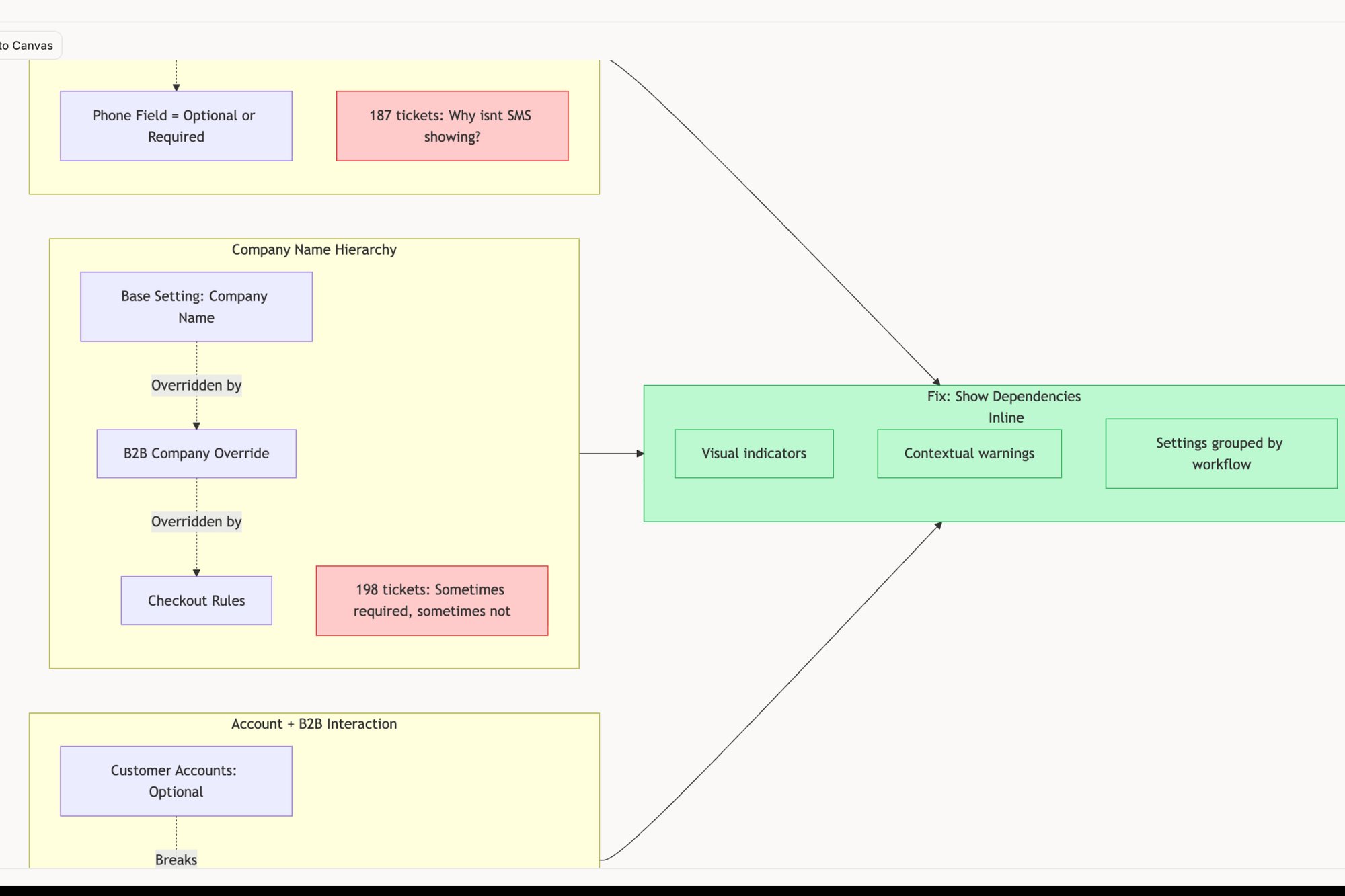
This turns analytics from a passive reporting tool into an active diagnostic engine. It helps you focus your efforts where they'll have the biggest impact, making sure your work is always tied to a real, measurable user problem.
Building a Dashboard for Quality
A friend who leads product at a B2B company told me they were drowning in data but starved for actual insight. They had dashboards for everything: sprint velocity, MRR, churn. But nothing for the user experience itself. The team felt busy, but they had no idea if they were actually making the product better.
So, they tried something simple. They dedicated one part of their weekly meeting to one single quality metric. One week, it was the task success rate for their reporting feature. The next, it was the error rate on their user invitation flow. You can see more on how to set this up in our guide on building a product management dashboard.
This small ritual did more to build a CQI mindset than any formal training. It made quality a tangible, recurring topic of conversation, owned by everyone on the team.
This simple habit grounds the abstract goal of "quality" in concrete numbers. It gives you the evidence you need to argue for improvements with data, not just conviction. And looking beyond your product, a solid framework for measuring customer service is crucial for spotting wider trends and driving growth. Ultimately, this data-driven focus is what separates teams that just ship features from those that consistently deliver real value.
Your First Step Toward Continuous Improvement
Feeling inspired is good. Taking action is better.
We've walked through the mindset, the workflow, and the metrics behind continuous quality improvement. But theory doesn't ship products, teams do. The entire philosophy hinges on turning big ideas into small, daily habits. So, what’s the single most effective thing you can do tomorrow morning?
It’s not another meeting. It’s not a new framework.
It’s an experiment.
Boil One Pot, Not The Ocean
Pick one recurring, painful issue in your workflow. Maybe it’s the endless back-and-forth after design handoff. Or the surprise bugs that always pop up in a specific part of your app. Find one single point of friction.
Now, pick one upcoming feature. A small one is perfect.
Your task is to map the complete user flow and generate every possible edge case for just that one feature. Instead of trying to force continuous quality improvement across your entire organization, you’re running a tiny, controlled test on a single component.
This approach turns a daunting initiative into a manageable task. You’re not committing to a massive organizational shift. You’re simply gathering better intelligence for one piece of work. For example, instead of guessing what could go wrong with a new scheduling feature, you can generate concrete artifacts like these test cases for Cal.com.
The Grounded Takeaway
This small experiment delivers immediate, tangible value. It prevents rework by making the unknown visible before a single line of code is written. More importantly, it demonstrates the power of a CQI mindset in a low-risk, high-impact way that leadership can actually see and understand.
It’s a clear, manageable first step. You prove the value of proactive quality not with a slide deck, but with a smoother feature launch and fewer last-minute fixes.
This is how the flywheel starts. One small, successful experiment builds the confidence, and the evidence, needed to take the next step, and the one after that. This is your journey to building better products, more systematically.
Frequently Asked Questions
Is Continuous Quality Improvement Just Another Term For Agile?
Not quite, though they work really well together. Think of it this way: Agile is the engine that keeps your team shipping in short, iterative cycles. Continuous Quality Improvement is the steering wheel, ensuring each of those cycles is actually moving you toward a better, more reliable product.
You can definitely run Agile sprints without a formal CQI process. But when you bake CQI into those sprints, you stop just shipping features and start shipping genuine quality improvements. Each iteration becomes a chance to get smarter and stronger, not just busier.
How Do We Add CQI Without Slowing Our Team Down?
That’s the million-dollar question, isn't it? Everyone's worried that a new process will just add overhead. The trick is to start small and shift your team’s focus from perfection to prevention.
At first, a CQI practice like mapping out all the edge cases might feel like an extra step. But its real job is to eliminate the chaotic, unplanned work that truly kills velocity: the emergency bug fixes, the late-night rework, the "quick" changes that spiral into days of effort.
Investing a little time upfront to get that clarity saves you from fire-fighting later. It’s about spending one hour today to save ten hours next week. That’s how you actually get faster.
How Can I Convince Leadership To Invest In A CQI Approach?
Leadership cares about business outcomes, not process buzzwords. So, don’t sell them on "CQI." Sell them on what CQI delivers.
Frame the conversation around its return on investment:
- Reduced engineering costs from slashing rework and bug fixes.
- Faster time-to-market because you're building the right thing, the right way, the first time.
- Higher user retention because the product simply works better and frustrates people less.
The best way to make your case is with data. Run a small pilot project on a single feature. Track the "before" state, how many bugs slipped through, how much time was spent on fixes. Then, introduce a CQI practice and track the "after" state.
When you can walk into a meeting with hard numbers showing how a small process change directly improved the bottom line, the conversation shifts. It's no longer an expense, it's a strategic investment in efficiency.
Turn product thinking into production-ready artifacts. With Figr, you can map complex flows, uncover edge cases before handoff, and generate test cases from designs to ship UX faster and more confidently. Learn more at https://figr.design.