Your product data is not a static library; it is a living, breathing supply chain. It starts as a supplier’s spreadsheet, gets enriched by a marketer, is translated for a new region, then syndicated to a dozen different marketplaces, each with its own schema. A single error, a stale attribute, or a missing image can cascade downstream, causing lost sales, compliance failures, and a slow-motion brand crisis.
Effective product data management is not about having a tidy database. It's about controlling the flow. This control is the difference between a high-velocity digital operation and a team perpetually trapped in cleanup mode. In industries like e-commerce, the need for this control is absolute, with an increasing reliance on automation. You can explore how AI solutions for e-commerce are being applied to solve these very challenges.
But how do you choose the right platform when every vendor promises a 'single source of truth'?
The answer lies not in features, but in fit. This is what I mean: this guide moves beyond marketing promises to show you which platform actually solves which business problem. We will dissect the landscape, from enterprise-grade governance with tools like Informatica and Stibo Systems to nimble syndication for SMBs using platforms such as Plytix and Sales Layer. Each entry includes screenshots, direct links, and an analysis of its ideal use case, so you can find the right tool to manage your data supply chain.
1. Salsify
Salsify is not just a database for your product information; it is a command center for your entire product experience. Think of it less as a simple PIM and more as a complete Product Experience Management (PXM) platform. It unifies enterprise-grade PIM, DAM (Digital Asset Management), channel syndication, and digital shelf analytics into a single nervous system. This is the tool for brands that need to manage product content not just internally, but across a sprawling network of retailers and marketplaces.
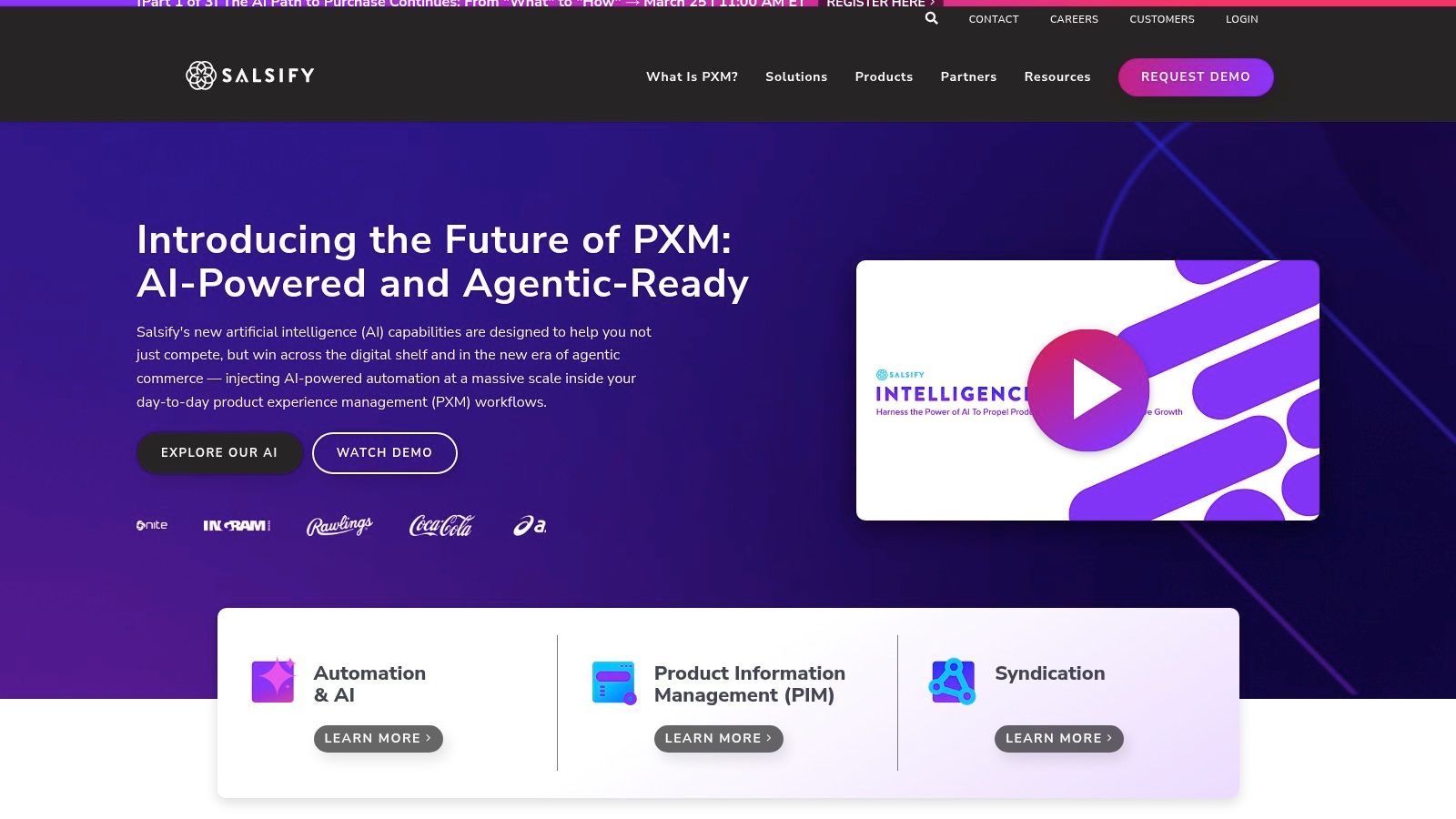
The platform is designed for large-scale operations. Its core strength is its ability to connect your single source of truth to the specific requirements of hundreds of different retail channels. Salsify handles the complex mapping and syndication, ensuring your product listings on Amazon, Walmart, or Target are not only correct but also optimized for that specific storefront's algorithm. For a software PM, observing its workflow automation can offer insights into building better, more integrated suites of product manager software tools.
Core Strengths & Use Cases
PIM + DAM + Syndication: Salsify integrates these three pillars tightly. This means you can manage product specs, marketing copy, and high-resolution imagery in one place and then push that complete package out to retail partners without manual intervention.
Digital Shelf Analytics: The platform provides feedback on how your products are performing on retailer sites, scoring content readiness and identifying gaps. It answers the question: "Is our product page on BestBuy.com actually effective?"
Enterprise Governance: Its workflow and governance tools are built for large, distributed teams, which is critical for maintaining brand consistency at scale.
Limitations and Considerations
Salsify is positioned for the mid-market and enterprise segments. Pricing is quote-based and reflects its comprehensive nature, making it a significant investment. Successful implementation is not a casual affair; it demands dedicated ownership within the organization and a real strategy for change management. It is a powerful solution, but it requires commitment.
Website: https://www.salsify.com
2. Akeneo
If Salsify is the sprawling command center, Akeneo is the methodical architect's workshop. It’s a Product Information Management (PIM) platform deeply rooted in the idea of building a structured, logical, and scalable product catalog. Akeneo places a heavy emphasis on the "experience" part of PXM (Product Experience Management) by providing teams with a clear framework to define, enrich, and govern their product data before it ever sees a channel. Its appeal lies in its flexibility, offering everything from a free, open-source Community Edition to a fully-managed enterprise SaaS solution.
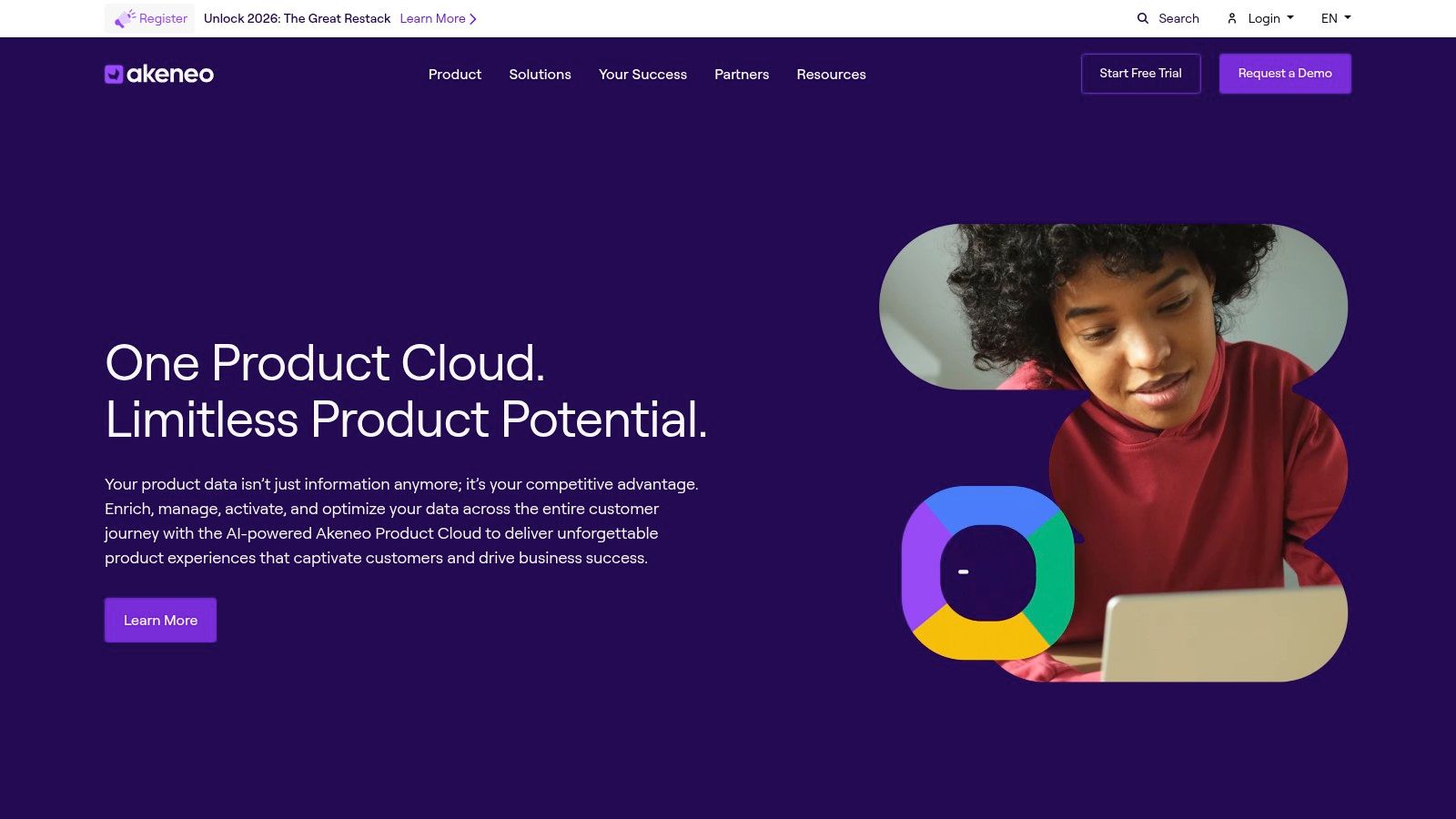
The platform’s strength is its data modeling. It guides you to think in terms of product families, attributes, and associations, which enforces a welcome discipline on otherwise chaotic data. This structured approach is foundational for effective product data management. It ensures that when you add a new product line or expand into a new region, you're building on a solid foundation, not just adding another room to a house of cards. For a product manager, understanding this structure is like learning how to create an ERD, it provides a blueprint for how information connects and flows.
Core Strengths & Use Cases
Flexible Deployment Models: Akeneo offers open-source (Community Edition), PaaS (Enterprise Edition/Serenity Mode), and SaaS (Growth Edition) options. This allows a company to start small, perhaps even self-hosting, and scale up to a fully supported enterprise solution as their needs mature.
Structured Data Modeling: Its core workflow is built around defining product structures first, then enriching them. This is ideal for businesses with complex catalogs where consistency across attributes (e.g., materials, dimensions, compliance data) is critical.
Strong Connector Ecosystem: Akeneo features a marketplace with a wide array of connectors for ERPs, eCommerce platforms like Shopify and BigCommerce, and other business systems, facilitating a more connected data environment.
Limitations and Considerations
The power lies in the paid editions. The free Community Edition is a great starting point but lacks the advanced workflow automation, validation rules, and asset management features that larger teams require. Pricing for the Growth and Enterprise editions is quote-based and represents a serious commitment. Implementation requires a thoughtful approach to data governance and modeling from the outset; it is not a tool you can simply switch on and use effectively without a plan.
Website: https://www.akeneo.com
3. Pimcore
If many PIMs are pre-fabricated houses, Pimcore is a set of high-end architectural blueprints and a pile of premium lumber. It's a powerful open-source platform that consolidates Product Information Management (PIM), Master Data Management (MDM), Digital Asset Management (DAM), and even a Content Management System (CMS) into a single, extensible framework. This is the choice for organizations that value ultimate flexibility and want to build a truly bespoke data and experience engine, rather than adapting to a pre-built SaaS workflow.
Pimcore's philosophy centers on its flexible data modeling engine. Instead of forcing your product data into a rigid structure, it provides the tools to define the exact objects, hierarchies, and relationships your business needs. This developer-centric approach means you are not just managing product data; you are building the very foundation of your digital ecosystem. By visually mapping out complex information architecture, as seen in this exploration of Dropbox's file upload failure states, teams can leverage Pimcore's flexibility to build truly robust systems.
Core Strengths & Use Cases
All-in-One Architecture: By combining PIM, DAM, MDM, and CMS, Pimcore eliminates data silos at their source. You can manage a product's technical specifications, marketing copy, related lifestyle images, and the webpage it lives on from one unified backend.
Open-Source Flexibility: The free Community Edition offers a potent starting point, allowing teams to build, customize, and integrate without initial licensing costs. This makes it an attractive option for companies with strong internal development resources.
Flexible Data Modeling: Its strength is allowing you to define any data structure. This is critical for businesses with complex products, extensive variant options, or unique data relationships that do not fit standard PIM molds.
Limitations and Considerations
Pimcore is not a turnkey solution. Its greatest strength, flexibility, is also its biggest implementation hurdle. It requires significant developer involvement and a clear architectural plan to be successful. The open-source model means that enterprise-grade features, official support, and managed services come with the paid Enterprise subscription. Migrating complex data into such a custom system also requires careful planning, a process that shares principles with understanding how to migrate data between different product management and design software systems.
Website: https://pimcore.com
4. inriver
inriver presents itself as an end-to-end product journey platform, built on a composable, multi-tenant SaaS architecture. It’s designed for enterprises that view product data not as a static asset but as a living entity that evolves across its lifecycle. The platform combines core PIM capabilities with syndication and digital shelf analytics, focusing on adaptability and workflow automation to connect the dots from creation to customer.
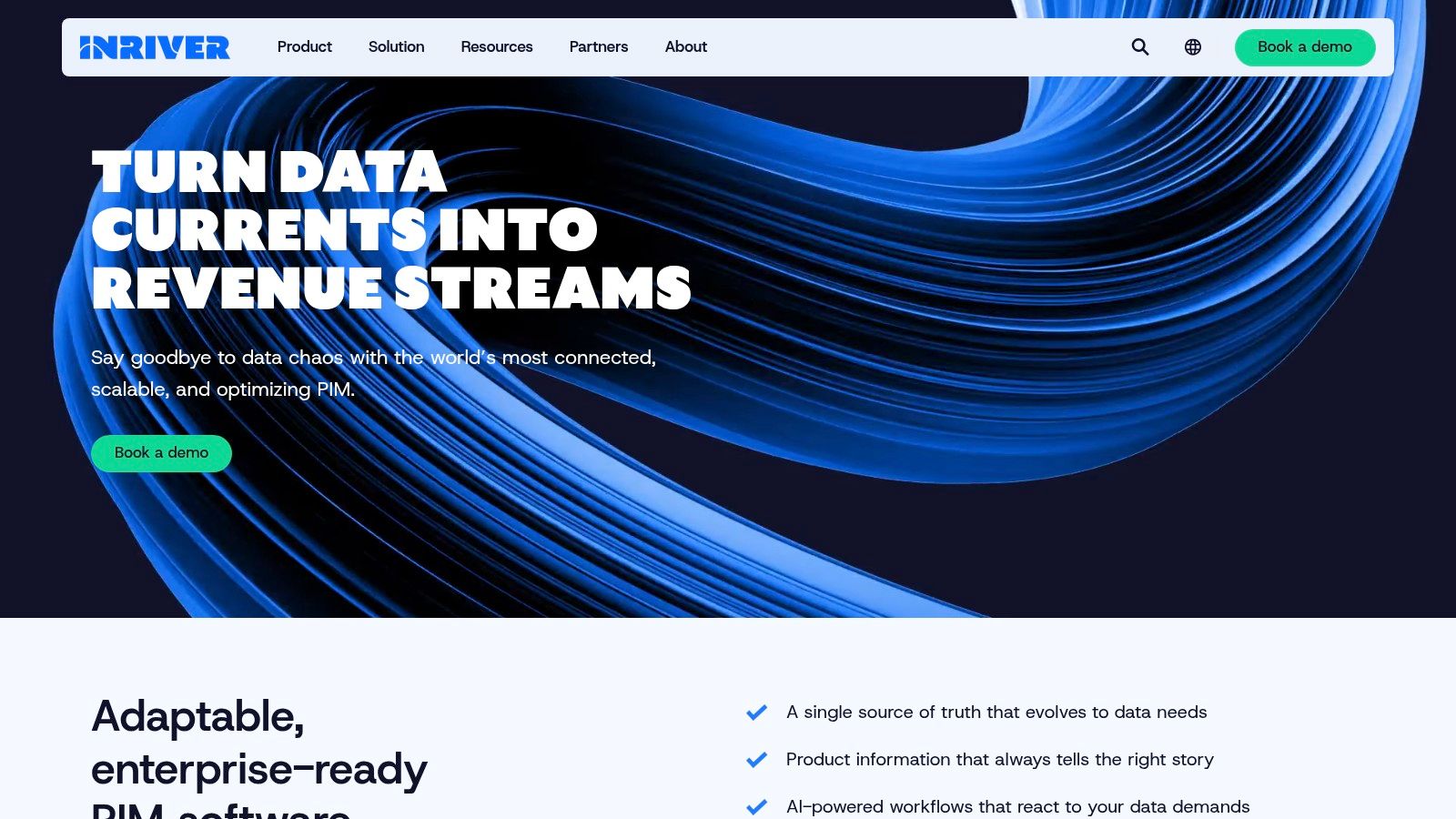
This tool is for organizations aiming to control the complete product narrative without stitching together multiple point solutions. A key differentiator is its commitment to MACH (Microservices, API-first, Cloud-native, Headless) principles, making it a forward-looking choice for companies building a modern, flexible tech stack. The platform’s AI-assisted enrichment helps teams automate tedious data entry, which provides useful insights for product teams exploring how they can use AI for organizing product documentation automatically in their own workflows.
Core Strengths & Use Cases
Integrated Data Lifecycle: inriver’s strength is its unified approach, covering data enrichment, syndication to channels via one-click or API calls, and then analyzing performance on the digital shelf. This closes the feedback loop for product data management.
Composable Architecture: Its MACH alignment allows for greater flexibility. Teams can integrate inriver into a best-of-breed ecosystem without being locked into a monolithic suite, which is critical for future-proofing an enterprise's commerce strategy.
AI-Powered Enrichment: The platform uses AI to suggest attributes, write copy, and translate content, reducing manual effort and accelerating the process of getting products ready for market.
Limitations and Considerations
inriver is built for the enterprise, and its quote-based pricing reflects that. The investment can be substantial, placing it out of reach for smaller businesses. While powerful, its flexibility means implementation often requires a clear strategy and may benefit from the guidance of an implementation partner to tailor workflows and integrations effectively.
Website: https://www.inriver.com
5. Stibo Systems STEP
Stibo Systems STEP is less of a departmental tool and more like an organization's central nervous system for data. It originates from the world of Master Data Management (MDM), which means its DNA is wired for governance, control, and multi-domain complexity. This is not just about product descriptions; it's for enterprises that see product data as one critical domain among many, like customer, location, and supplier data, that all need to be unified and pristine.
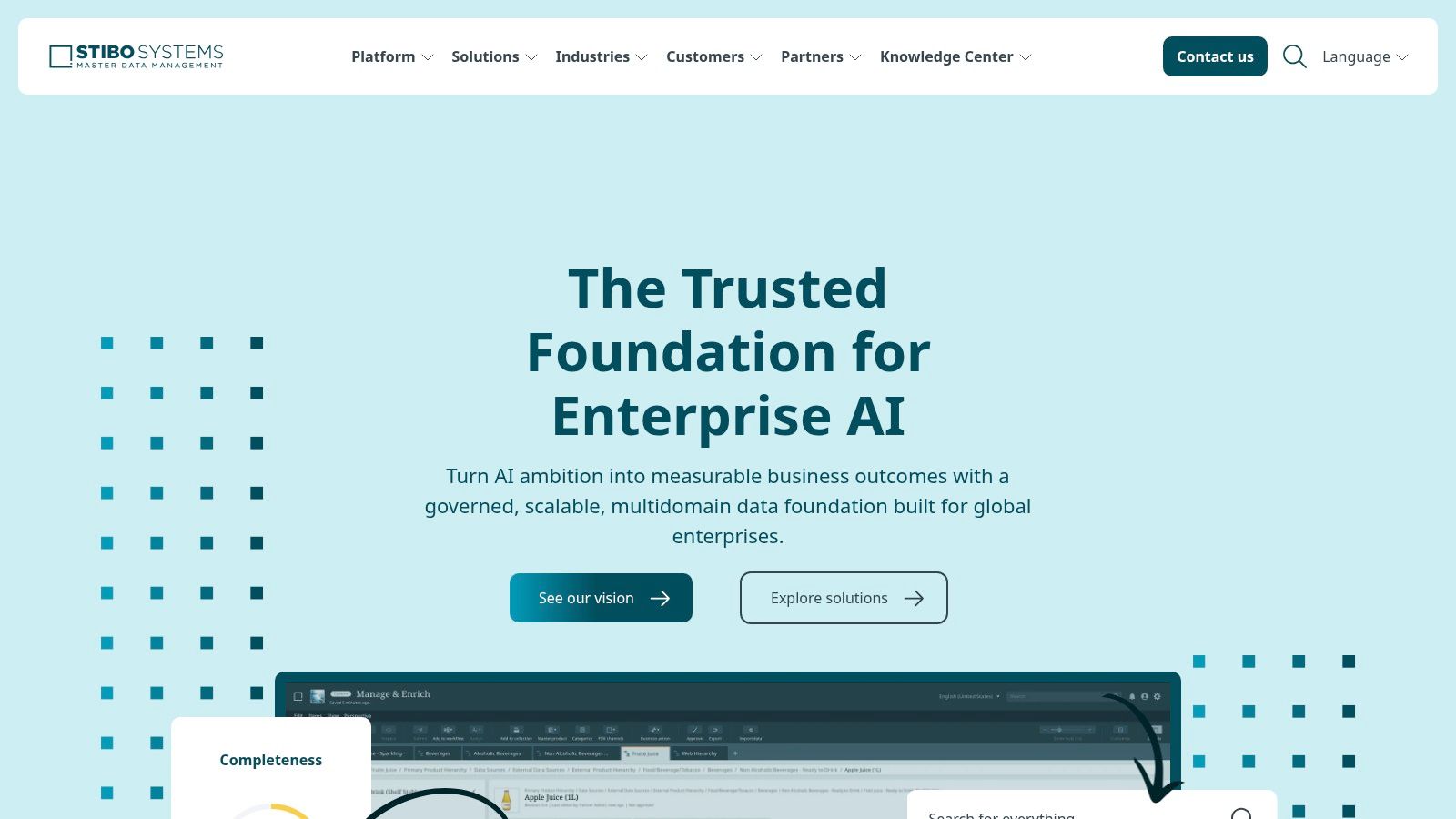
The platform is designed for global enterprises managing intricate product catalogs with deep, complex taxonomies and relationships. Think of a manufacturer with thousands of component parts that combine into hundreds of finished goods, sold in dozens of countries with unique regulatory requirements. STEP provides the granular control to manage this web of information. Its cloud-native architecture offers scalability, and the platform keeps meticulous documentation and changelogs, ensuring system administrators are never in the dark about updates.
Core Strengths & Use Cases
Multi-Domain MDM: STEP's greatest asset is its ability to manage product information alongside other core data domains. It’s ideal for organizations aiming for a single, authoritative source for all enterprise data, not just product specs.
Deep Governance and Auditing: For regulated industries or companies with strict compliance needs, the platform’s versioning, workflows, and audit trails are essential. It answers the question: "Who changed this attribute, when, and who approved it?"
Complex Taxonomy Management: STEP excels at handling products with complex hierarchies, interdependencies, and a high degree of variation. It is built for scenarios where simple flat data structures are insufficient for proper product data management.
Limitations and Considerations
This is an enterprise-grade solution through and through. The platform's power comes with significant implementation complexity and time. This is not a plug-and-play PIM; it's a foundational data infrastructure project that requires serious organizational buy-in and a dedicated team. The pricing is quote-based, reflecting a substantial investment suited for large corporations that need its deep capabilities.
Website: https://www.stibosystems.com
6. Informatica Product 360
Informatica Product 360 is not a standalone tool; it is a heavyweight component within a larger data universe. Think of it as the product-specific module for an organization’s central nervous system for data. It's designed for enterprises that see product data not as a marketing asset, but as a critical piece of their Master Data Management (MDM) strategy. It excels where governance, data lineage, and integration with complex corporate systems are paramount.
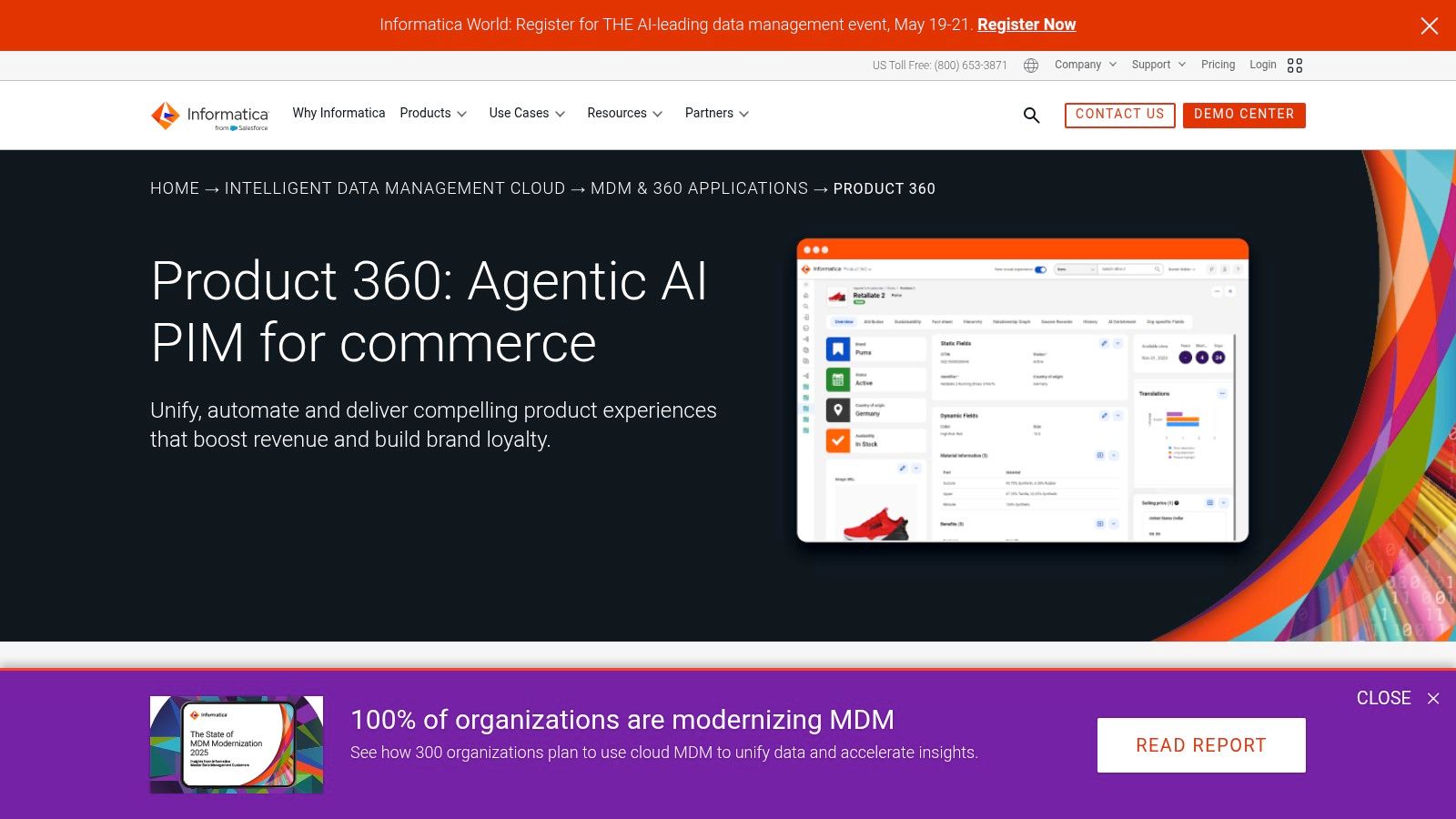
This platform shines in regulated industries or in companies managing immense, multi-domain complexity. Its strength is not just storing product attributes; it's about creating an authoritative, governed "golden record" for each product that is trusted across finance, supply chain, and commerce teams. For product managers in these environments, Informatica provides a robust framework for ensuring that the product data feeding their digital experiences is consistent, auditable, and secure.
Core Strengths & Use Cases
Enterprise MDM Integration: Product 360 is built to live inside Informatica’s MDM hub. This is its key differentiator. It connects product data with customer, supplier, and location data, providing a true 360-degree view.
Data Governance and Lineage: The platform offers powerful tools to track where data comes from, who changed it, and how it is being used. This is essential for compliance and for troubleshooting data quality issues at their source.
Supplier Onboarding: It includes portals and workflows specifically for ingesting and validating product data from a network of suppliers, ensuring consistency before it ever enters your ecosystem.
Limitations and Considerations
Informatica is an enterprise-grade solution with a corresponding price tag and implementation effort. Pricing is quote-only and intended for large-scale deployments. For teams not already invested in the Informatica ecosystem, adopting Product 360 can be a significant undertaking, often requiring specialized consultants and a dedicated internal team. It is not a nimble tool for a small D2C brand; it’s an industrial-strength solution for complex global operations.
Website: https://www.informatica.com/products/master-data-management/product-information-management.html
7. Syndigo (Riversand)
Syndigo represents a heavyweight contender in the product data management arena, particularly after its acquisition of Riversand. This is not just a PIM; it's a full-scale Master Data Management (MDM) and syndication engine. Think of it as a central data refinery for massive enterprises that need to standardize product information not just for e-commerce, but for their entire operational backbone, from supply chain to marketing. Its main purpose is ensuring data quality and then pushing that verified data across one of the largest syndication networks available.
The platform is designed for complexity. Where some tools focus on the final mile of marketing content, Syndigo starts much earlier, establishing governance over core product data at an enterprise scale. Its cloud-native architecture is built to handle huge, multi-domain datasets, making it a fit for global manufacturers or distributors managing millions of SKUs. The core value proposition is less about beautiful content creation and more about creating unimpeachable data accuracy and ensuring it reaches every critical endpoint, from retailer portals to internal ERP systems.
Core Strengths & Use Cases
Massive Syndication Network: Syndigo’s key differentiator is its vast, pre-built network of connections to retailers and distributors. If your primary goal is getting accurate product data to a wide array of channel partners with minimal friction, this is a strong candidate.
Enterprise MDM Capabilities: Beyond product data, the platform can act as a central hub for other data domains like customer, supplier, or location data. This makes it a strategic asset for enterprise-wide data governance initiatives.
Data Quality Frameworks: It offers robust tools for data validation, cleansing, and enrichment at scale. This is critical for organizations where data errors have significant financial or compliance repercussions.
Limitations and Considerations
Syndigo is built for the enterprise, and its pricing and complexity reflect that. The cost is quote-based and will depend heavily on data volume, number of users, and the specific integrations required. Implementing a solution this comprehensive is a major project, often requiring specialized partners and a dedicated internal team to manage the rollout and ongoing governance. It's an industrial-strength solution for industrial-scale problems.
Website: https://syndigo.com/riversand/
8. Precisely EnterWorks
Precisely EnterWorks positions itself as more than just a product information silo; it’s an enterprise-grade Master Data Management (MDM) hub. It views product data management as one piece of a much larger data integrity puzzle. For organizations where product information is deeply entangled with supplier, customer, and location data, EnterWorks provides a central, governed environment to connect these domains. It’s built for complex ecosystems, especially those with deep roots in print catalogs and intricate supplier relationships.
The platform’s DNA comes from a world of physical distribution and multi-channel commerce. This is reflected in its strong capabilities for creating print-ready outputs and managing supplier portals where vendors directly upload and enrich product data. It’s less about the fast-paced digital shelf analytics of some newer tools and more about creating an unimpeachable, auditable data foundation. The goal here is governance and control across a wide network of internal and external collaborators.
Core Strengths & Use Cases
Supplier and Partner Portals: EnterWorks excels at creating secure, self-service portals. This allows suppliers to onboard their own products, reducing the data entry burden on your internal teams and enforcing data quality standards at the point of entry.
Print Automation: For companies in manufacturing or distribution that still rely heavily on printed catalogs, spec sheets, or price lists, the platform's print automation is a core feature. It links the master data directly to Adobe InDesign templates.
Holistic MDM: Its ability to manage multiple data domains (Product, Customer, Asset, Location) in one place is a significant advantage for enterprises seeking a true "single view" across their operations, not just for products.
Limitations and Considerations
Precisely EnterWorks is a serious enterprise commitment with quote-based pricing. Its heritage as a comprehensive MDM solution means its user interface can feel more dense and less intuitive than modern, SaaS-only PIMs. Organizations considering EnterWorks should be prepared for a structured implementation process that involves significant data modeling and workflow configuration. It’s a powerful engine for data governance, but it requires skilled operators.
Website: https://www.precisely.com/product/precisely-enterworks/enterworks/
9. Plytix
Plytix represents the democratization of product data management. It's built on the idea that managing product information should not require a six-figure budget or a dedicated implementation team. This cloud-based PIM is designed for small to medium-sized businesses that need a central source of truth but are wary of the cost and complexity of enterprise-grade solutions. Its core value is accessibility: clear pricing, a user-friendly interface, and a fast track to getting organized.
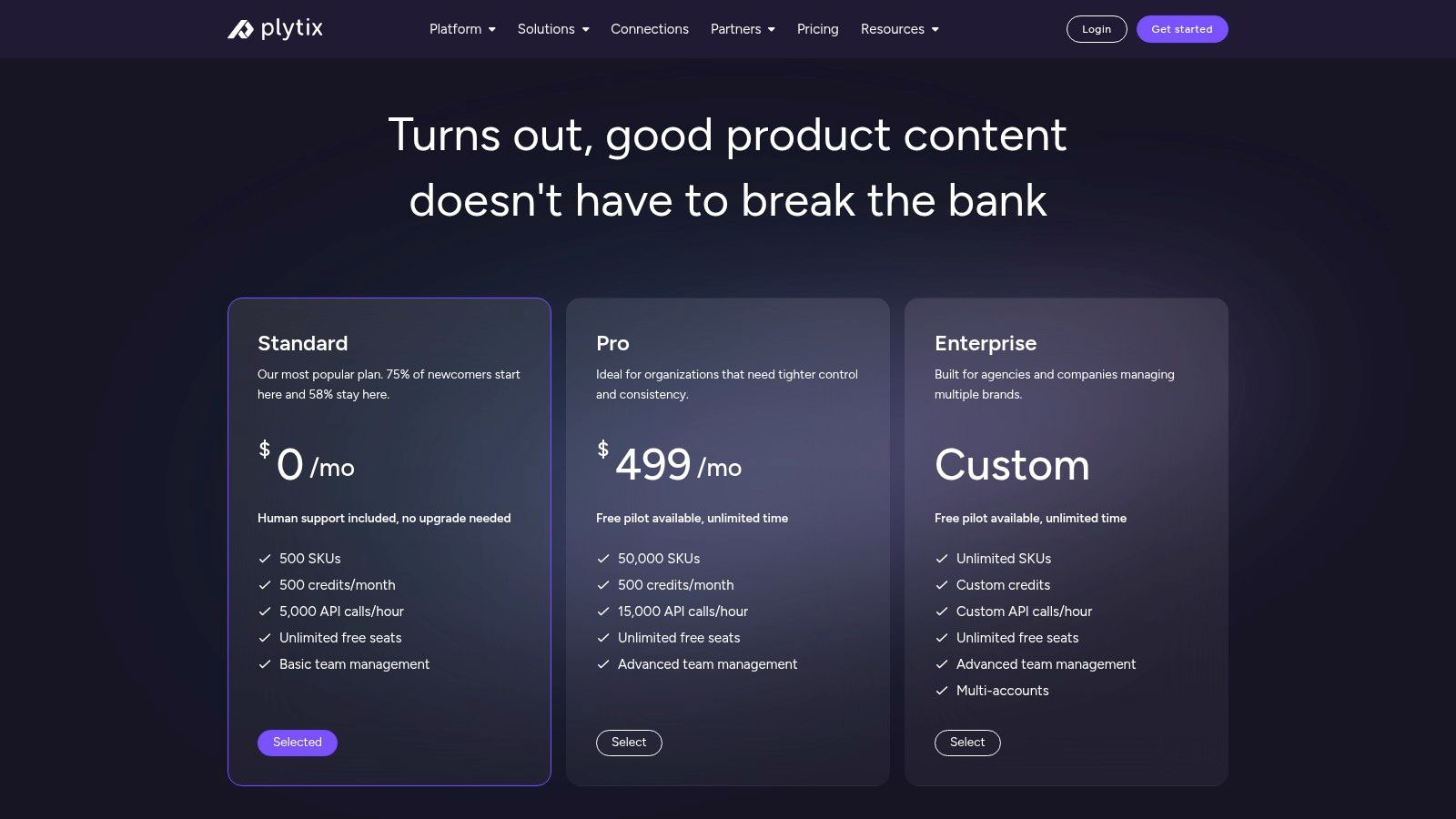
The platform is less of a battleship and more of a nimble patrol boat. It combines PIM and DAM functionalities, allowing teams to store product specifications alongside lifestyle images and marketing assets. The emphasis is on outputs. Plytix makes it straightforward to create shareable brand portals for partners or generate custom feeds for e-commerce platforms and marketplaces. It is a pragmatic tool for brands that are outgrowing spreadsheets and need structure without the enterprise-level overhead.
Core Strengths & Use Cases
Low Barrier to Entry: With a free-forever plan and transparent, publicly listed paid tiers, Plytix removes the guesswork and high upfront costs. This allows teams to start organizing their product data immediately.
User-Friendliness: The interface is clean and intuitive, designed for marketers and merchandisers, not just IT. Non-technical users can manage data, create formulas, and set up channel outputs without a steep learning curve.
Shareable Outputs: Its Brand Portals and Channels features are perfect for creating curated product catalogs for different audiences, whether it's for sales teams, distributors, or specific online stores.
Limitations and Considerations
Plytix is purpose-built for the SMB segment, and its limitations reflect that focus. The number of outputs, API call limits, and automation capabilities are tied to the pricing tier, which can be a constraint for rapidly scaling businesses. It does not offer the deep master data management (MDM) or complex governance features found in platforms like Salsify or Akeneo, making it less suitable for large enterprises with intricate hierarchies and compliance needs.
Website: https://www.plytix.com/pricing
10. Catsy
Catsy offers a more guided entry into product data management, packaging its PIM and DAM capabilities into focused offerings. It’s less of a sprawling, do-everything ecosystem and more of a purpose-built solution for specific use cases, particularly for Shopify merchants, multi-store retailers, and B2B distributors. The platform is designed to get teams productive quickly by reducing initial complexity.
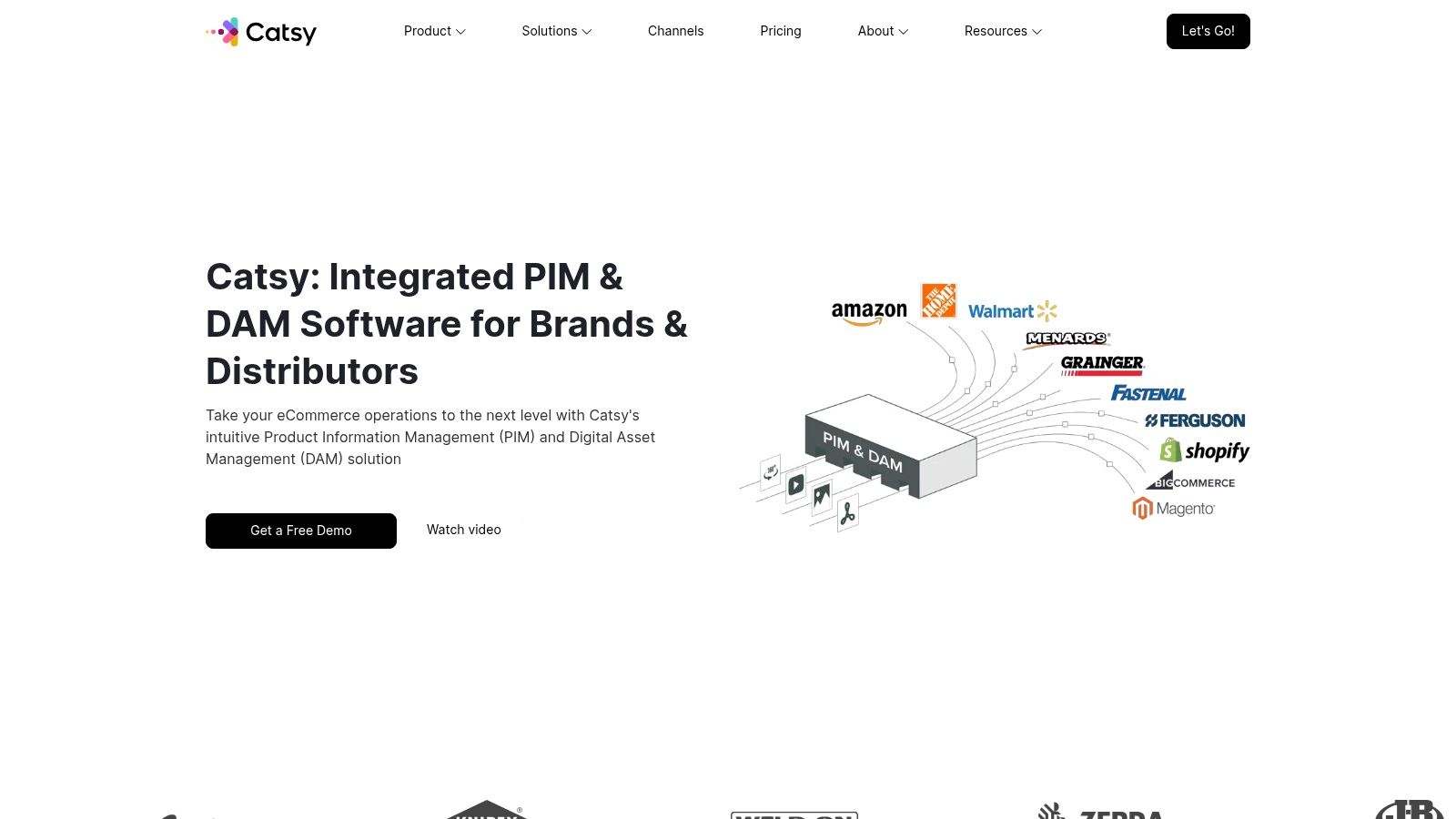
The core idea is to provide guardrails for ecommerce teams. Instead of presenting a blank canvas, Catsy comes with pre-packaged connectors and workflows tailored for channels like Shopify. This includes robust support for metafields and automation routines that help maintain data integrity across multiple storefronts. It guides users toward a "complete" product profile, a key feature for teams struggling to standardize their information before it goes live. This structured approach helps prevent common data issues that can derail complex projects, much like how a well-defined user flow for a Shopify checkout redesign can prevent drop-offs.
Core Strengths & Use Cases
Pre-Packaged Solutions: Catsy’s focused offerings for Shopify and B2B distributors significantly shorten the time-to-value. Teams do not have to build their channel integrations from the ground up.
Completeness Scoring: The platform includes workflow tools that score product information completeness, giving teams a clear metric to work toward before publishing. This is critical for maintaining quality control with minimal manual oversight.
Unified PIM + DAM: Like its larger counterparts, it combines product specifications and digital assets in one place, ensuring that the correct image is always associated with the latest product data.
Limitations and Considerations
Catsy is a strong contender for mid-sized companies, especially those heavily invested in the Shopify ecosystem. However, its ecosystem is not as expansive as the largest enterprise players. Pricing is provided through a demo and quote process, which means you’ll need to engage their sales team to understand the investment required. It is a pragmatic choice for teams who value speed and a clear path to implementation over endless customization options.
Website: https://catsy.com
11. Sales Layer
Sales Layer positions itself as the friendly face of product data management, built specifically for the marketers and commercial teams who live and breathe product content daily. It’s a cloud PIM designed not for deep IT integration but for rapid adoption and collaborative enrichment. Think of it as the accessible, team-oriented hub that empowers non-technical users to centralize, improve, and distribute product information without needing a developer on standby.
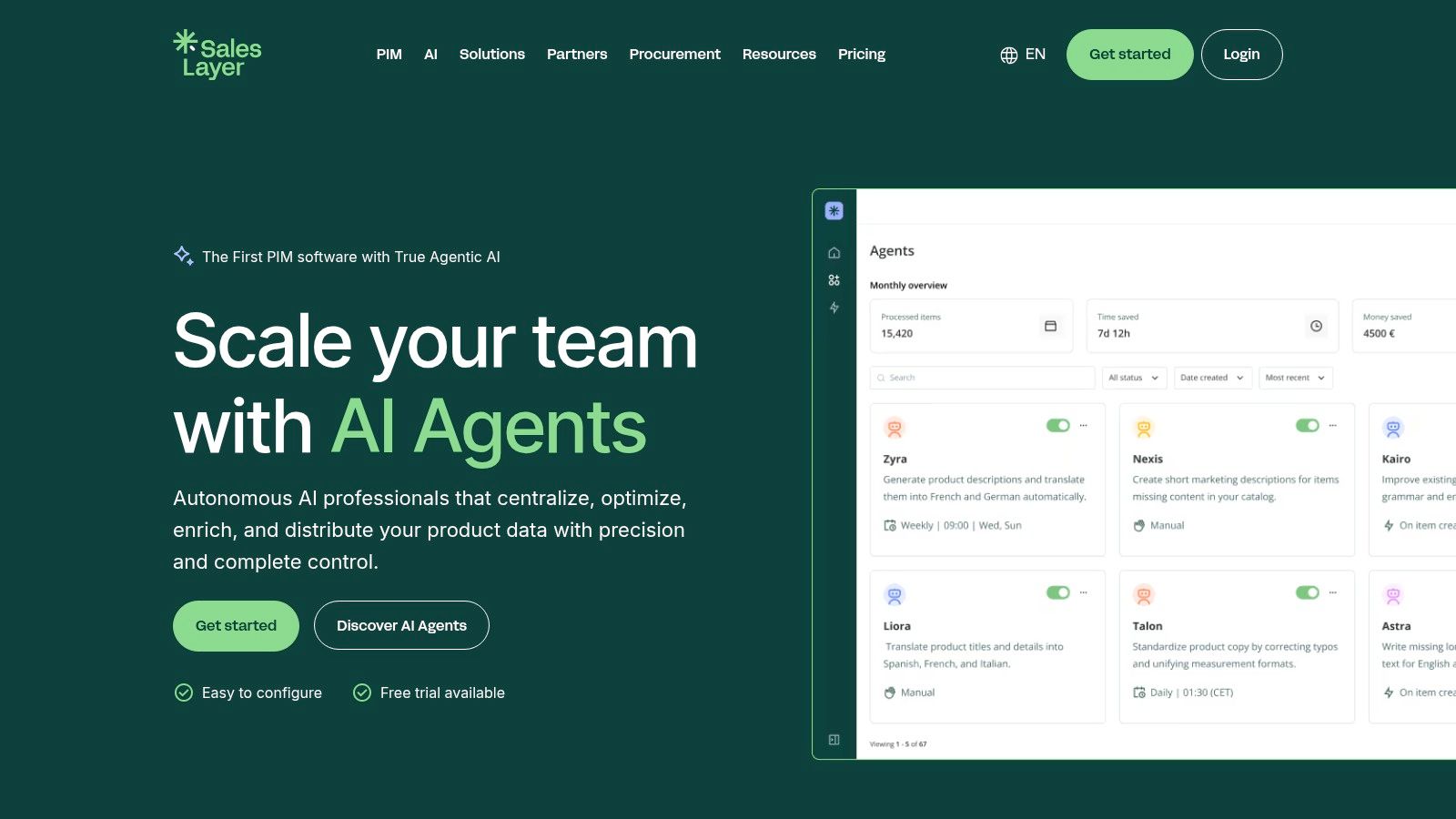
The platform’s core idea is to remove friction. Where enterprise systems can feel like navigating a complex machine, Sales Layer feels more like a shared workspace. Its strength is its marketer-centric user interface and its focus on quick onboarding. This makes it an ideal solution for teams that need to get their product catalog organized and pushed to multiple channels, like marketplaces and retailer feeds, without a six-month implementation project. What does a smooth, user-centric process look like? Consider this interactive prototype for a redesigned scheduling flow, which prioritizes clarity and speed.
Core Strengths & Use Cases
Marketer-Friendly UI: The platform is praised for its intuitive interface, which allows commercial teams to manage product enrichment, data quality checks, and workflows without a steep learning curve.
Rapid Onboarding & Syndication: Sales Layer focuses on getting users up and running quickly. Its channel connectors are built to simplify the process of publishing accurate data to various e-commerce platforms and marketplaces.
Collaborative Enrichment: Tools are built-in for teams to work together on improving product data, with validation rules and quality checks ensuring consistency before information goes live.
Limitations and Considerations
Sales Layer strikes a balance between features and usability, which means it might lack the deep, granular governance and advanced process automation found in top-tier enterprise solutions. Pricing is quote-based, tailored to catalog size and the number of channels, so costs can scale. While it’s powerful for its intended audience, companies with extremely complex, multi-brand hierarchies or strict regulatory compliance needs might find they require add-ons for more advanced governance.
Website: https://www.saleslayer.com
12. Contentserv
Contentserv positions itself as the specialist for complex industries like retail, fashion, and consumer goods. Instead of a one-size-fits-all approach to product data management, it offers a Product Experience Management (PXM) platform with pre-built solutions and templates for these specific verticals. Think of it as a PIM that already speaks the language of seasonal collections, complex manufacturing specs, or FMCG compliance, which reduces the initial setup friction.
Acquired by Centric Software, Contentserv deeply integrates the supply chain context with the demands of omnichannel commerce. The core idea is that a product's journey does not start when marketing gets involved; it starts with design and manufacturing. The platform’s strength lies in its robust data enrichment workflows and governance models, ensuring that product information is not just stored but actively improved and prepared for every channel, from an e-commerce site to a printed catalog.
Core Strengths & Use Cases
Vertical-Specific Solutions: Contentserv shines for brands in retail, fashion, and CPG. Its industry templates provide a running start, with data models and workflows configured for the unique challenges of those sectors.
PIM + PXM Focus: The platform goes beyond basic data storage, providing tools to build compelling omnichannel product experiences. This means managing not just the data, but how that data is presented across different customer touchpoints.
Strong Enrichment & Governance: Built for complex product portfolios, it offers powerful workflows for data cleansing, translation, and enrichment, ensuring high-quality, consistent information.
Limitations and Considerations
Contentserv is enterprise-grade, with quote-based pricing that reflects its deep feature set. While powerful, its brand recognition and partner ecosystem are less extensive in North America compared to some of the larger players in the market. This might be a factor for global companies looking for a wide network of implementation partners. Implementation requires a clear strategy, particularly for integrating it upstream with PLM systems.
Website: https://www.contentserv.com
From Data Janitor to Data Strategist: The Next Step
Choosing a product data management platform is a significant commitment. It’s not just a software purchase; it’s an operational re-wiring of how your organization thinks about, handles, and values its products. The tools we’ve explored, from enterprise-grade platforms like Salsify and Informatica to more agile solutions like Plytix, all promise a single source of truth. But what is the real goal?
To transform your role.
A friend at a major CPG company recently lamented that she spends most of her week as a 'data janitor', chasing down inconsistent SKUs, correcting outdated descriptions, and manually syncing information across a dozen disconnected systems. This is the silent tax you pay for a fragmented data infrastructure. It's a role defined by reaction, not strategy. The core purpose of effective product data management is to automate the janitorial work so you can become the data strategist.
However, a tool alone is never the strategy. It’s the vehicle. Your first step isn’t scheduling a demo with Sales Layer or Pimcore. It’s conducting an honest, unflinching audit of your current state.
The basic gist is this: map your product information’s journey. Who creates the initial data? Who enriches it with marketing copy or technical specifications? Where does it flow for syndication to retailers or for use on your e-commerce site? Most importantly, where does it break? This map is your single most powerful asset. A study from the Aberdeen Group found that companies with a formal PIM system see, on average, a 25% reduction in data management time. That’s the prize. That’s the time you get back to focus on market positioning, competitive analysis, and strategic growth.
This mapping process is not just a technical exercise; it's an organizational one. It reveals process gaps, ownership ambiguity, and the human cost of inefficiency. You might find that the marketing team has no visibility into the supply chain team’s data, leading to campaigns for out-of-stock products. Or that your QA team wastes hours validating data that was already incorrect at the source. This is the real cost of poor product data management.
In short, your next move is to create a simple user flow diagram of your data's journey from creation to customer. You can do this on a whiteboard, but a digital tool can make it more concrete and shareable. For example, by mapping the process for the LinkedIn job posting flow, you can quickly identify hidden steps and bottlenecks that a simple checklist could never reveal. This visual evidence turns the abstract pain of 'bad data' into a concrete, measurable problem. It becomes your business case, your roadmap, and your justification for the investment. It’s the document that moves the conversation from "we have data problems" to "here is exactly where we are losing time and money, and here is how we fix it."
This map will also be your guide for selecting the right platform.
Is your biggest pain point syndication to a wide variety of retail channels? Look closely at Syndigo and Salsify.
Are you a manufacturer with complex product relationships and a need for digital asset management? Pimcore or Stibo Systems might be a better fit.
Are you a small but growing team needing an accessible, easy-to-implement solution? Plytix or Catsy could be your starting point.
The platform you choose should solve the specific fractures you identified in your data-flow map. Do not buy a sledgehammer if you only need a screwdriver. This focused approach ensures you're not just buying features but investing in a solution that makes your team, your product, and your business smarter. The goal is to leave the mop and bucket behind for good.
Ready to map your own data flows and build the business case for better product data management? Figr is an AI design partner that can help you visualize complex processes, identify edge cases, and create clear, actionable artifacts from your raw inputs. Turn your screenshots and notes into a compelling visual story that gets you the buy-in you need.