
Every product team feels the pain. (Feeling that right now? If yes, keep going.)
Cycles that take too long compared to what you expected. Features that ship incomplete. Stakeholders asking questions that should have been answered weeks ago. Engineers discovering edge cases that were never designed.
But when you try to articulate where the breakdown happens, it slips away. The pain is diffuse.
I spent six months diagnosing product development cycles across multiple companies. The breakdowns clustered into seven patterns. Count how many apply to your team.
Sign 1: Prototypes Look Nothing Like Your Product
Symptom: Stakeholders say "this doesn't look like us." Half the review discusses styling instead of strategy.
Root cause: Generic AI tools have never seen your product.
Fix: Parse your product first. Every prototype inherits your exact design language.
Sign 2: You Re-Explain Your Product Every Session
Symptom: Every AI session starts with the same pasted paragraphs. Product overview. Target users. Constraints.
Root cause: Most AI tools have no memory. Each session begins fresh.
Fix: Product memory that persists. Context compounds instead of resetting.
Sign 3: PM Intent Gets Lost in Translation
Symptom: The PM knows exactly what they want. The design comes back different. Three revision cycles follow.
Root cause: Words are lossy for visual communication.
Fix: PM generates prototype showing intent. Designer sees exactly what PM means.
Sign 4: You Cannot Validate Before Engineering Commits
Symptom: Features ship without user testing because realistic prototypes take too long.
Root cause: Validation requires realistic prototypes. Realistic prototypes require significant design time.
Fix: PM-generated prototypes enable pre-engineering validation.
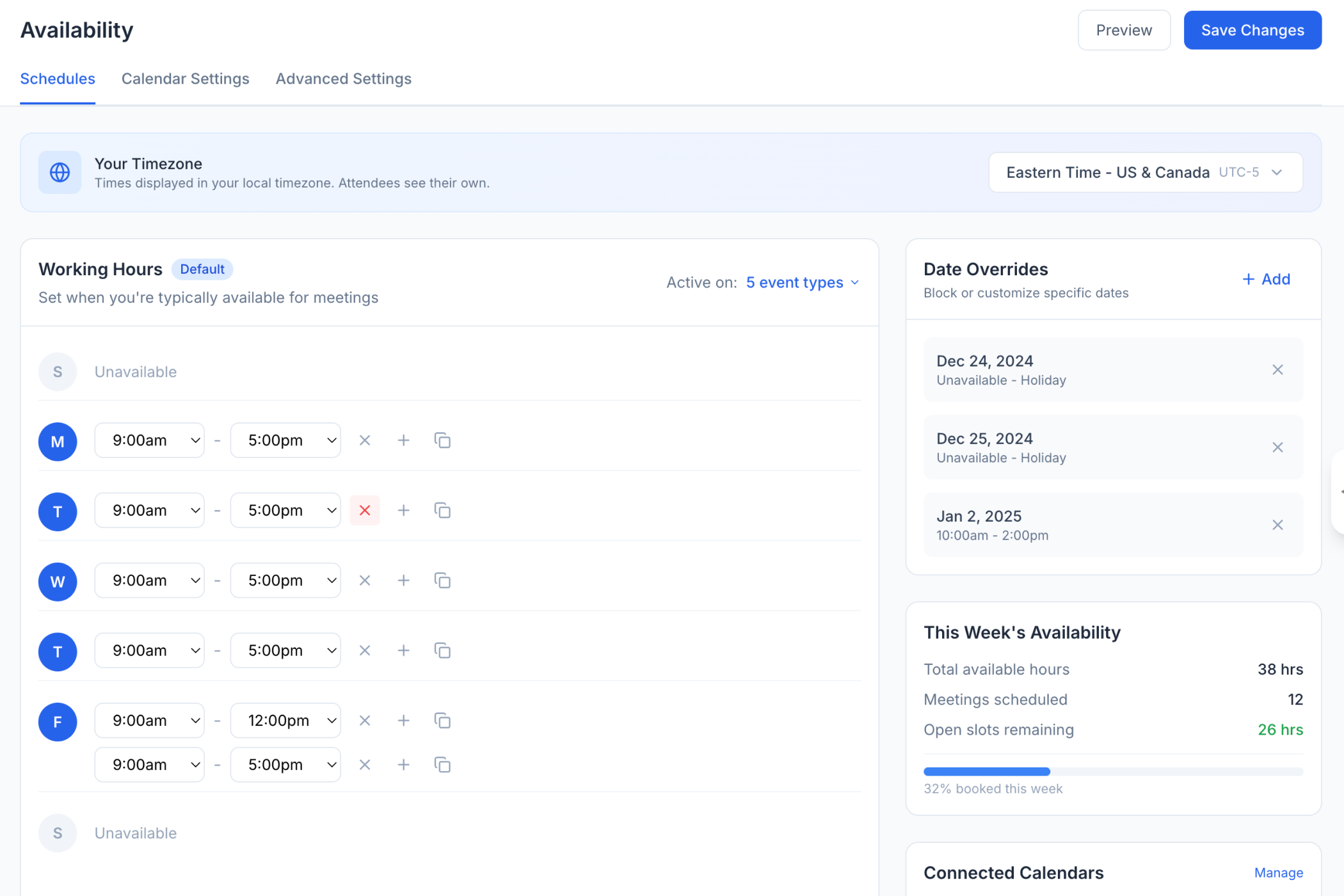
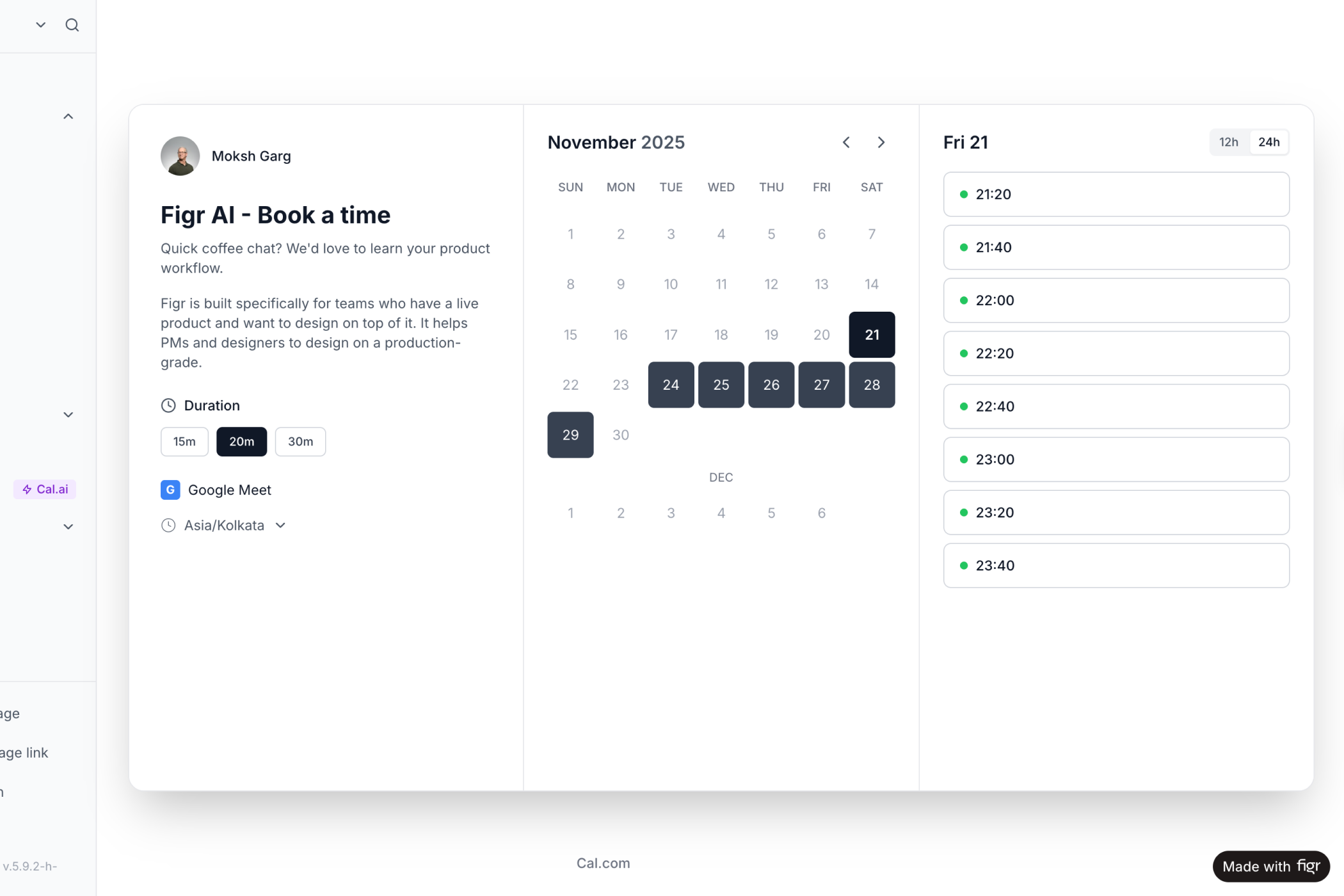
→ See how Cal.com vs Calendly was validated before building (Need the product pages too? Cal.com vs Calendly.)
Sign 5: Stakeholder Prototypes Take Days When You Need Hours
Symptom: Executive asks for a prototype by tomorrow. Answer is always "not possible."
Root cause: Creating prototypes requires designer bandwidth.
Fix: Five-minute stakeholder prototypes in your product's design language.
Sign 6: Designs Drift From Design System
Symptom: Inconsistencies creep in. One screen uses one button style. Another uses different.
Root cause: Design system compliance is manual. Manual processes fail at scale.
Fix: Outputs automatically design-system compliant.
Sign 7: Edge Cases Discovered After Launch
Symptom: Features ship. Bug reports arrive. "What happens when the network drops?"
Root cause: Human working memory cannot hold all edge cases for complex features.
Fix: Pattern intelligence surfaces edge cases proactively.
→ See how Dropbox edge cases were mapped before development (Need the product page too? Dropbox.)
The Diagnostic
Most teams have 4-6 of these seven signs. The fixes compound because the signs are interconnected.
The basic gist is this: fixing multiple signs transforms the cycle. Context memory enables design system compliance. Compliance enables faster prototypes. Faster prototypes enable pre-engineering validation.
In Short
Your product development cycle is probably broken in at least three ways. The pain shows up everywhere, but root causes hide.
AI that understands your product, remembers your decisions, and surfaces what you miss is the fix. For the complete framework to fix your cycle end-to-end, see our guide to the product development lifecycle stages.
→ Try Figr on your most painful sign