

It's 4:47 PM on Thursday. Your VP just asked for something visual to anchor tomorrow's board discussion. You have a PRD. You have bullet points. You have 16 hours and no designer availability.
What you're reaching for isn't just a document, it's a shared map of the future. A static timeline feels like a promise you can't keep, while a vague list of themes feels like you're hiding something. The problem isn't your plan, it's the language you're using to describe it.
The basic gist is this: the right project roadmap example doesn't just show what you're building, it reveals how you think. Time isn't a conveyor belt of features, it's a switchboard connecting team effort to business outcomes. A well-crafted roadmap acts as a comprehensive plan, similar to how one might build a Strategic Roadmap To Create A Thesis, guiding your entire initiative from conception to completion.
This guide moves beyond generic templates. We will dissect eight distinct roadmap archetypes, from timeline-based Gantt charts to outcome-driven OKR formats. For each project roadmap example, we will break down the specific conversation it’s designed to start, the strategic situation it fits best, and how to adapt it for your team. You will leave with actionable takeaways and a clearer framework for communicating your vision, whether you're aligning with stakeholders or briefing your engineering team.
1. Timeline-Based Roadmap (The Gantt Chart)
A timeline-based roadmap is the classic visual for answering one question above all others: “When?” It arranges tasks and milestones chronologically across a horizontal axis. Think of it less as a strategic document and more as an instrument of coordination. Its primary job is to create a shared understanding of delivery dates, dependencies, and the linear sequence of work.
This format excels in contexts where deadlines are firm and external stakeholders need predictability. Companies like Microsoft and Slack often use public-facing timeline roadmaps to manage customer expectations for feature releases. It provides a clear, digestible view of what’s coming and when. A friend at a B2B SaaS company calls this their "Sales Enablement Roadmap" because it's the single most effective document for aligning sales, marketing, and success teams on the product's future.
Strategic Breakdown
The strength of this project roadmap example is its simplicity. Everyone from the board of directors to a new sales hire can understand a Gantt chart at a glance. However, its greatest strength is also its biggest weakness. By focusing on when, it can inadvertently de-emphasize why. The risk is that the team becomes a feature factory, hitting dates without necessarily moving key business metrics.
Actionable Takeaways
To make a timeline-based roadmap work, you must be disciplined:
- Use it for communication, not execution. This is an artifact for aligning stakeholders, not for managing the day-to-day sprint.
- Build in a buffer. A 20-30% buffer on timelines isn't pessimistic, it's realistic. It accounts for the inevitable "unknown unknowns" that emerge during development.
- Tie milestones to outcomes. For each major release date, include a note specifying the user problem it solves or the business metric it aims to impact.
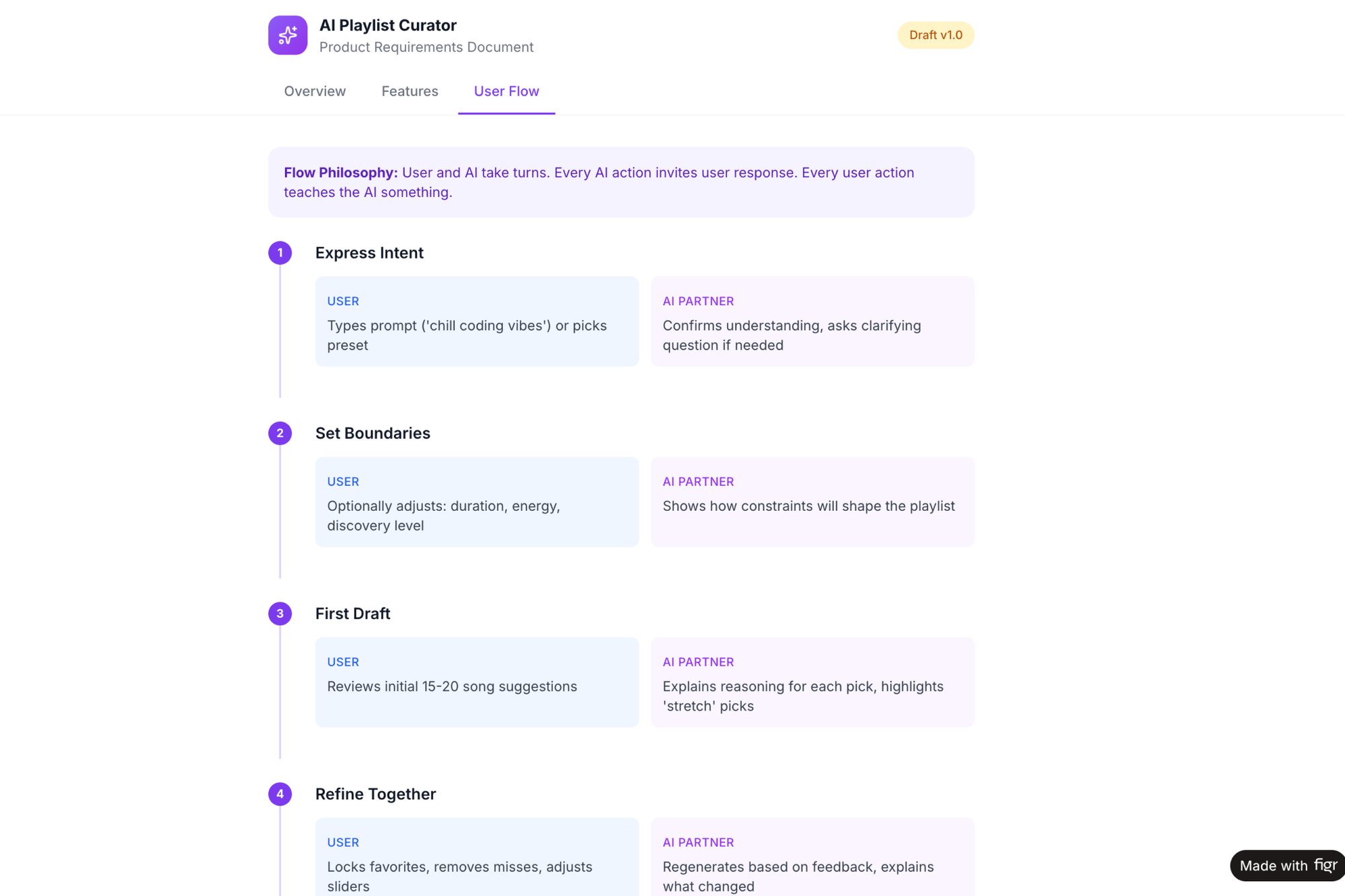
- Integrate with your documentation. A PRD for a new Spotify AI feature can generate a timeline to track its progress from concept to launch. Comparing different product roadmap tools vs. design prototyping tools can help you find the right stack for this integrated approach. For choosing the right tool to present these formats, our roundup of product manager software tools compares the leading platforms.
2. Outcome-Driven Roadmap (The OKR Compass)
An outcome-driven roadmap shifts the central question from “What are we building?” to “What are we trying to achieve?” Instead of listing features, this format organizes work around key business objectives and measurable results, often framed as Objectives and Key Results (OKRs). The features become hypotheses: bets on what might move the needle. This project roadmap example is less of a plan and more of a strategic framework for learning.
This approach thrives in product-led companies where teams have the autonomy to solve problems, not just ship code. Google famously pioneered the OKR model to maintain alignment while scaling. A product leader at a high-growth fintech firm described it as their "North Star document."
It doesn't dictate the path, but it constantly reminds everyone of the destination.
Strategic Breakdown
The power of an outcome-driven roadmap lies in its direct connection to business value. It forces difficult conversations about priorities and impact. By focusing on why, it empowers engineers and designers to propose better solutions than what might have been initially prescribed. The flip side is that it requires a high degree of trust and comfort with ambiguity, which can be challenging for stakeholders accustomed to predictable timelines.
Actionable Takeaways
To execute an OKR-aligned roadmap effectively, a shift in mindset is required:
- Frame initiatives as hypotheses. Start each item with a clear statement: “We believe that [initiative] will result in [measurable outcome] for [user persona].”
- Distinguish leading from lagging indicators. Track leading indicators like weekly active users to get early signals on your progress toward lagging indicators like revenue.
- Focus on problems, not solutions. The roadmap should define the customer problem to be solved in a given quarter. The specific solution should emerge from discovery.
- Generate your strategy from data. Ground your desired outcomes in real product data. For example, AI tools to generate product strategy documents can use analytics to ensure your OKRs are ambitious yet realistic. A detailed PRD, like this one for a new Spotify AI feature, should explicitly state the OKRs it aims to impact.
3. User Story Map Roadmap (The Narrative Arc)
A user story map roadmap flips the script from "when" to "who." It organizes work as a narrative, following the steps a user takes to accomplish a goal. The horizontal axis represents the user’s journey (e.g., Sign Up → Create Project → Invite Team), and the vertical axis stacks features under each step. This format is less about hitting dates and more about delivering a coherent, valuable experience.
This project roadmap example shines when the primary goal is user adoption and holistic problem-solving. Teams at companies like Notion and Figma implicitly use this approach. They organize their work around user workflows, not just isolated features. For instance, Notion didn’t just build a "database", they built the entire workflow from creation to relational linking. Each release deepens the user’s journey.
Strategic Breakdown
The power of a user story map is that it forces empathy. You cannot build one without deeply understanding your user's context and pain points. It keeps the team grounded in the why by visually connecting every task back to a specific moment in the customer's experience. The main risk? It can feel less concrete to stakeholders accustomed to hard deadlines.
Actionable Takeaways
To use a user story map effectively as a roadmap, treat it as a living document:
- Define the "walking skeleton." Identify the minimum set of features that allows a user to complete the core journey from end to end. This becomes your MVP.
- Color-code releases horizontally. Use horizontal swimlanes to group features into releases. The first slice is your MVP, the second is your V2, and so on. This adds a time dimension without sacrificing the user-centric structure.
- Involve the whole team in mapping. This isn’t a solo PM activity. Get design, engineering, and QA in a room to build the map. The shared context is invaluable.
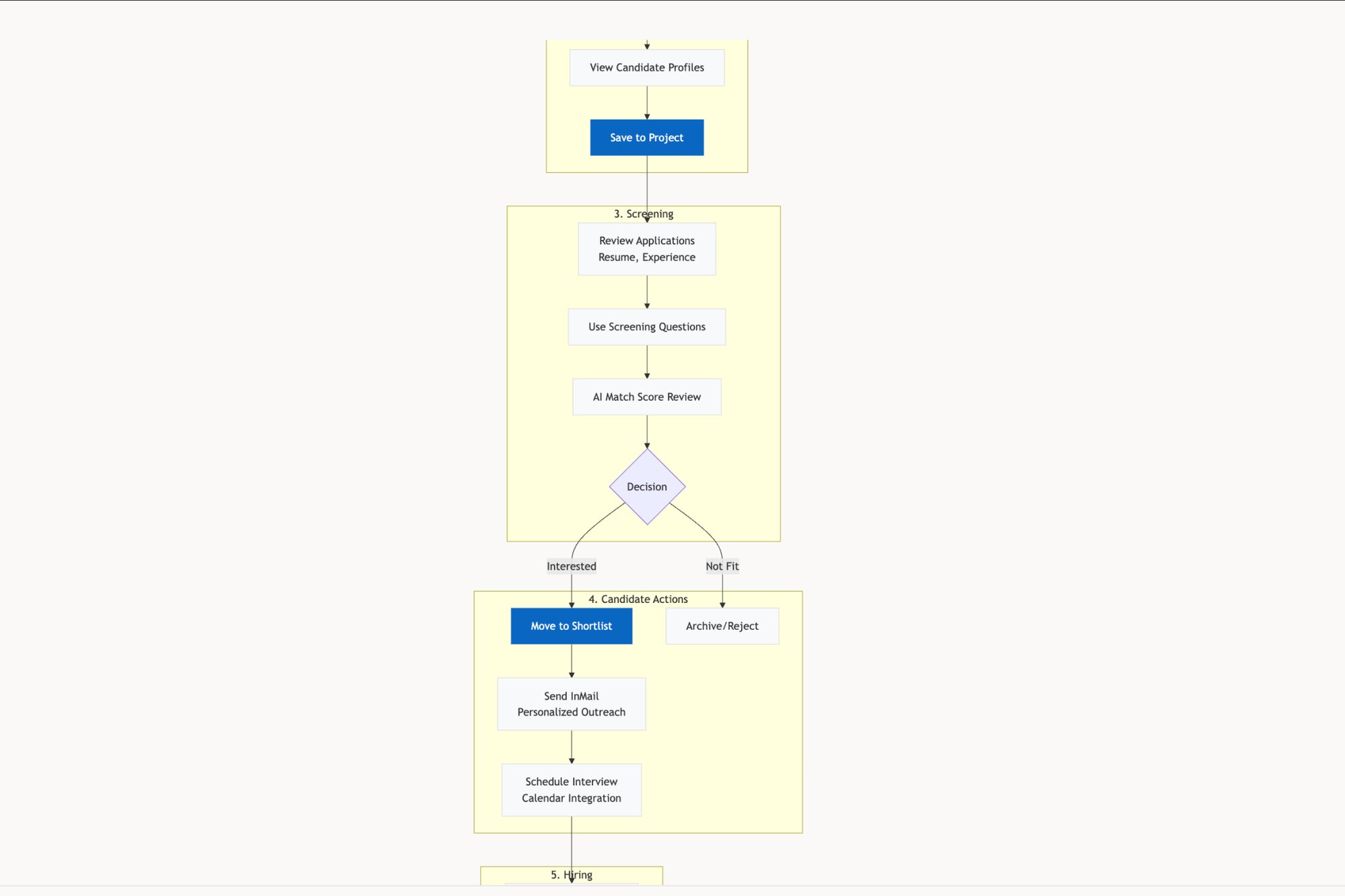
- Map features to user flows. Start by mapping out actual steps. For example, mapping the complete LinkedIn job posting flow and then layering your roadmap items onto it ensures you’re solving real friction points, not imagined ones.
4. Theme-Based Roadmap (The Strategic Pillars)
A theme-based roadmap trades the question "When?" for a much more potent one: "Why?" Instead of a chronological list of features, it organizes work into broad, strategic buckets. This project roadmap example communicates direction over delivery dates. Think of it as a constitution for your product strategy, outlining core principles that will guide development.
This format is ideal for fast-moving companies where opportunities change quarterly, but the mission remains constant. Zapier famously groups its initiatives into themes like 'Performance' and 'Intelligence'. A contact at Discord mentioned their roadmap is aligned to pillars like 'Community Safety'. This tells the entire organization where investment is going without locking them into specific features months in advance.
Strategic Breakdown
The core strength of a theme-based roadmap is its strategic resilience. Market conditions can shift, but your core theme of 'Enterprise Security' remains a valid focus. It decouples high-level strategy from the volatile reality of sprint-level execution. The primary risk is ambiguity. Without concrete features, stakeholders might feel a lack of clarity, asking "So what are we actually building?"
Actionable Takeaways
To make this strategic project roadmap example effective, you must translate themes into tangible focus:
- Define 3-5 high-level themes. These should be direct descendants of your annual company goals. Any more than five dilutes your focus.
- Allocate your resources explicitly. Show the percentage of effort dedicated to each theme. This makes prioritization a clear, quantitative decision.
- Include a brief "Why this matters" description. For each theme, write one or two sentences explaining the business or user outcome it drives.
- Link themes to execution artifacts. Each theme should serve as a container for more detailed plans. A theme like 'AI-Powered Curation' could link directly to the underlying PRD for a new Spotify feature, connecting vision to tactics.
5. Now/Next/Later Roadmap (The Kanban Horizon)
The Now/Next/Later roadmap is an answer to the tyranny of the timeline. Instead of committing to specific dates months in advance, it organizes work by priority and readiness. This Kanban-style format sorts initiatives into three simple columns: what the team is actively building (Now), what’s queued up (Next), and what’s in the backlog (Later). It is the native language of agile teams.
This format trades long-term predictability for short-term agility, making it a favorite for startups that need to adapt to market feedback quickly. Basecamp famously uses a version of this to communicate their public roadmap, focusing customer attention on immediate value. For these teams, the roadmap isn't a static plan, it's a living document that reflects a continuous conversation about priorities.
Strategic Breakdown
The core strength of this project roadmap example is its honesty. It acknowledges that in software development, the future is uncertain. By avoiding specific deadlines for "Next" and "Later" items, it prevents the team from making promises it can't keep. The primary risk is misinterpretation by stakeholders accustomed to date-driven commitments. They might see "Next" and mentally assign it a date, creating unstated expectations.
Actionable Takeaways
To use a Now/Next/Later roadmap effectively, clarity is your most important asset:
- Define your terms. Be explicit about what each column means. "Now" might be the current 6-week cycle, "Next" the following one, and "Later" everything after.
- Link 'Now' items to detailed plans. For anything in the "Now" column, the planning should be concrete. An artifact like the edge cases for a component shows the depth of thinking required for active work.
- Focus on problems, not just features. Frame each item around the user problem it solves. "Improve onboarding completion rate" is better than "Build new tutorial."
- Establish a review cadence. This roadmap is not static. It should be reviewed regularly, often in lockstep with your team's planning cycles. This ensures it remains a true reflection of your strategy, a key component of effective agile release planning.
6. Portfolio Roadmap (The Command Center)
A portfolio roadmap is the command center view. Where a feature roadmap focuses on a single product's journey, the portfolio roadmap zooms out to show how an entire fleet of products or initiatives are moving in concert. Its core purpose is to answer the question: “How are all of our investments collectively driving the company's strategic goals?” It's the essential tool for CPOs and VPs of Product.
Organizations with multiple product lines rely on this view. Think of how Salesforce presents its various clouds or how Atlassian coordinates the futures of Jira, Confluence, and Trello. These companies use portfolio roadmaps to ensure that a major initiative in one product doesn't create a collision with another. It’s the difference between a fleet of ships sailing in formation versus a disorganized regatta.
Strategic Breakdown
The power of this project roadmap example lies in its ability to force difficult conversations about resource allocation. By visualizing every major investment on a single canvas, it becomes immediately obvious where the company is placing its bets. Are we investing heavily in mature products, or are we funding new ventures? This transparency is its greatest asset but also requires significant organizational discipline. The primary risk is that the roadmap becomes a political battleground for resources.
Actionable Takeaways
To use a portfolio roadmap effectively, treat it as a strategic contract:
- Anchor everything to company goals. Each product line or initiative on the map must be explicitly tied to a corporate objective. If you can't draw a straight line, it should be challenged.
- Visualize resource allocation. Don't just show initiatives, show the relative investment for each. This clarifies strategic priorities better than any mission statement.
- Identify cross-product dependencies early. Use this view to spot collisions. If the Jira team is planning a major API overhaul in Q3, the Confluence team needs to know in Q1.
- Establish a clear review cadence. A portfolio roadmap is a living document. It should be reviewed monthly by leadership and updated quarterly to reflect market changes and business performance.
7. Problem-Focused Roadmap (The Empathy Map)
A problem-focused roadmap flips the entire script. Instead of starting with a list of features to build, it begins with a documented list of user problems to solve. This format resists the allure of shiny objects and anchors the team to a single, powerful question: “Whose pain are we alleviating?” It organizes work around problem statements, solution hypotheses, and the metrics that will prove a problem has been solved.
This is the kind of project roadmap example you’ll see at companies that truly live and breathe user obsession. Tesla’s master plan wasn’t about building specific car models, it was about solving problems like ‘make electric cars affordable’. Similarly, design firms like IDEO structure their projects not around deliverables, but around deep explorations of human challenges. It forces a fundamental shift from "What are we building?" to "What are we changing for the user?"
Strategic Breakdown
The core strength here is deep strategic alignment. By framing the roadmap around problems, you ensure every ounce of effort is directed toward creating tangible value. You stop shipping features and start shipping solutions. The main risk is that "problem exploration" can feel ambiguous to stakeholders accustomed to seeing a neat list of features and dates. It requires a culture that trusts the discovery process.
Actionable Takeaways
To make a problem-focused roadmap effective, you must champion the process:
- Invest heavily in pre-roadmap research. Before a problem even makes it onto the roadmap, your team should have spoken to at least 10-15 users who experience that specific pain.
- Frame problems with precision. Use a clear structure: "Users [like persona X] struggle to [perform a behavior] because [of a constraint], which results in [a negative outcome]."
- Show, don’t just tell, solution explorations. For each problem, the roadmap should link to artifacts showing multiple solution paths. This could be a canvas exploring the user flow for a new signup experience or high-fidelity prototypes testing different approaches.
- Use AI to accelerate solution discovery. Once you have a well-defined problem, leverage tools that can help prioritize solutions. Some modern platforms can analyze user data to suggest high-potential feature ideas. You can explore a few AI tools that help prioritize product features to see how this works in practice.
8. Hybrid Roadmap (The Switchboard)
A hybrid roadmap is the product leader’s switchboard, connecting multiple lines of thinking into a single, coherent view. It blends the why of an outcome-driven roadmap, the when of a timeline, and the what of a theme-based structure. This project roadmap example doesn’t force you to choose between strategy and execution: it shows how strategic themes translate into measurable outcomes delivered along a timeline.
This model is popular with companies like Notion and Stripe because it scales communication effectively. Stripe can organize its efforts under broad themes like "Global Payments." Within each theme, they can define specific outcomes for the quarter (e.g., "Increase payment acceptance rate in LATAM by 5%") and then map the initiatives onto a loose timeline. This allows an engineering lead to see dependencies while the C-suite can track progress against strategic goals.
Strategic Breakdown
The core strength of the hybrid model is its versatility. It provides tailored views for different audiences from a single source of truth. An executive can see a high-level view of themes and their business impact, while a product team can drill down into the features and deadlines. Its major challenge, however, is complexity. Without a robust tool and clear governance, it can quickly become a tangled mess of conflicting information.
Actionable Takeaways
To successfully implement a hybrid roadmap, you need a system, not just a document:
- Establish a clear hierarchy. Define the relationship: Themes are strategic pillars. Outcomes are measurable results within themes. Initiatives are projects on a timeline that deliver those outcomes.
- Create multiple views. Use a tool that allows you to filter the roadmap for different audiences: executives, the team, and sales.
- Define governance. Decide who owns the roadmap and how changes are approved. How often are themes reviewed? Who prioritizes initiatives within a theme?
- Link documentation to execution. A hybrid roadmap is a living document. For each initiative, ensure it links back to a detailed PRD. For example, a PRD for a founder-focused forecasting tool keeps the strategic intent directly connected to the work being done.
From Document to Instrument
We've dissected eight distinct types of project roadmap examples, from the rigid certainty of a Gantt chart to the fluid intentionality of an outcome-driven plan. Each one serves a different purpose and invites a different kind of conversation. The throughline is this: a roadmap is not a static artifact to be filed away. It's a communication tool. A focusing lens. A strategic instrument.
A timeline-based roadmap promises predictability, perfect for coordinating a marketing launch. But in early discovery, that same format can stifle innovation. A theme-based roadmap excels at aligning the company around high-level goals, yet it offers little guidance to an engineering team planning their next sprint. The key isn't finding one perfect project roadmap example, it's building a quiver of options and knowing which arrow to pull.
The Roadmap as a Conversation Starter
Last week I watched a PM present a timeline-based roadmap for a new mobile feature. The engineering lead immediately pointed out three dependencies that made the Q3 launch impossible. A debate started. The roadmap, intended to create alignment, created conflict instead. Why? It was the wrong tool for that conversation. A story map would have surfaced those dependencies weeks earlier.
This is what I mean: a roadmap is an instrument you play to create harmony between strategy, execution, and stakeholder expectations. According to a 2021 study in the Project Management Journal, teams that frequently adapt their roadmap format to their current stage of development report 34% higher project success rates. Your takeaway is this: don't just pick one roadmap and stick with it.
Your Next Actionable Step
Don't aim for a perfect document. Aim for a better conversation. This week, look at your current roadmap and ask a simple, powerful question: what conversation is this document starting?
- Is it a conversation about dates and deadlines? (Useful for coordinating launches).
- Is it a conversation about customer problems? (Essential for ensuring you're building the right thing).
- Is it a conversation about business impact? (Critical for securing budget and executive buy-in).
If the conversation it’s starting isn't the one you need to have right now, your job is clear. Pick a different format from this list and sketch out a new version. This isn't about creating more work, it's about making your work more effective. By tailoring the visualization, you guide the discussion. You elevate the quality of feedback. For highly structured initiatives, you can even refine this further with a specialized contract management workflow roadmap to guide specific operational processes. The format you choose dictates the focus of the room.
In short, mastering the art of the roadmap is about developing strategic fluency. It's the ability to translate a complex vision into a simple, compelling visual story that everyone can understand. The examples in this article are your vocabulary. Now go start the right conversation. These examples illustrate different formats, but the strategy behind them matters more. See our complete product roadmap guide. The right format depends on your prioritization method. See how the action priority matrix helps decide what makes the roadmap in the first place.
The roadmaps we've explored provide the strategic skeleton. But what about the flesh: the user flows, the edge cases, the interactive prototypes that bring a feature to life? Figr helps you move from roadmap item to tangible artifact in minutes, letting you visualize complex ideas and test assumptions before a single line of code is written. Turn your "next" column into a clickable prototype and get the clarity you need to build with confidence.